Born in 1977 in Inglewood, California, Cara Romero is a Chemehuevi artist in the Escalette Collection. She is known mainly for her photographs that document Indigenous perspectives and challenge Eurocentrism. Her work is supported by years of research, which uncovers long-lost histories of Indigenous culture due to colonization and discrimination. Besides the five pieces in the Escalette Collection, Romero’s oeuvre has reached far and wide, like the 2021 billboard exhibition, The Tongvaland Project, and the current PST ART: exhibition, Nature on Notice: Contemporary Art and Ecology at LACMA.
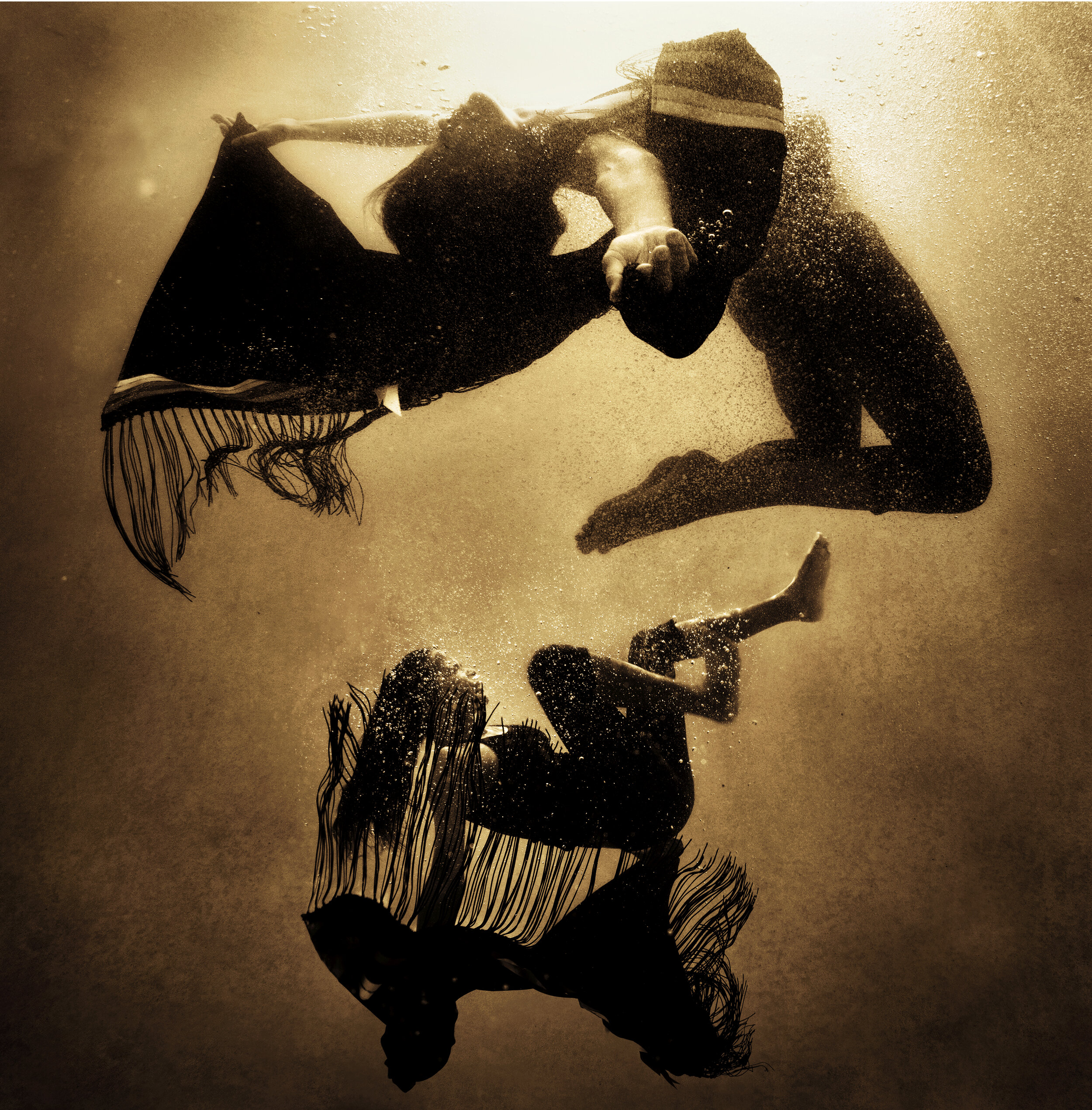
Eufaula Girls
As part of Romero’s “Water Memories” series, she captures Muscogee mother and daughter, Lisa and Crickett Tiger, in this underwater scene, highlighting water’s supportive and destructive capabilities. Water provides life, resembling the Chemehuevi belief that women were life-givers, putting them in equal status to men. However, water is also disastrous, causing damage like the historic floods in Eufaula, Oklahoma, once home to the Muscogee Creek Nation, Choctaw Nation, and Cherokee Nation. These communities were removed due to acts of colonization and later construction plans for energy and water supply, and flood control. This piece captures the importance of water in the lives of Indigenous people, telling stories of abundance and loss.
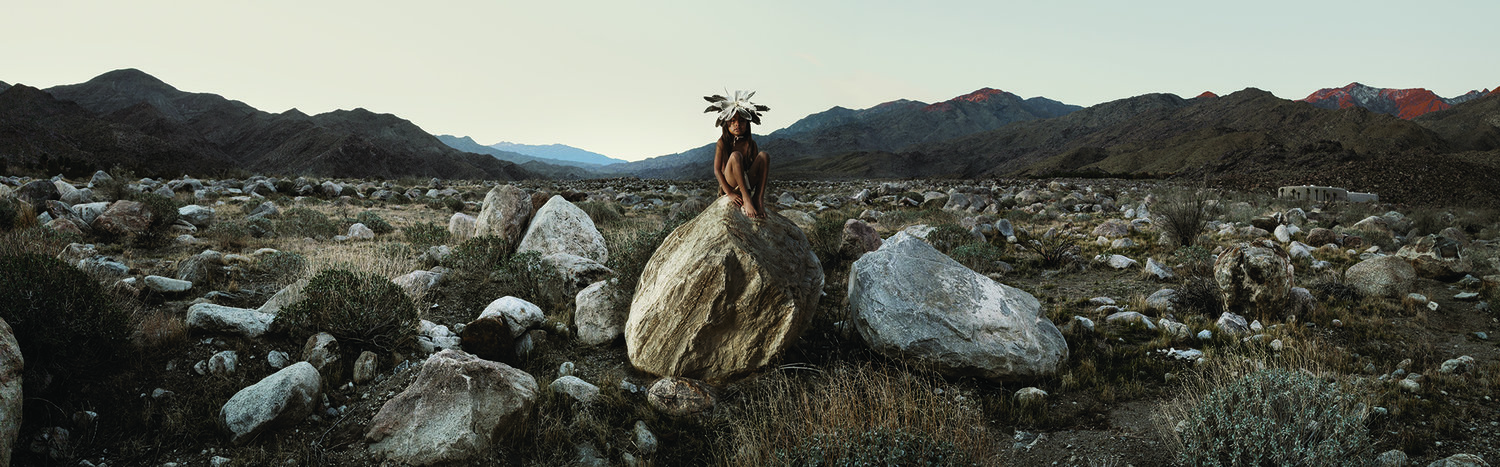
Indian Canyon
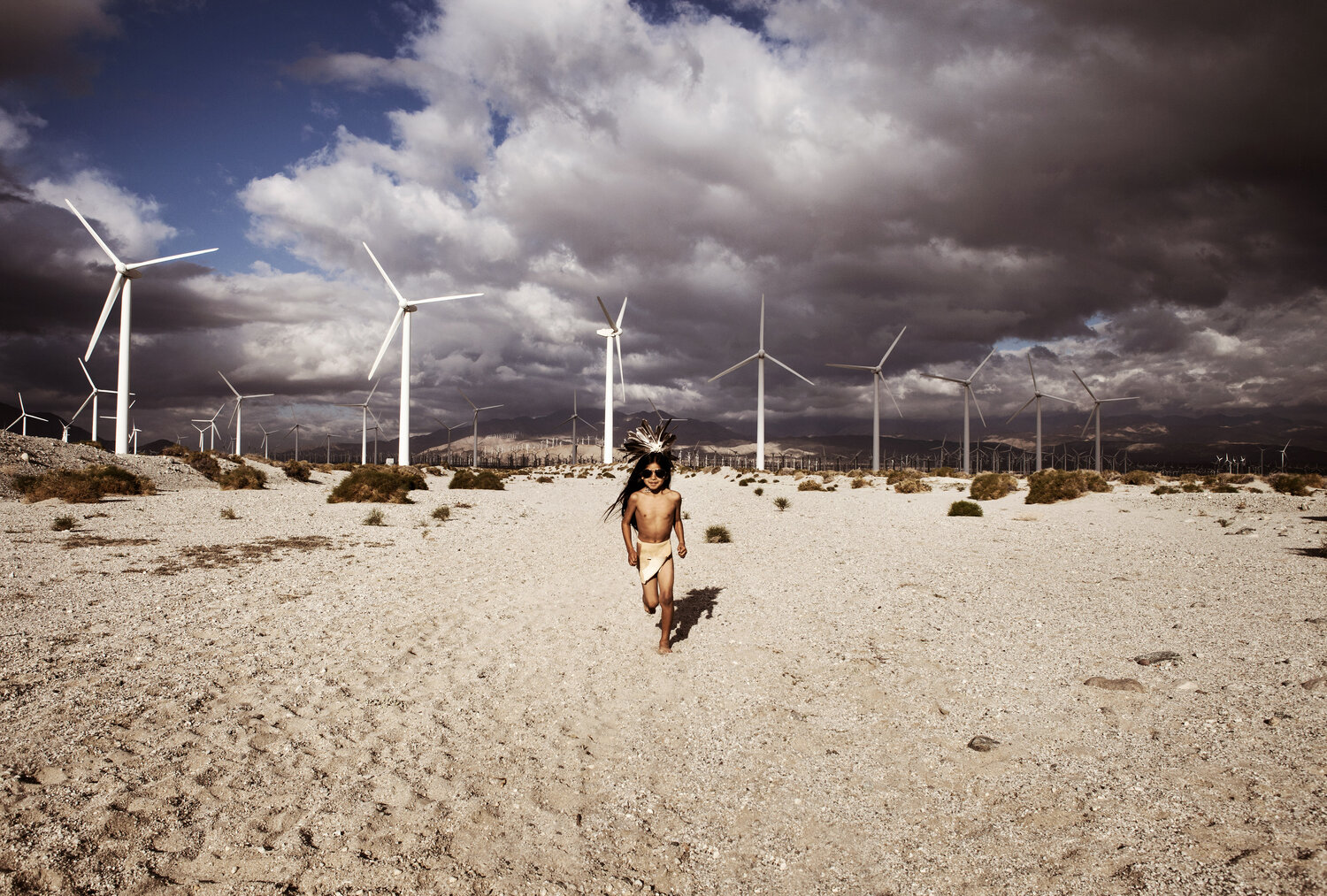
Indian Canyon, Kiyanni, and Winka & The Windmills are from the series “Jackrabbit, Cottontail & Spirits of the Desert,” whose subjects are Chemehuevi time travelers visiting the lands of the Cahuilla, Serrano, and Mojave people in what is now known as the Coachella Valley. In Indian Canyon, one of these mythical visitors perches on a rock amidst a rocky landscape, taking in the world around him. His gaze invokes feelings of the sublime, adventure, and the deep connection humans have with the land. In a video with Craft in America, Romero states the importance of including children in her work because “they carry the spirit of their ancestors with them.” These subjects are the physical entity of the longevity of Chemehuevi and Indigenous culture.
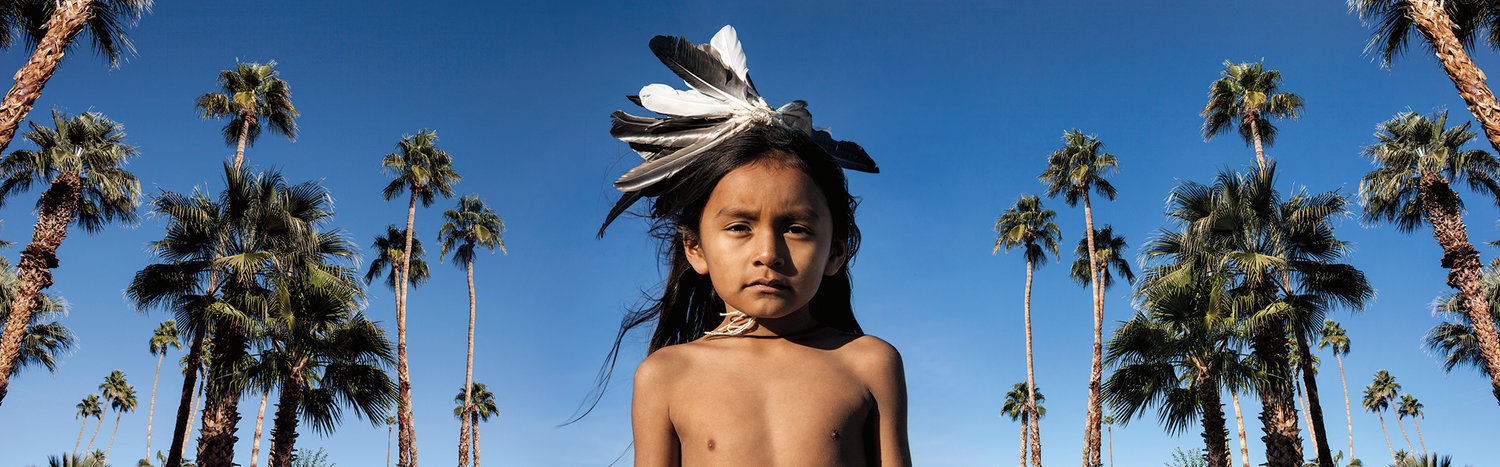
Kiyanni
Kiyanni is a time traveler staring intensely at us, surrounded by palm trees reminiscent of modern Southern California. His gaze reminds audiences of the people who first inhabited this land and their significance to the community and the land we stand on. It is as if this piece is holding us accountable as non-Natives to bring light and visibility to the Indigenous communities and their cultures and histories. These pieces also empower the Indigenous youth to embrace their heritage and continue the legacy of their people.
Winka & The Windmills
A time traveler wearing sunglasses traverses a sandy plain with windmills in the background. The traditional clothing of the time traveler paired with the windmills forces one to consider the changes that have taken place, both to the land and those who were its original caretakers. Rather than depicting Indigenous people as “stuck in the past,” Romero places Indigenous individuals in contemporary contexts, highlighting their continued importance to California today.
Naomi
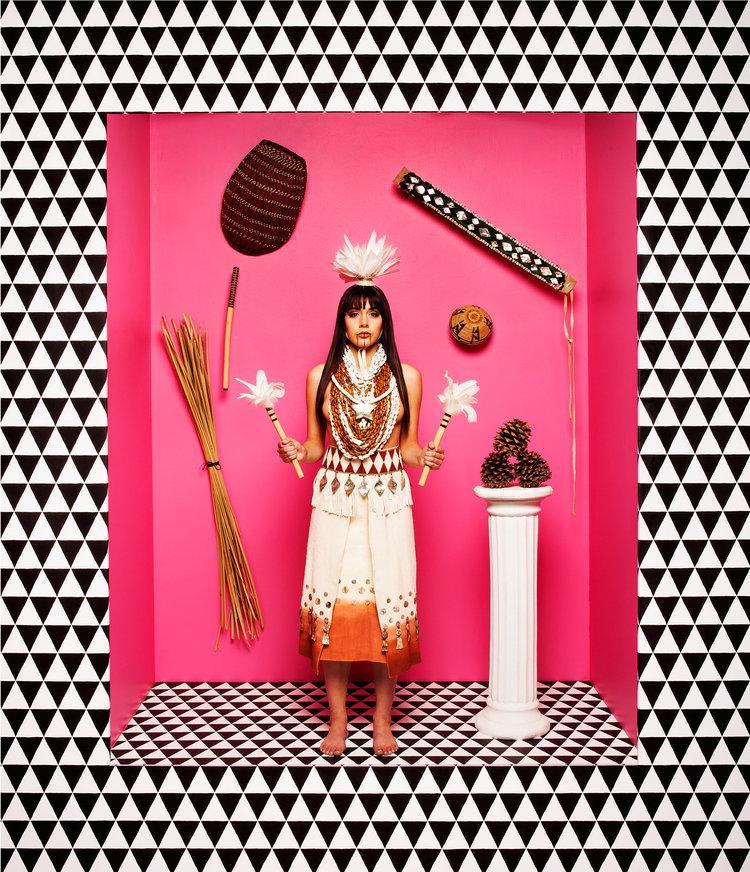
In a doll box reconstruction, Romero puts together an image of an Indigenous woman and her cultural accessories that are true to her heritage. As a part of Romero’s “First American Girl” series, she rewrites the inaccurate perspectives and prejudices about Indigenous women perpetuated in popular culture, bringing forth an authentic story to be heard and learned from. From the bright colors to the various patterns, Naomi draws you in to observe the details that make the subject who she is today. Like the rest of her work, Romero is uplifting the stories of Indigenous women and how they keep their cultures alive despite periods of turmoil and discrimination.
For this summer, as you travel to new places or spend much-needed time outside, take the time to learn about the land you are standing on and the Indigenous groups that have always been there.
We also encourage you to explore other Native and Indigenous artwork in the Escalette Collection here.
We invite you to explore all the works in the Escalette Collection by visiting our eMuseum.
Wilkinson College of Arts, Humanities, and Social Sciences is the proud home of the Phyllis and Ross Escalette Permanent Collection of Art. The Escalette Collection exists to inspire critical thinking, foster interdisciplinary discovery, and strengthen bonds with the community. Beyond its role in curating art in public spaces, the Escalette is a learning laboratory that offers diverse opportunities for student and engagement and research, and involvement with the wider community. The collection is free and open to the public to view.