Center for Targeted Drug Delivery Launches at Chapman
November 24, 2025
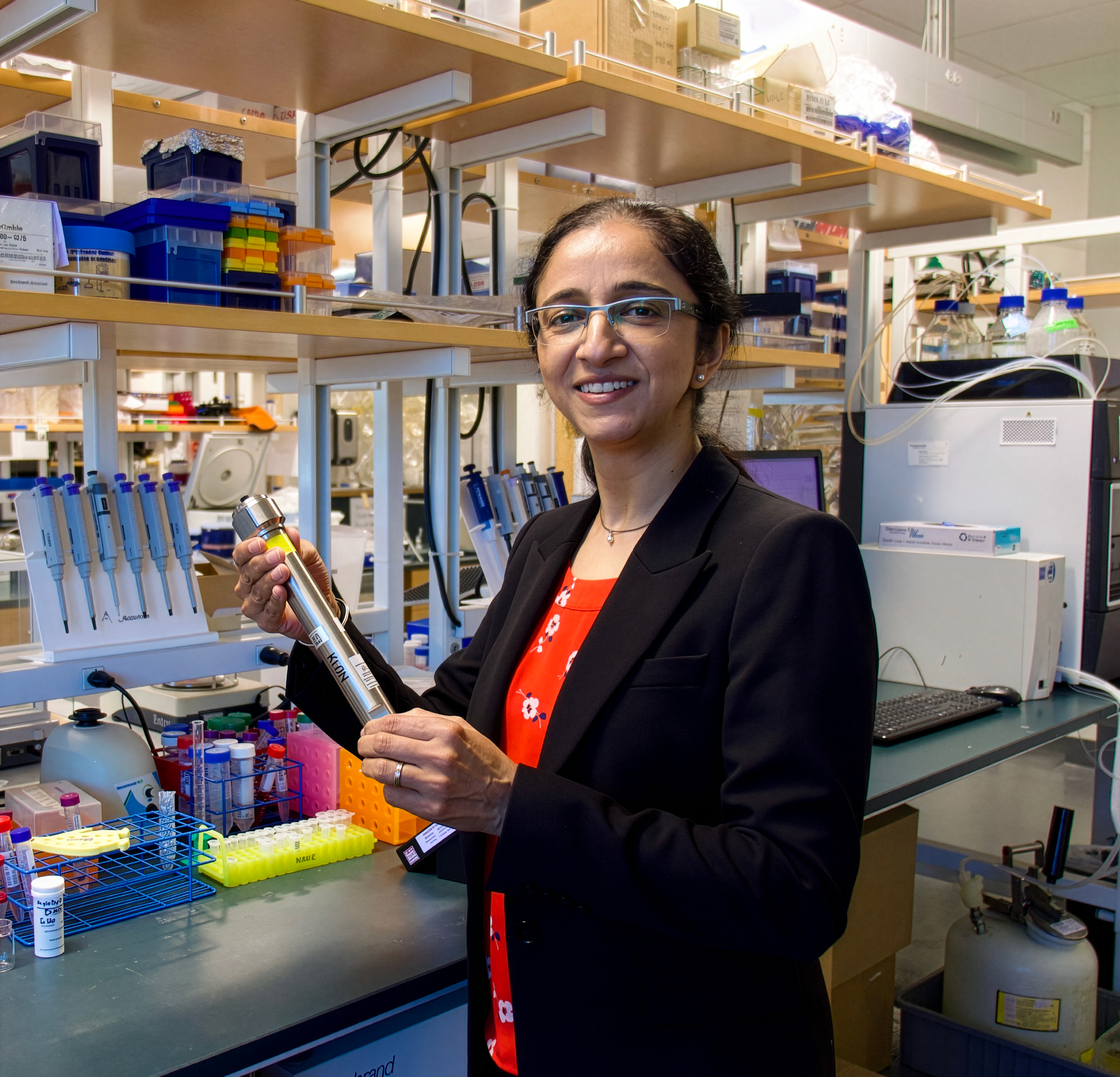
The Center for Targeted Drug Delivery (CTDD) is our latest research center, created to advance precision drug delivery technologies and translate novel technologies into impactful therapies.
The CTDD provides a formal structure that will deepen interdisciplinary collaborations among faculty researchers, industry partners, and other leading research institutions, while also attracting new partnerships. By uniting researchers to advance precision drug delivery, the center will accelerate innovation, expand into broader therapeutic areas, and train the next generation of scientists.
“Targeted drug delivery researchers are advancing therapies that are more effective and safer, addressing urgent healthcare challenges such as rising cancer incidence, drug resistance, and the demand for precision medicine,” says Kamaljit Kaur, Ph.D., professor of medicinal chemistry and the director of CTDD. “Our work spans aggressive cancers like triple-negative breast cancer (TNBC) and melanoma, as well as conditions such as uncontrolled bleeding, infections, cardiovascular and neurodegenerative diseases.”
Since 2011, more than a dozen antibody-drug conjugates (ADCs) have been FDA-approved to deliver chemotherapy selectively to cancer cells. However, ADCs are often associated with significant toxicities such as immunogenicity and ocular side effects. CTDD investigators are pioneering peptide-drug conjugates (PDCs), which provide comparable precision with the potential for improved safety. Similarly, CTDD researchers are developing technologies to deliver therapeutics across the blood–brain barrier (BBB), a critical need for treating diseases such as Alzheimer’s.
Breakthroughs at Chapman University show the vast potential for further collaborative research, including a study led by CTDD researchers Kaur, Surya Nauli, Ph.D., and Rachita Sumbria, Ph.D., which identified a novel TNBC target protein (Yao et al., Scientific Reports, 2025), marking a key advance in drug delivery for this type of cancer. Similarly, Sun Yang, Ph.D., and Kaur reported a small peptide for targeting melanoma cells, both aggressive cancers that kill thousands of people per year.
Recently, a grant was awarded by the NIH-National Cancer Institute to support Chapman University’s pioneering work in cancer-focused targeted drug delivery. Keykavous Parang, Ph.D., Pharm.D., and Yang received funding to develop PDCs aimed at mitigating cardiotoxicity and overcoming drug resistance in cancer.
“The success of PDCs will impact the future breast cancer patients with TNBC in several ways,” says Kaur. “First, treatment with PDCs will increase the therapeutic efficacy of current chemotherapy drugs and will be effective in several-fold lower dose than the free drug, reducing the toxic side effects of chemotherapy. Secondly, physicians will not have to reduce the dosage, which is often necessary in the case of high toxicity associated with chemotherapy. Finally, the use of optimal dosage will reduce the chances of developing drug resistance and improve the quality of life in breast cancer patients, ultimately increasing patient survival and benefiting women’s health.”
The CTDD supports a collaborative, high-performing team of investigators with complementary expertise in computational biology, medicinal chemistry, engineering, and pharmacology to research one of the greatest mysteries facing healthcare. By pooling resources and knowledge, the research center will enhance productivity and provide innovative drug delivery technologies that address critical unmet medical needs.
This article was co-written by Silas Fernandes.