Nauli Research Discoveries Make Global Headlines in High Impact Journals
July 17, 2025

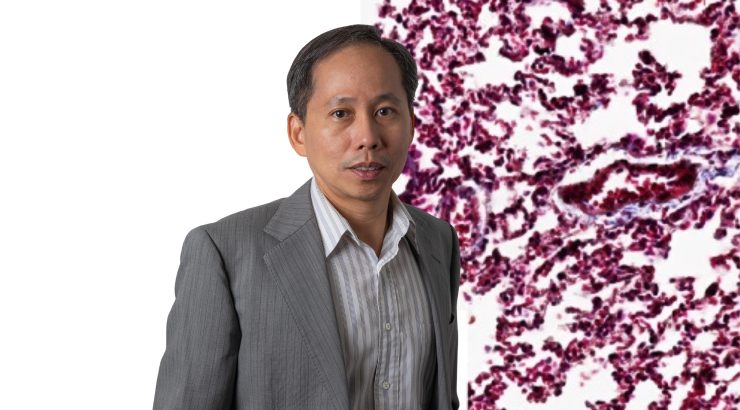
Each day, researchers push the boundaries of science in pursuit of new developments in medicine and human health. Faculty at CUSP, including Surya Nauli, Ph.D., are leading these developments to share with the world and have recently published in two different high-impact journals.
In scientific research, few journals are as respected within the medical profession as Science and Nature. One of Nauli’s groundbreaking studies was recently published in Nature Communications, part of the Nature portfolio, with an impact factor of 14.7. This particular study reports that the function of progesterone receptor component-2 (PGRMC2) is essential for the heart’s ability to adapt to physical stress, such as exercise and low-oxygen environments like high altitude. Without PGRMC2, the heart fails to function optimally, increasing the risk of damage and heart failure. The findings suggest PGRMC2 as a promising target for future therapeutic investigations.
Nauli’s second study appeared in Bioactive Materials, a leading biomedical journal with an impact factor of 18.0. The research uncovers the discovery of cilia, a tiny, hair-like structure found on animal cells, as a novel method of drug delivery. Drug delivery with cilia may be able to reduce the biotoxicity of many drugs, as cilia exist naturally in the body and are therefore naturally biologically compatible. The implications are vast, especially for certain diseases linked to non-functional cilia, such as blindness, hypertension, and neurocognitive diseases such as Alzheimer’s and Parkinson’s.
This research has significant potential for developing new drug delivery methods and commercial applications. Bioactive Materials has published this research as front-page news in their recent edition due to the impact of Nauli’s findings, and his work is currently under consideration for patent application by Chapman University.
The impact of scientists like Nauli on the progress of medicine and the power of science improves health care, increases patients’ lifespan, and ultimately saves lives. New developments in cardiovascular biology and pharmaceutical sciences inspire Chapman University researchers and faculty to further uncover new lifesaving applications and advance health.
Interested in being part of this movement toward the future of healthcare? Click here to learn more about earning your degree with CUSP.
This article was written by Silas Fernandes.