Stress Management Tips from Michele Wanner, AVP
July 1, 2015
Feeling the need to breathe a little and de-stress? Our very own Michele Wanner, associate vice president of development, can help with that. Did you know she is certified to teach yoga, with 500 hours of training? She is a truly balanced yogi, having found time to dedicate to both yoga and Chapman! Whenever you find yourself feeling stressed, including at the office, give Michele’s breathing technique below a try. In this Q&A post, she offers plenty more words of wisdom on stress management, mindfulness and the benefits of shifting your focus to serving others. Thanks for the inspiration and motivation, Michele!
How did you become interested in yoga?
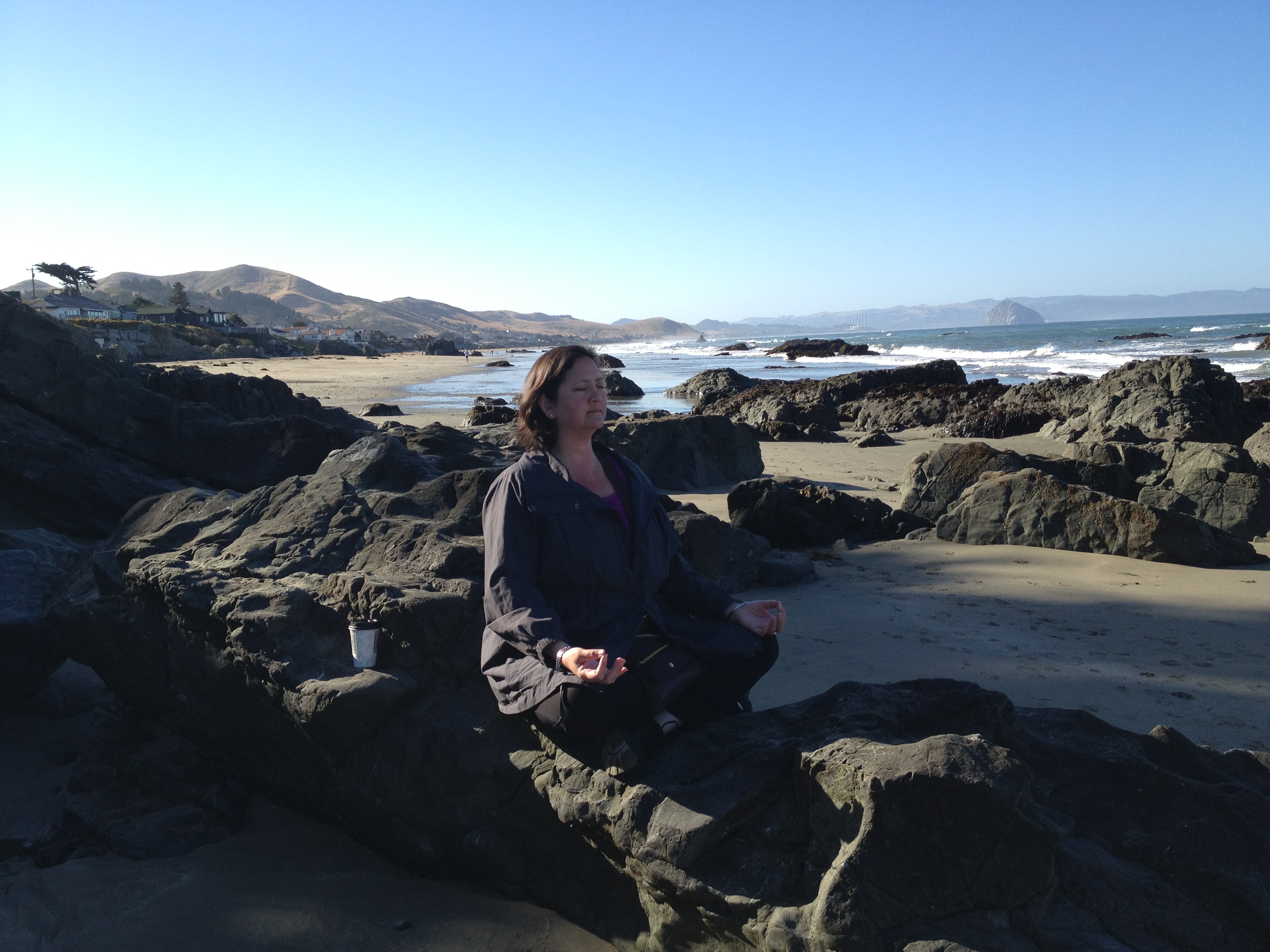 My sister-in-law tried for years to get me to go with her to Bikram Yoga (hot yoga in a room heated to 105 degrees). Everyone knows how much I love the heat (NOT!), so the thought of that was downright repulsive to me — not to mention I am pretty clumsy and do not have the stereotypical yoga physique. I did not think it was for me. Then in 2006, I was experiencing a lot of stress and thought I would give it a try. I was pretty shocked that I really enjoyed it! After going for a month or so, I thought I would explore other types of yoga, so I tried many and just got hooked. Later that year I signed up for teacher training and became a teacher of Kundalini Yoga. I continued advanced study over the years and have completed 500 hours of training.
What does your regular yoga practice consist of?
For years I maintained a daily asana (physical) practice, usually for 90-120 minutes. This included the physical aspects of yoga as well as pranayama (breath work/focused breathing) and meditation. However, yoga is much more than the asana practice; it is a way of life! The practice of yoga is dedicated to creating union between body, mind and spirit, and heightens our awareness of our self. It affects our daily life — both at home and at work. Lately, my practice has been focused on pranayama (breath work), meditation, sound (music) and mantra (chanting). I aspire to create room in my life for a daily asana practice.
How does your yoga and meditation practice affect stress that might occur in daily life?
Yoga and meditation completely reduces stress in all areas of life, and increases your awareness of self and others. That is why you will often hear people refer to their practice as “bliss” and they cannot stop smiling. Yoga evokes a true sense of contentment.
Everyone should experience yoga and/or meditation. There are many ways you can explore: go to a class, or practice at home with a DVD, YouTube or online classes. Don’t make your judgment from the first class — you should explore many types of yoga and teachers to find the right fit for you. There IS a yoga type and teacher out there for EVERY BODY! Please reach out to me for any questions, I would love to talk to you more about yoga!
What tips to you have to bring mindfulness or a yoga mindset into the office?
We have to put our work into perspective. While the work we do is extremely important and impactful in so many ways, we are not doing brain surgery! What may feel like crisis and insurmountable goals is nothing compared to matters of life and death. One of my favorite quotes is by Mahatma Gandhi: “The best way to find yourself is to lose yourself in the service of others.” The nature of our advancement and development work is service-oriented. If we approach our work with the perspective of being of service to others — donors and colleagues alike — many things can change from feeling burdened to being blessed.
Michele’s Stress-Reduction Tip: One-Minute Breath (Pranayama)
“If you encounter a stressful or difficult situation at work, do not react immediately. Shift your focus to your breath and practice the one-minute breath. You can do this anywhere and people will not even know you are doing it!
- Shift your focus to your breath
- Inhale through your nose for 20 seconds
- Hold your breath for 20 seconds
- Exhale through your mouth for 20 seconds
Repeat at least two times and you will feel an immediate shift in your response (you may still be stressed, but it will be greatly reduced!). Most cannot complete this breath as directed the first time. But with focused practice, you will be surprised how quickly you will develop this life-changing skill. Start with 7-10 seconds for each inhale/hold/exhale, and build up to 20 seconds each.”