Let’s Talk Prints! What they are, and all the different types
August 6, 2025
What is a Print?
At the Escalette Collection, we have a large collection of prints, including lithographs, screenprints, and letterpress prints. But what do these terms actually mean, and what is the process behind creating them?
Definition of a Print
Before we jump into the specifics, let us cover the basic definition of a print. A print is a piece of art created by applying pressure to transfer an image from a plate or matrix to a piece of paper. A matrix is a template made from wood, metal, or glass that is inked to produce a design on the paper. In doing so, an artist can create multiple reproductions of the same image. However, some monoprints are one-of-a-kind because they are embellished with other materials.
Lithograph
A lithograph print is made using a process based on the repulsion of oil and water. The artist draws an image with a greasy substance on a flat stone or metal plate. The surface is then treated with a chemical solution that ensures the drawn areas attract ink while the non-image areas repel it. When the inked plate is pressed onto paper, the image transfers, creating the final print.
If the design requires multiple colors, like many of the lithographs in our collection, additional plates are used, one per color. The same paper will go through the machine until the ideal look is achieved.
Click here to see a step-by-step videos of this process.

Todd Hebert, Less is More, lithograph, 2004. Gift of Cliff Benjamin.
Serigraph/Silkscreen/Screenprint
A serigraph, silkscreen, and screenprint are all made using the same stencil printmaking process. While the words can be used interchangeably, they are used in different scenarios. “Serigraph,” for example, is often used to distinguish a fine art print from a “silkscreen,” which could be used to print an everyday t-shirt; however, some artists, like Miriam Schapiro, defy these conventions.
Serigraphy is a printmaking technique that uses a mesh fabric stretched over a metal or wooden frame. Designs are applied to the screen either directly onto the screen with ink, or transferred using an emulsion, and areas that are unprinted are blocked off with a stencil or resist. A squeegee is then used to push ink through the open mesh, transferring the design to the paper or fabric underneath. If more colors are needed, the process is repeated with different screens.
Click here to see step-by-step photographs of this process.
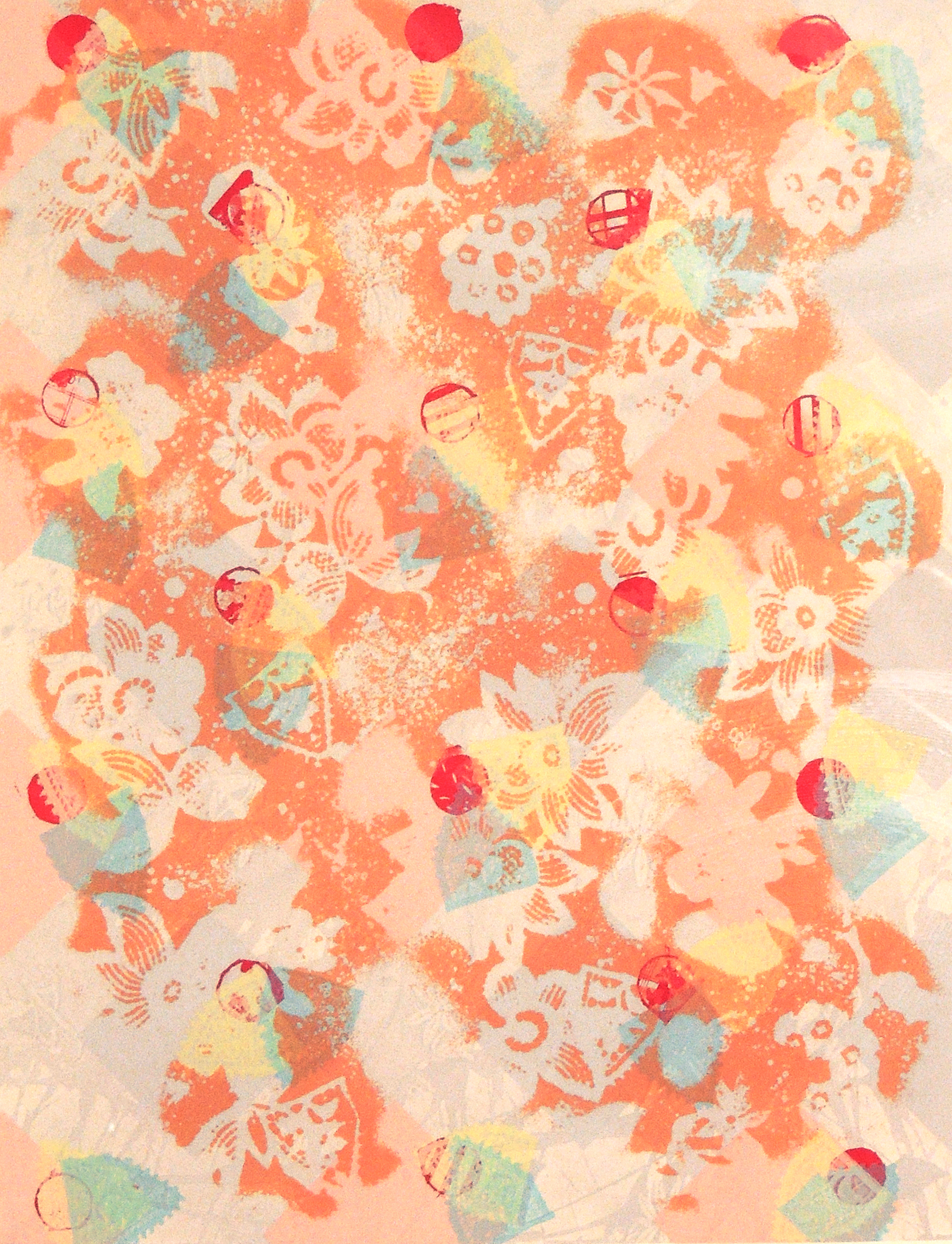
Miriam Schapiro, Sampler, silkscreen on paper, 1974. Gift of Doris Sosin.
Relief Printing
Relief printing is a technique in which a design is carved into a material, like wood or linoleum. The ink that is applied only touches the areas not cut away (the positive space), leaving an outline of the carved spaces (the negative space) when transferred to paper.
Woodcut
Woodcut is one of the oldest forms of printmaking, dating back to the 8th century in Japan and China. Like all relief printing, a woodcut begins with a carved design. The wood block is first seasoned to reduce moisture. The block cutter then carves a design into the wood. The block is then inked and the paper is pressed on top and sent through a platen press or roller press. The areas that had been carved away remain white, while the raised areas hold the ink. Multiple blocks are used depending on the print size and colors.
Click here to see a step-by-step videos of this process.
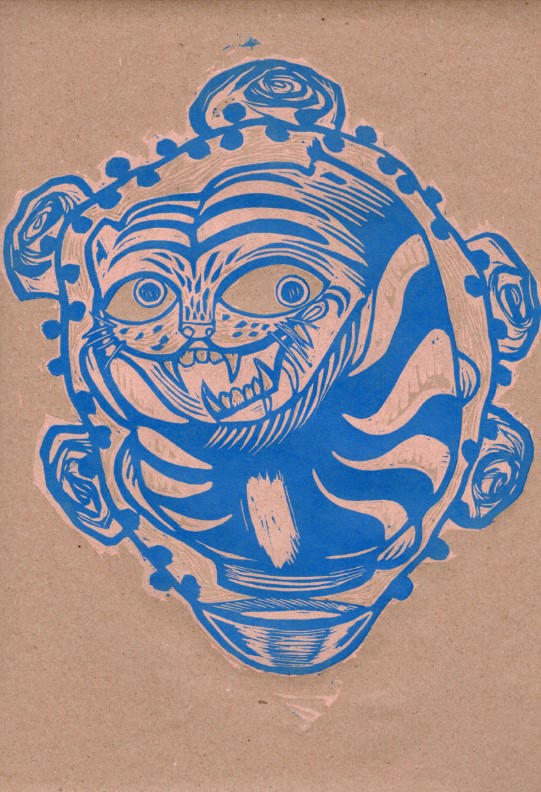
Maren Munoz, South Korea, relief woodcut, 2012. Purchased with funds from the Escalette Endowment.
Linocut
Linocut is very similar to woodblock printing, but instead of wood, the carving is done to a layer of linoleum, which is much softer to carve.
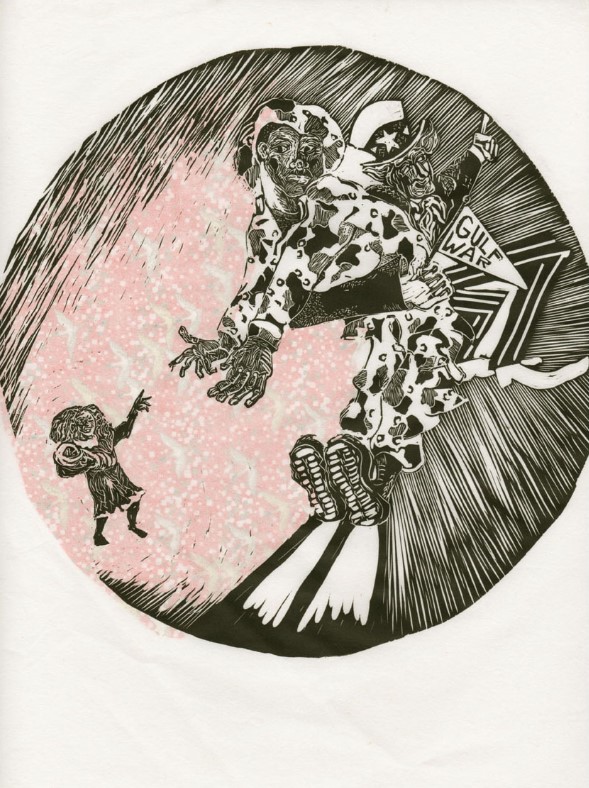
Yvette M. Pino, 1,000 Cranes, linocut, 2012. Purchased with funds from the Escalette Endowment.
Letterpress
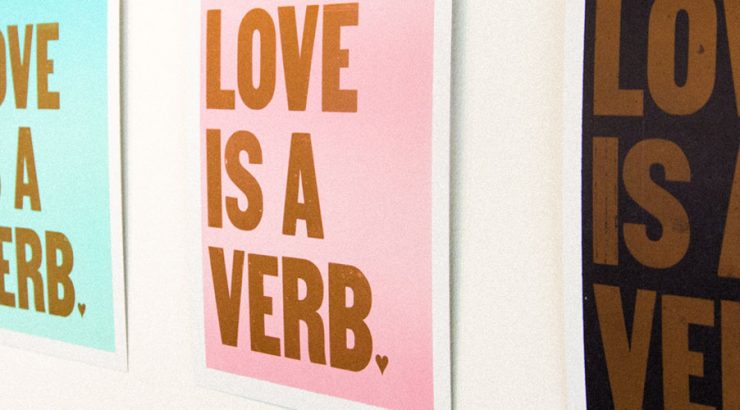
Like its name suggests, letterpress printmaking uses letters and whole pages of text to create its print. You can carve your own letters, but there are also existing letters and type that many people often use. This technique was used in the 15th century for books, flyers, and today’s wedding invitations, holiday cards, etc.

Jennifer Graves, Love is a Verb, letterpress print, 2020. Gift of Fiona Shen.
Intaglio Print
Like woodcuts, intaglio prints are images engraved into the surface of the plate (mainly copper and zinc) using sharp tools or acid. The following three prints fall into this category but have unique characterizations.
Etching
Etchings use acid to create the designs on plates. The plate is first polished to remove all blemishes and then covered in an acid-resistant varnish called “ground.” Then an etching needle carves into the plate, exposing the metal underneath. Once completed, the plate can be dipped into acid or covered, which eats away at the exposed spaces. The longer the plate is in the acid, the deeper and broader the recessions. The ground is removed, the ink is applied, and the plate is cleaned, leaving ink in the incisions. A piece of dampened paper and printing blankets go on top and are sent through the press. The final print is a mirror image of the plate, but the outline of the plate often appears, which is called a plate mark.
Click here to see a step-by-step videos of this process.
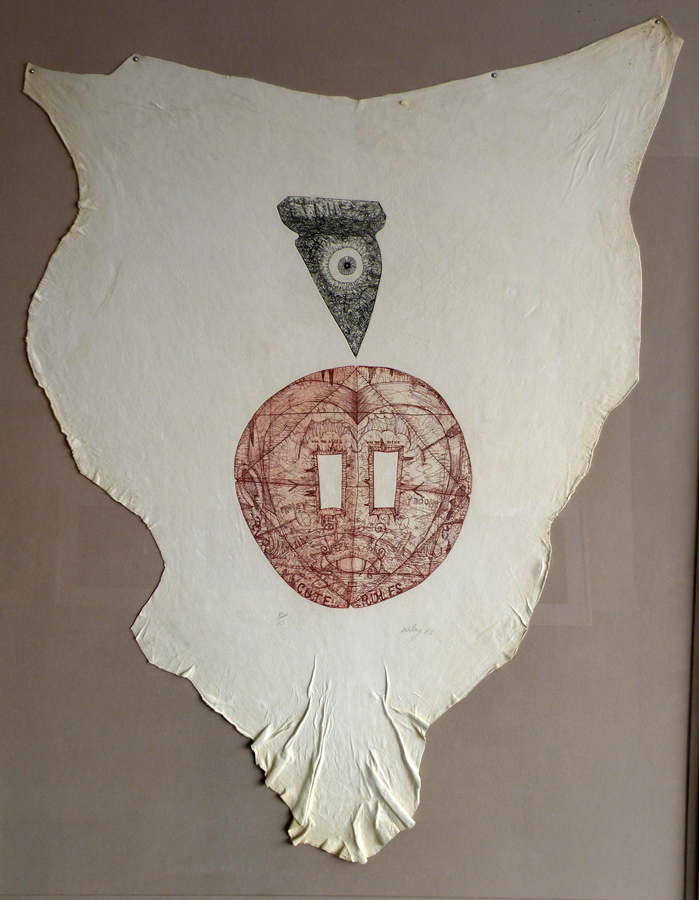
William T. Wiley, Who the Alien, color etching on chamios, 1983. Gift of Taco Bell
Aquatint
Aquatints add another step to the etching process to create additional tonal effects. Acid-resistant material, like powdered rosin (a fine form of tree sap), is applied to the metal plate using heat. Like etching, the plate is submerged or drenched in acid, but produces a grainy effect from the rosin. These grainy patterns allow more ink to settle, providing a wash effect. The tone depends on how long the plate is in acid; the longer the acid, the darker the tone. Other techniques, like spitbite aquatint, use saliva to thicken the acid so that it can be applied to the plate in a more manageable way.
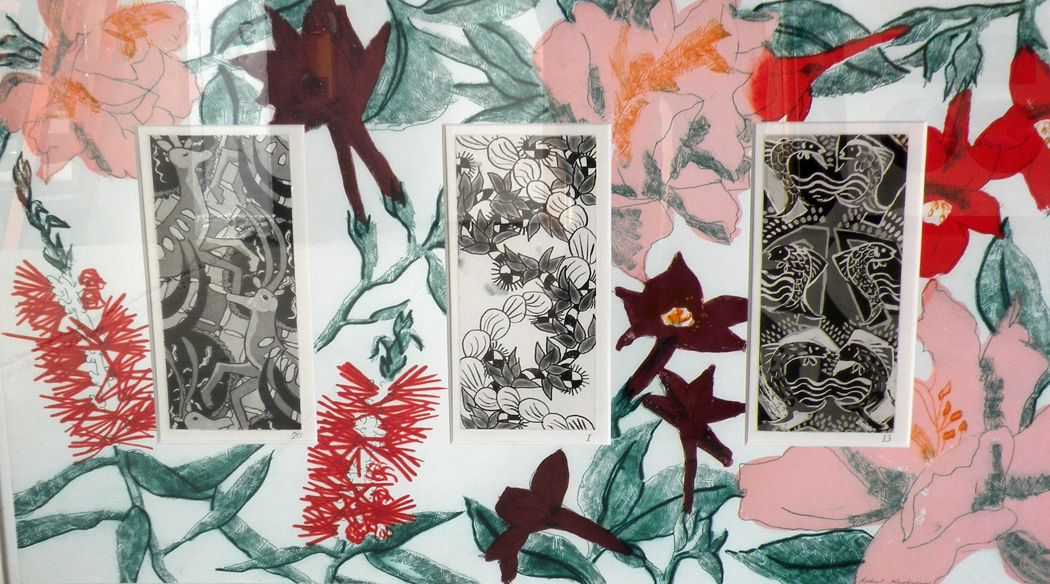
Robert Kushner, The Joy of Ornament and Flowered Mat, soft-ground etching with drypoint and aquatint, color soft-ground etching with aquatint and drypoint mounted to board, 1980. Gift of Taco Bell.
Digital Prints
Digital prints are a general category of any prints created with the assistance of a machine, like a printer. This could be created by images from your phone, for example, or digital collages.

Katie Dorame, L.A. Overseer, inkjet print of digitized collage and watercolor painting, 2020. Purchased with funds from the Ellingson Family.
Giclee/Pigment Print
Within the category of digital prints are giclee prints, which also use inkjet printers, but create very high-quality prints on paper and/or canvas with pigment-based inks. Because of their crisp finish, giclee prints are commonly used to print photographs.
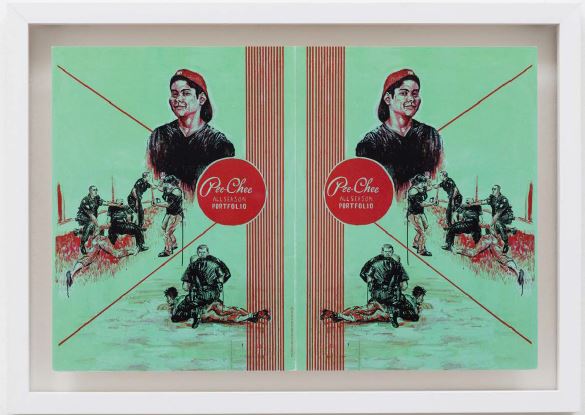
Patrick Martinez, Po-lice Misconduct (mint), pigment print on paper, 2016. Purchased with funds from the Escalette Endowment.
Hand-Embellished Prints
Although prints are traditionally reproductions of an original design, some artists take another step to add additional customization, making them one-of-a-kind. Artists can add paint to the print or hand-sew beads onto the canvas. They might be a small addition, but they can significantly contribute to the piece’s overall composition.

Carla Jay Harris, Ways of Gods, hand embellished archival digital print, 2020. Purchased with funds from the Ellingson Family.