The first thing artist Phung Huynh told the audience at her lecture was to eat the donuts. “I’m an Asian mom, and I love watching you eat, so you can eat during the talk, you don’t have to be polite,” Hunynh said. These donuts came from the local and Cambodian immigrant-owned Friendly Donuts and were just a taste of the rich history and culture that Huynh’s talk had to offer.
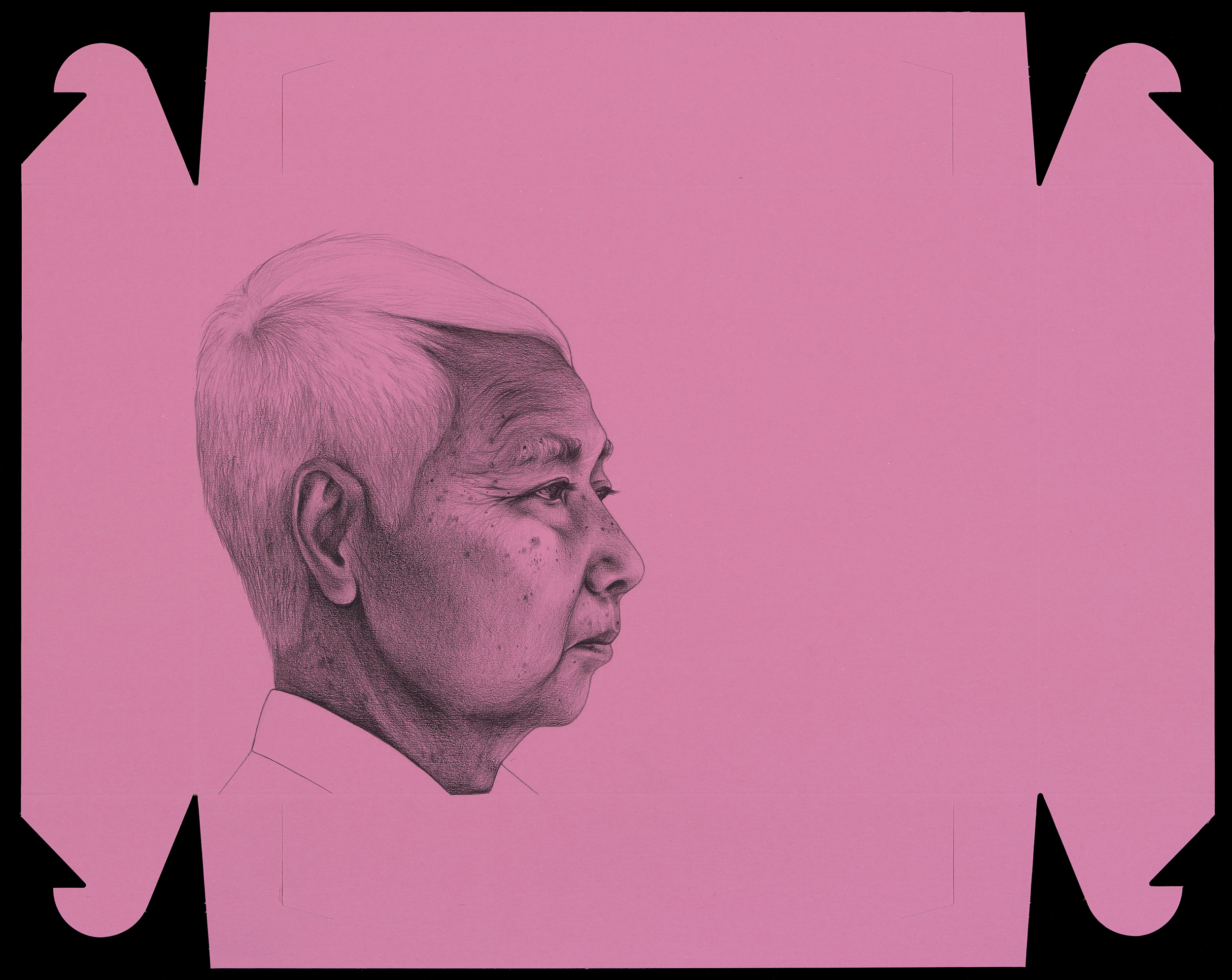
Phung Huynh’s artist talk was organized in conjunction with KIN: Portraits from the Escalette Collection in the Guggenheim Gallery, which features two of her works exploring the Cambodian and Vietnamese refugee experience. One work, Vann Nath, reflects on the circumstances that led to an influx of immigration to the United States during the brutality of the Pol Pot regime. The piece pays homage to Vann Nath, a Cambodian artist and one of the few survivors of the S-21 prison camp, who was spared because of his ability to create portraits of the dictator. The incredibly careful, detailed lines that form Nath’s face convey the dedication and reverence Huynh holds for one of the few Cambodian artists to survive the dictatorship.
Once in the United States, many Cambodian and Vietnamese immigrants opened donut shops as a path toward achieving the American Dream. This phenomenon was largely spurred by Ted Ngoy, the “Donut King,” who helped thousands of refugees settle in the U.S. by sponsoring them and assisting them in opening their own shops. Today, nearly 90% of independent donut shops in California are owned by Cambodian or Cambodian American (Khamerican) families.
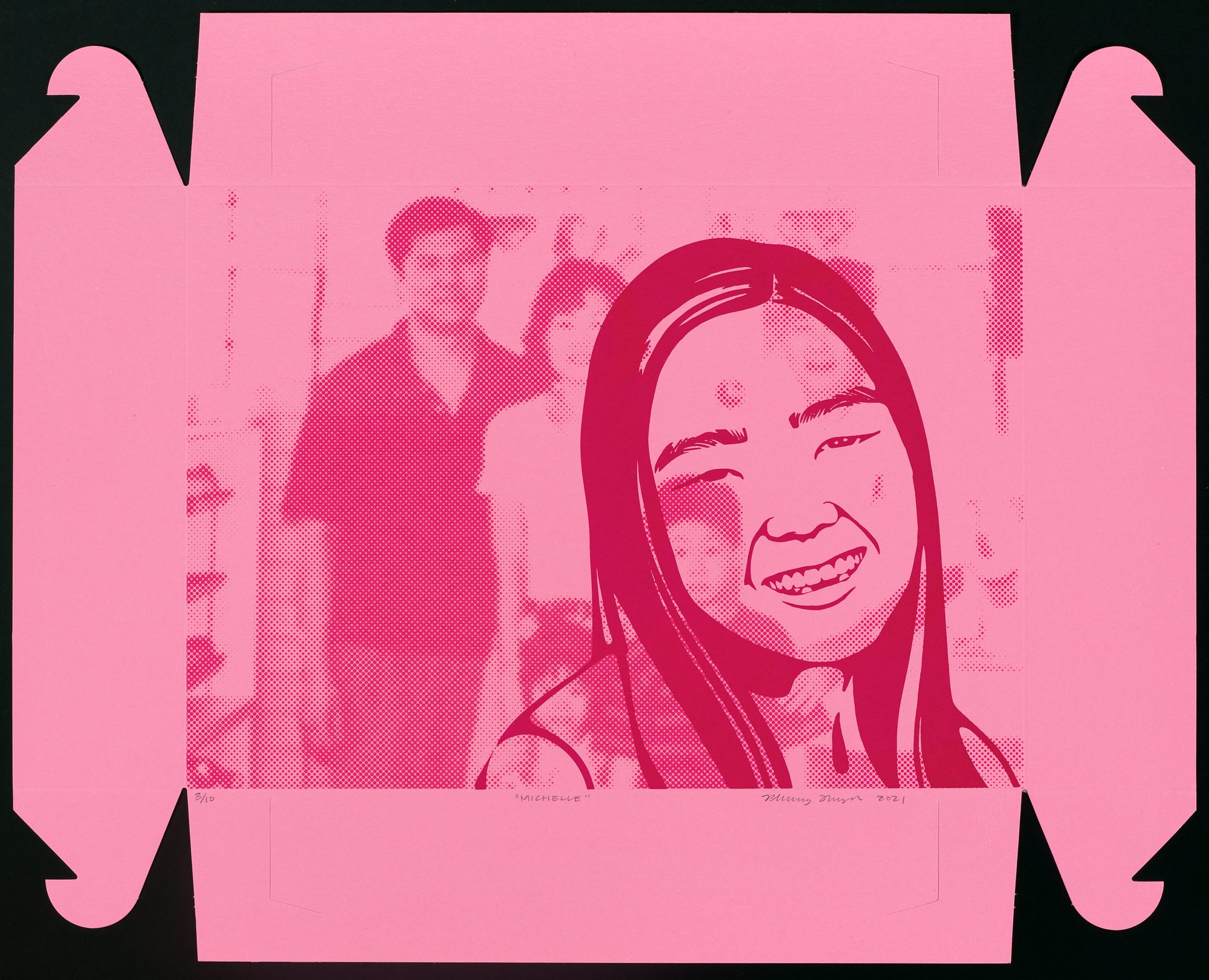
The second piece, Michelle Sou Donut Box, reflects on the second generation of Khamericans—the children of refugees who grew up working in their families’ donut shops. Behind her portrait, the faint outline of a photograph of her and her parents standing in their donut shop is visible.
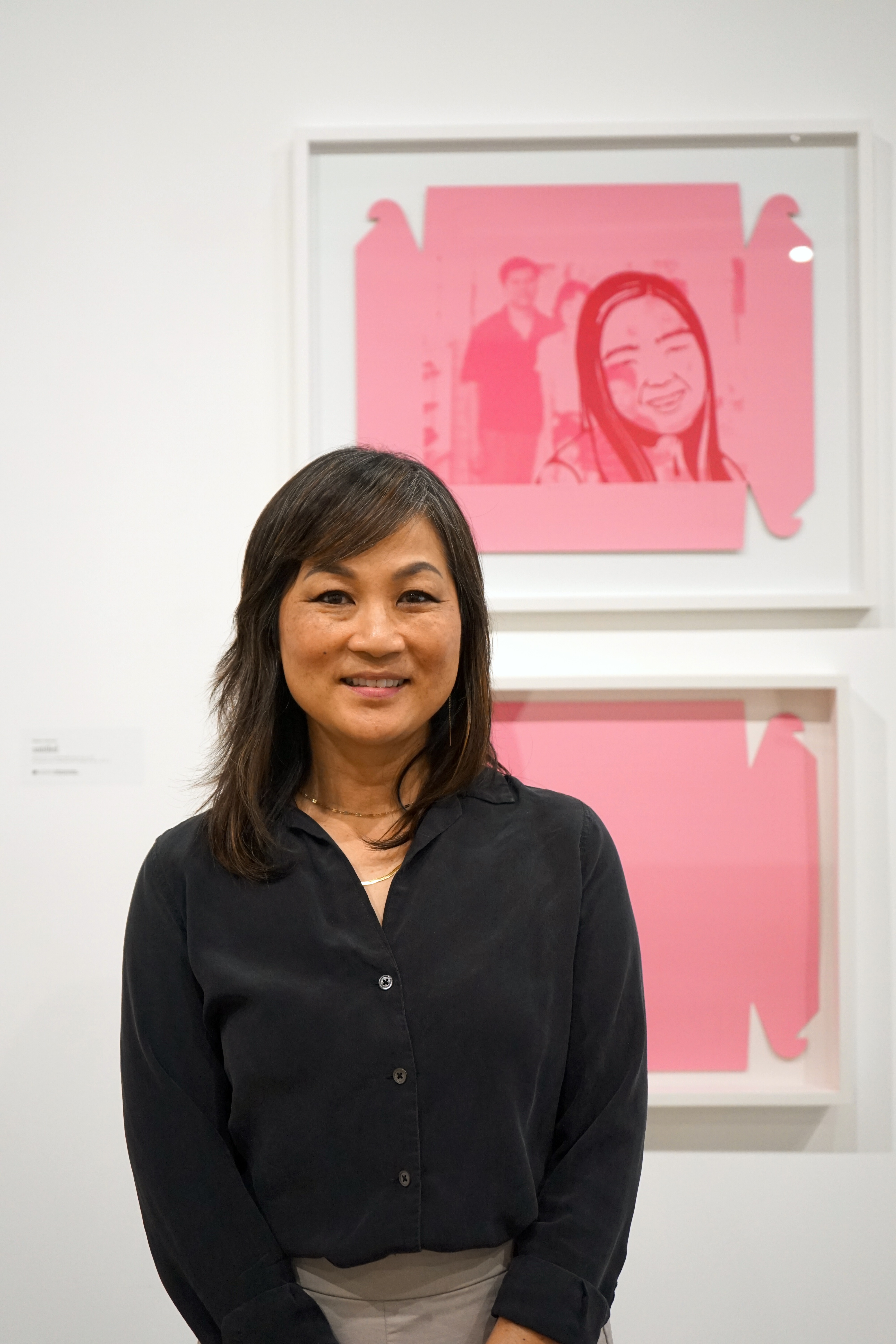
Her donut box series also serves as a way for Huynh to reflect on her own family’s history as refugees from Cambodia and Vietnam. Another drawing features a memory of her father translating for newly arrived refugees from Cambodia in Mount Pleasant, Michigan, after Huynh and her family were the first Southeast Asian family to arrive there.
Huynh recalled powerful anecdotes from her family’s journey, exploring stories from her childhood and tying them to her recent research on the cosmetic industry and the pressures it places on women of color. She explored how these systems shape identity and how her work aims to challenge these standards and recognize those who feel underrepresented.
“As an art history student and a Japanese-American, I resonated deeply with the themes and stories she presented, including strict beauty standards and the ongoing fight for the repatriation of looted museum objects,” said Rylie Shimabukuro (‘26 Art History, CCI minor.) “To hear her speak with such empathy for so many people was heartwarming, and to see her approach these moments with kindness was motivating.”
Huynh also spoke about Our Voices Count, a serigraph that was originally displayed as a billboard in Los Angeles. The project, which Huynh participated in alongside other LA-based artists, focused on communicating a positive message and using art as a platform of empowerment for people across Los Angeles County. Our Voices Count, was used to highlight information about the 2020 census, and includes images of close friends and family, including her son.
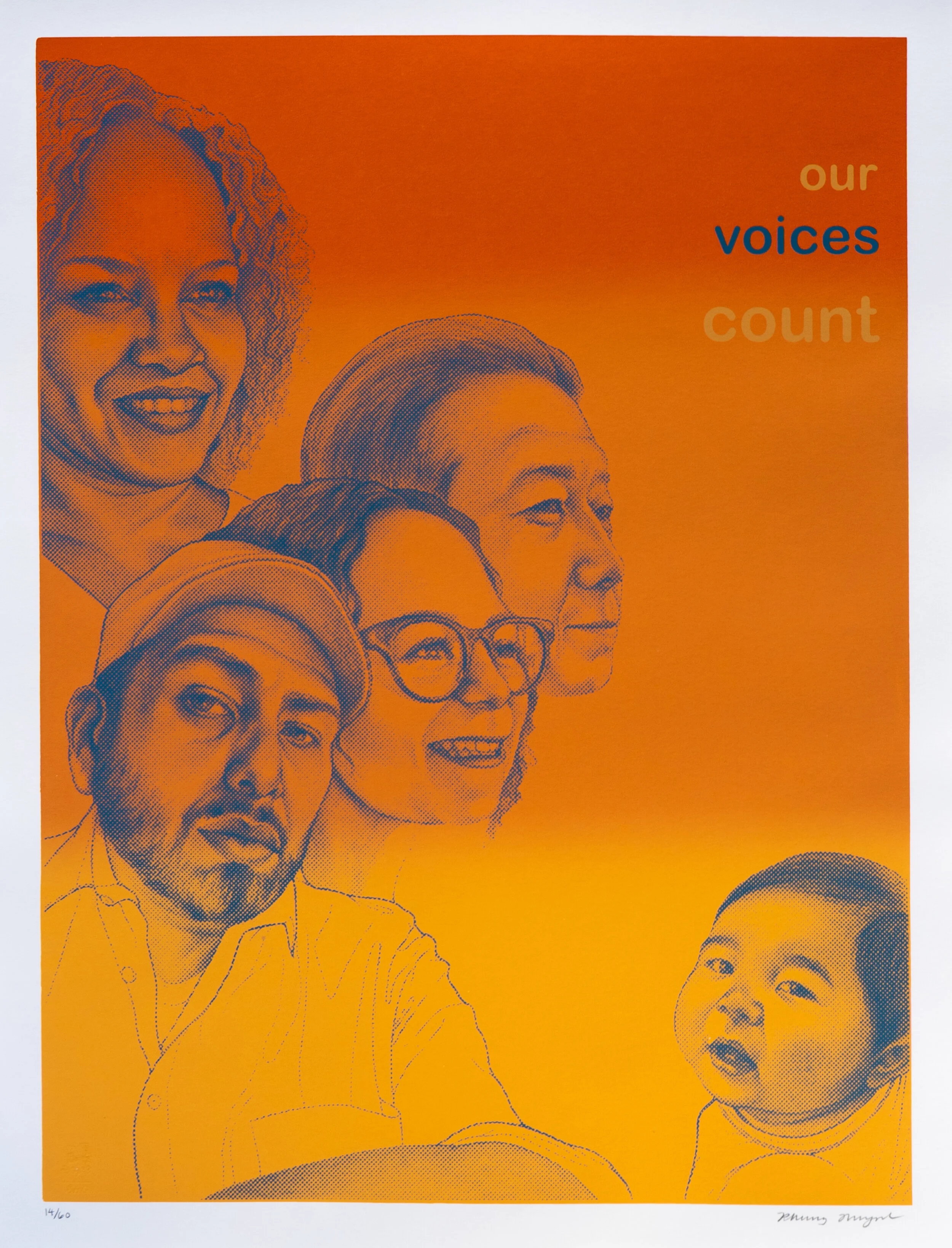
“For me, the heart of this project is about social and racial justice, about inclusion and belonging, and about community care. I take this approach not only with this particular artwork, but throughout my artistic practice, which I am honored to share with you today,” Huynh said
Huynh’s genuine care and focus on community shines through in the other projects she introduced including a public art installation that memorializes the coerced sterilization of Latina women at the LA County-USC Medical Center and Return Home, a series that reveals the looting and destruction of Khmer Buddha heads from Cambodia, many of which are now on display at American art museums.
Watch a recording of Phung Huynh’s artist talk.
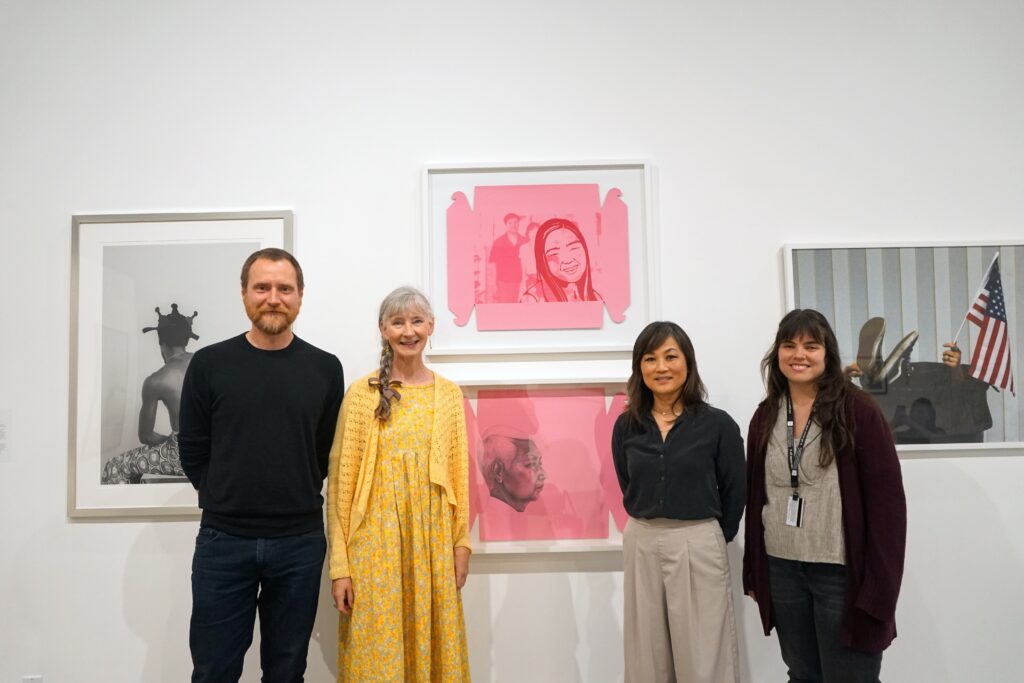
Featured Image: Marcus Herse (Director, Guggenheim Gallery), Fiona Shen (Director, Escalette Collection), Phung Huynh, Jessica Bocinski (Collections Manager, Escalette Collection) with Huynh’s artwork in KIN: Portraits from the Escalette Collection, Guggenheim Gallery.
We invite you to explore all the works in the Escalette Collection by visiting our eMuseum.
Wilkinson College of Arts, Humanities, and Social Sciences is the proud home of the Phyllis and Ross Escalette Permanent Collection of Art. The Escalette Collection exists to inspire critical thinking, foster interdisciplinary discovery, and strengthen bonds with the community. Beyond its role in curating art in public spaces, the Escalette is a learning laboratory that offers diverse opportunities for student and engagement and research, and involvement with the wider community. The collection is free and open to the public to view.