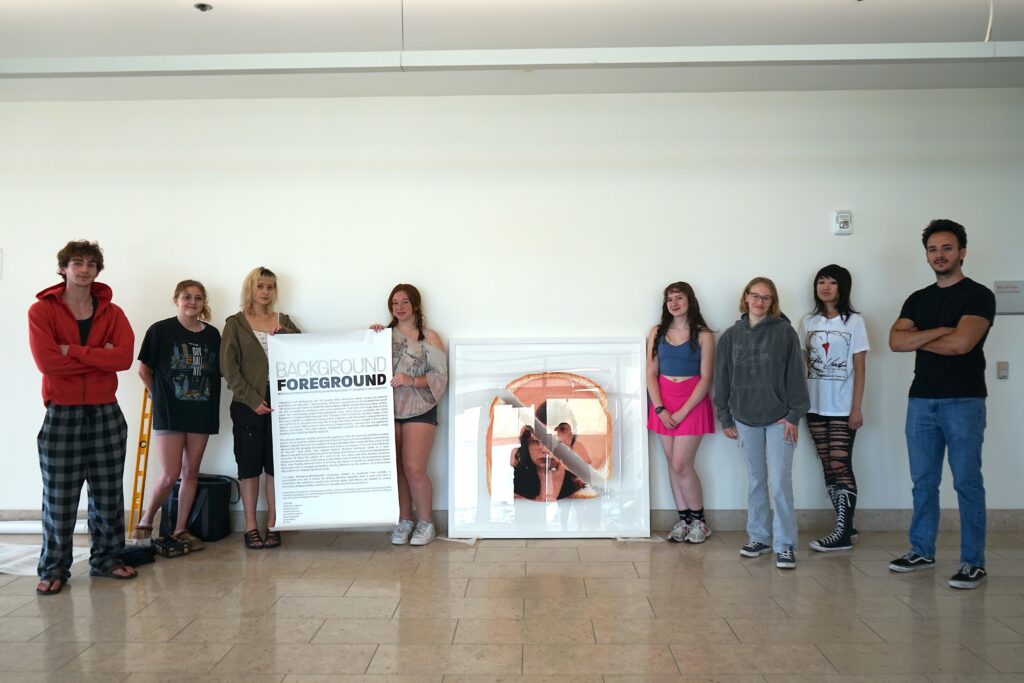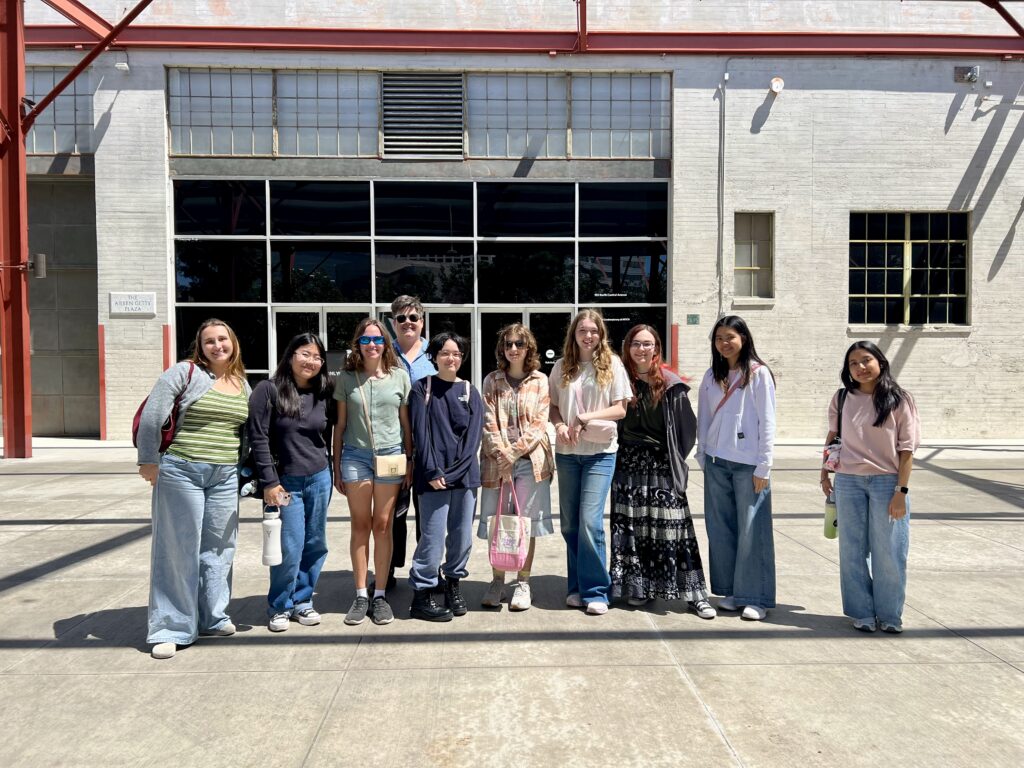
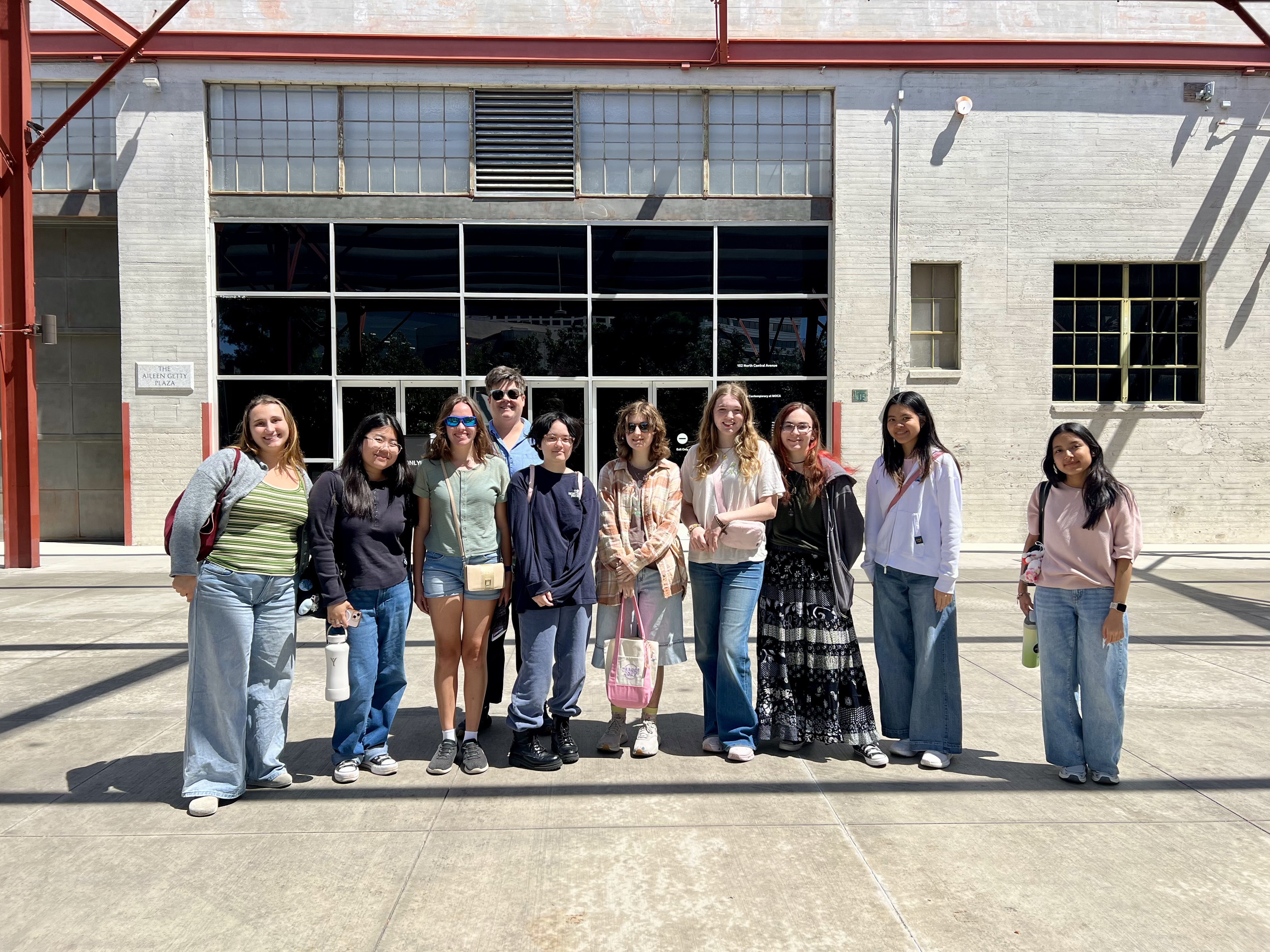
The Escalette Collection of Art hosts field trips each semester to galleries and museums across Southern California for its student workers, interns, and volunteers. These outings are designed to build on the training and experience students gain with the Collection, broadening their knowledge of the museum field.
This semester, the Escalette Collection collaborated with Wilkinson College of Arts, Humanities, and Social Sciences to open a visit to MONUMENTS, an exhibition at MOCA, to all Wilkinson College students. MONUMENTS, co-presented by MOCA and The Brick, reflects on the histories and legacies of the Civil War in America by bringing together decommissioned monuments with contemporary artworks.
The reflections below highlight the experiences of two Escalette student workers who attended the trip.
Doris Liss (Art History and English ’27)
I arrived at the Orange bus stop early in the morning, excited for the day ahead. This trip, co-hosted by the Escalette Collection of Art and Wilkinson College, had been in the works for months, and the day was finally here! My fellow art history students and I had been talking about the MONUMENTS exhibition at MOCA Geffen since it had initially opened in October, so I went in with a decent amount of knowledge, but I still had no clue what I was truly in for.
After the quick train ride to Union Station and a short walk to the museum, we were finally there. The first thing I saw when I entered the gallery was a towering statue covered in red paint. The statue was a confederate soldier monument, but was painted by protestors in 2017. The statue was a very jarring start to the exhibit, placing me immediately in the physical and mental setting that the show encouraged.

The first thing I noticed about MONUMENTS was how many non-statue pieces of art there were. When I had talked about the exhibition in one of my classes, we had focused on the way that the curators and artists had repurposed and reimagined monuments, while examining the complicated histories behind them. While the statues are certainly a large part of the show, some of my favorite pieces were the photography and video works. These pieces expanded on the ideas of the show as a whole without directly referencing monuments. The works that most intrigued me were the series of photographs by artist Jon Henry, and the short film by opera singer Davón Tines and filmmaker Julie Dash.
Henry’s series titled Stranger Fruit depicts African American mothers and sons. In each photo a mother holds her son’s body, a reference to the classical works depicting Mary and Jesus. The photographs speak to police brutality and violence against people of color.
The short film by Tines and Dash, titled HOMEGOING, commemorates the murder of nine African American worshipers in the 2015 Mother Emanuel Church shooting. The film features Tines singing a haunting rendition of “Let it Shine” inside the church itself. The film is played in a room towards the back of the gallery, with closed off walls that make the sound feel as though it’s going through you. I watched the film twice, once to focus on the visual elements and once to focus on the auditory elements.
As we left the exhibit, I could not stop thinking about what I had just witnessed. It was one of those experiences that needs time to process. I am super grateful to have gone on this trip as it is one of the most powerful things I think I will ever witness. I know the exhibition closes very soon, but I urge anyone reading this to go to MONUMENTS. It is a stunning and impactful show that discusses issues that need to be talked about. The only thing that you will regret is not seeing MONUMENTS sooner.

Rylie Shimabukuro (Art History ’26)
As an art history major, it is very helpful to see how artists and museums respond to contemporary issues as we continue to understand how history will be remembered. Simply being in the space itself brought these ideas to life in a way that goes beyond a classroom lecture. It forces you to confront, and even feel uncomfortable, as you challenge your own knowledge and try to de-colonize your learning.
This has been a highly anticipated exhibition for me, so I am grateful I was able to go with the Escalette Collection and Wilkinson College. In particular, I was very moved by the Stan Douglas film and the Nona Faustine photography series. Both works show us how we should reflect on the historical black experience and how we can continue to look on the black experience in America. MONUMENTS is a once-in-a-lifetime show!
We invite you to explore all the works in the Escalette Collection by visiting our eMuseum.
Wilkinson College of Arts, Humanities, and Social Sciences is the proud home of the Phyllis and Ross Escalette Permanent Collection of Art. The Escalette Collection exists to inspire critical thinking, foster interdisciplinary discovery, and strengthen bonds with the community. Beyond its role in curating art in public spaces, the Escalette is a learning laboratory that offers diverse opportunities for student and engagement and research, and involvement with the wider community. The collection is free and open to the public to view.