Steve Roden: Summer Internship to Senior Thesis
May 7, 2026
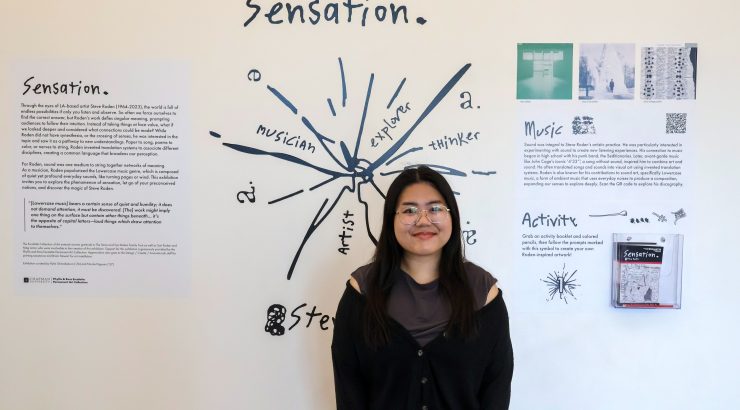
The last time you heard from me, I was a 2025 Escalette Summer Intern who recently finished working on Sensation, a solo exhibition of work by Steve Roden on the 3rd floor of Beckman Hall. However, my time with the Escalette Collection was not finished. As a senior art history major, a graduation requirement is to complete a year-long thesis project focusing on a specific artist, genre, work, or theme. When creating a list of topic options with my thesis advisor, I included Steve Roden because when I finished my summer internship there was still more I wished I had time to research. Little did I know that wish would come true, as I ended up choosing Steve Roden as my senior thesis topic and embarking on a journey that was incredibly insightful and heartwarming.
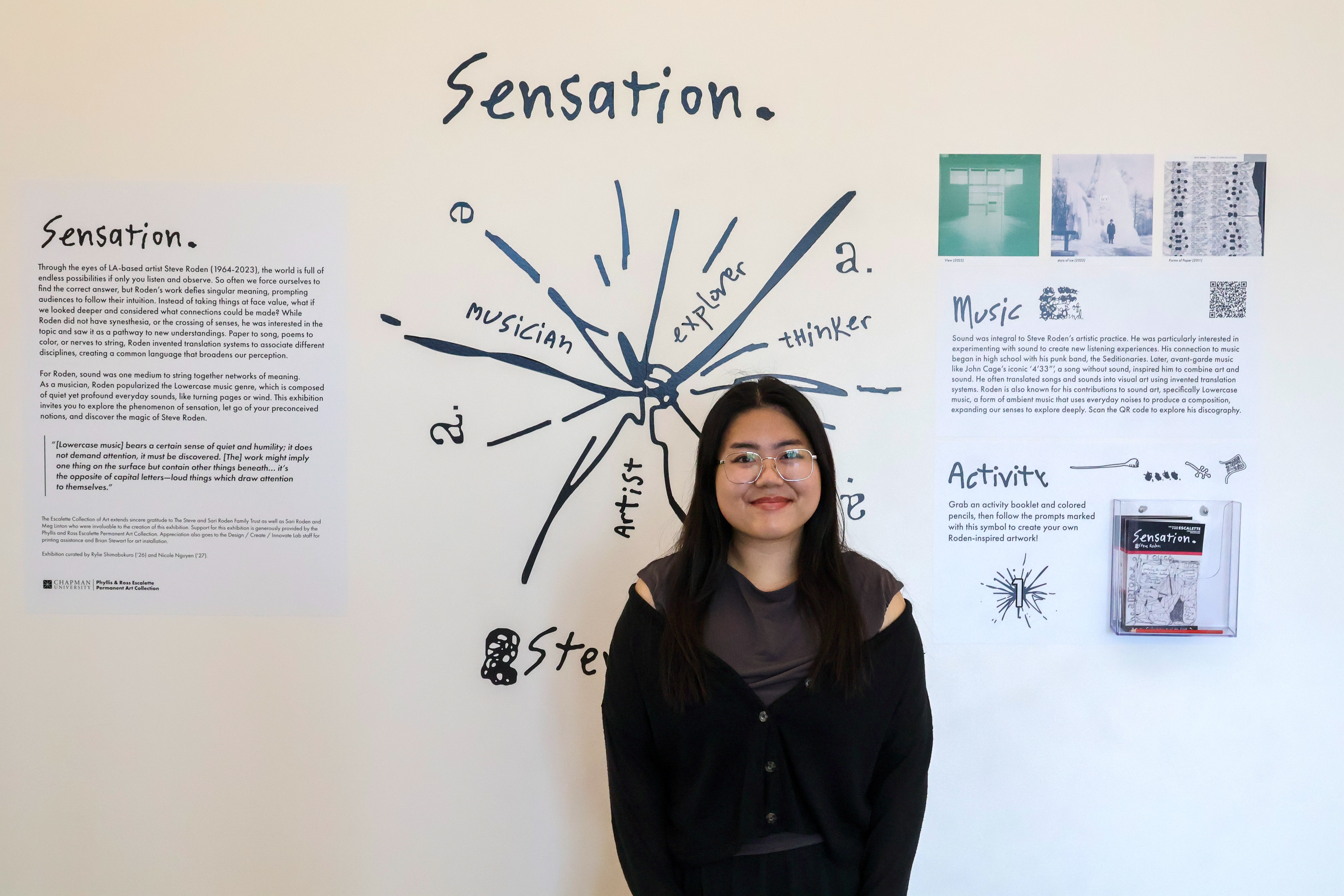
Rylie Shimabukuro standing in front of the title wall of Sensation, an exhibition she co-curated in Beckman Hall.
The pieces by Steve Roden that I mainly focused on for my senior thesis were the intimate series, a set of a dozen embroideries made in 1990. When researching over the summer, Roden noted that he was inspired by a children’s 1950s plastic anatomy kit. I ended up purchasing the kit on eBay, and it was a significant breakthrough. How he chose to recreate the shapes of the model pieces using thread and pulling sections of the instructions to write on the fabric was so interesting and reveals so much of how Roden’s brain worked. intimate was a trial-and-error project. He had no former embroidery skills, instead used the anatomy kit as a model to experiment and learn.
-
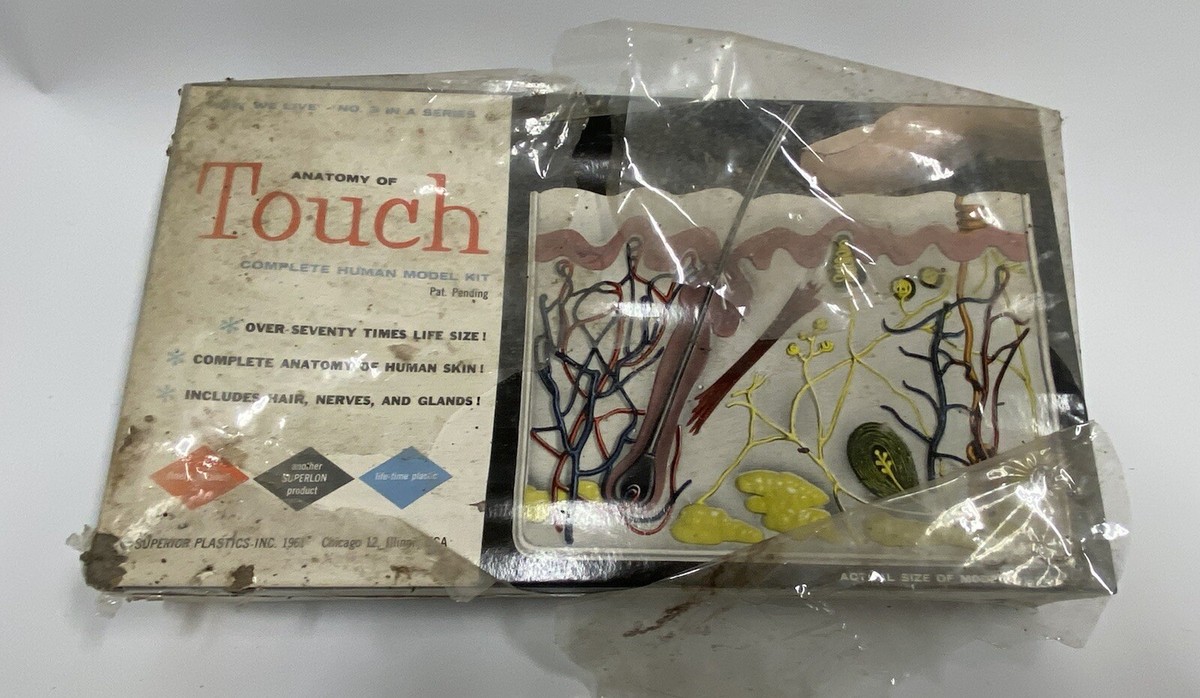
- 1950s Anatomy Kit, 1961
-
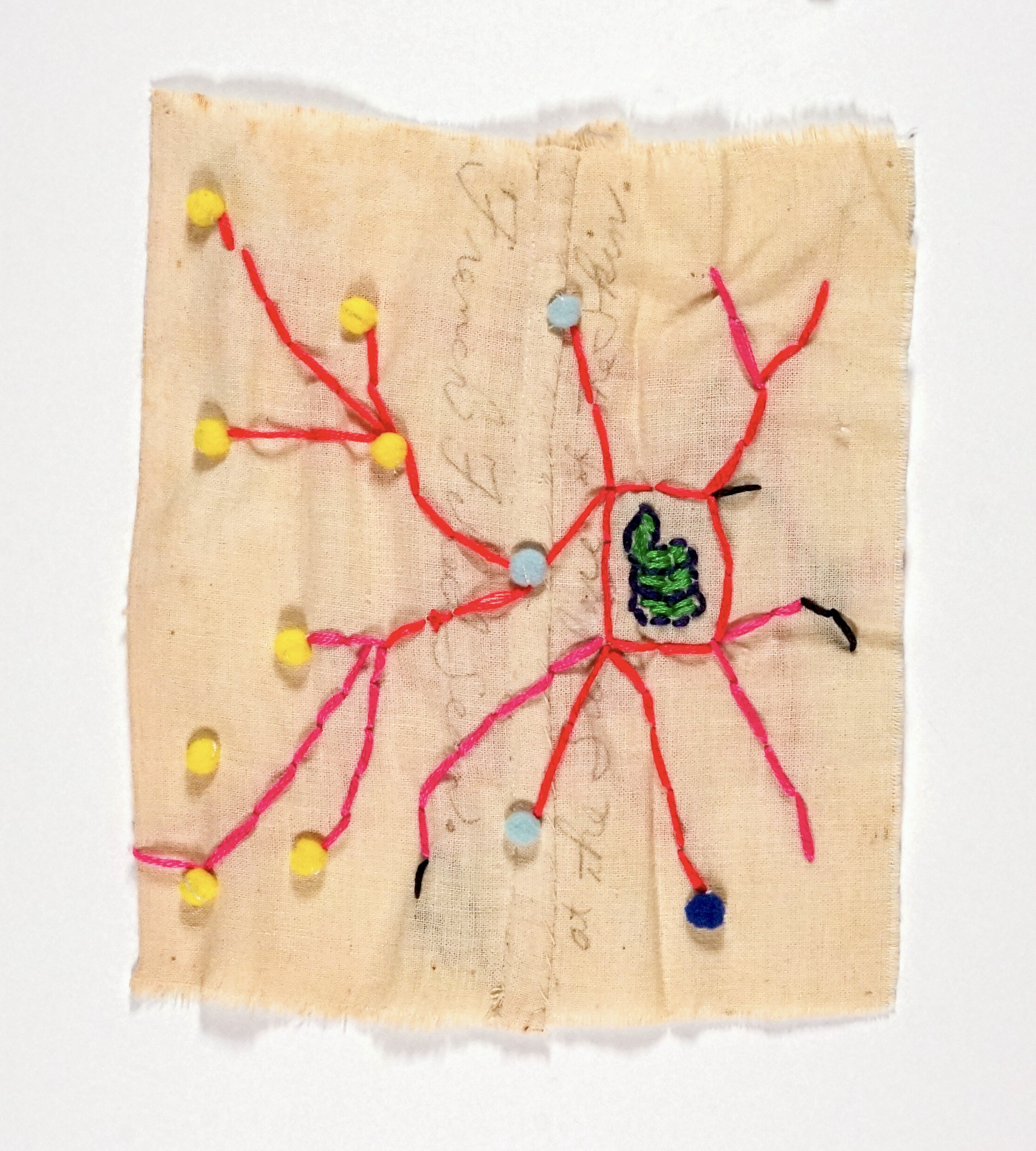
- Steve Roden, intimate, Found fabric, embroidery floss, pom poms, and pencil, 1990. Gift of the Steven and Sari Roden Family Trust.
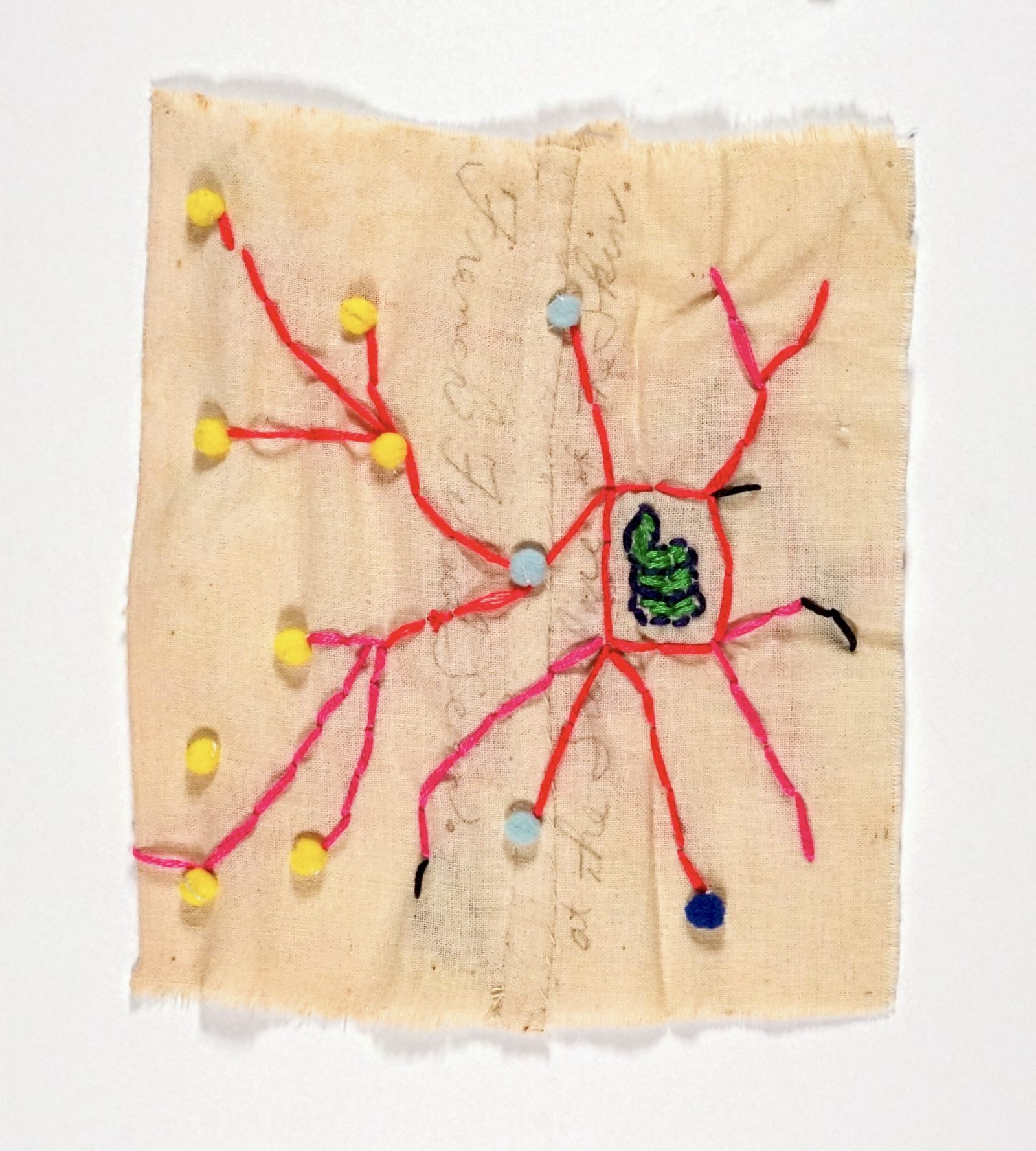
It was very helpful throughout the research process to have access to the Escalette Collection’s art and library resources, which became the foundation of this project. Because of this access, I was able to decode the direct correlations that Roden made between the anatomy of touch series, the intimate series, and the actual anatomy kit used to inform both these series. I am now at a point in the research where Roden is not actually in a league of his own, as I originally thought, but rather amongst other interesting artists like process artists who reject the traditions of making art and recognize the importance of creating and admiring the human experience.
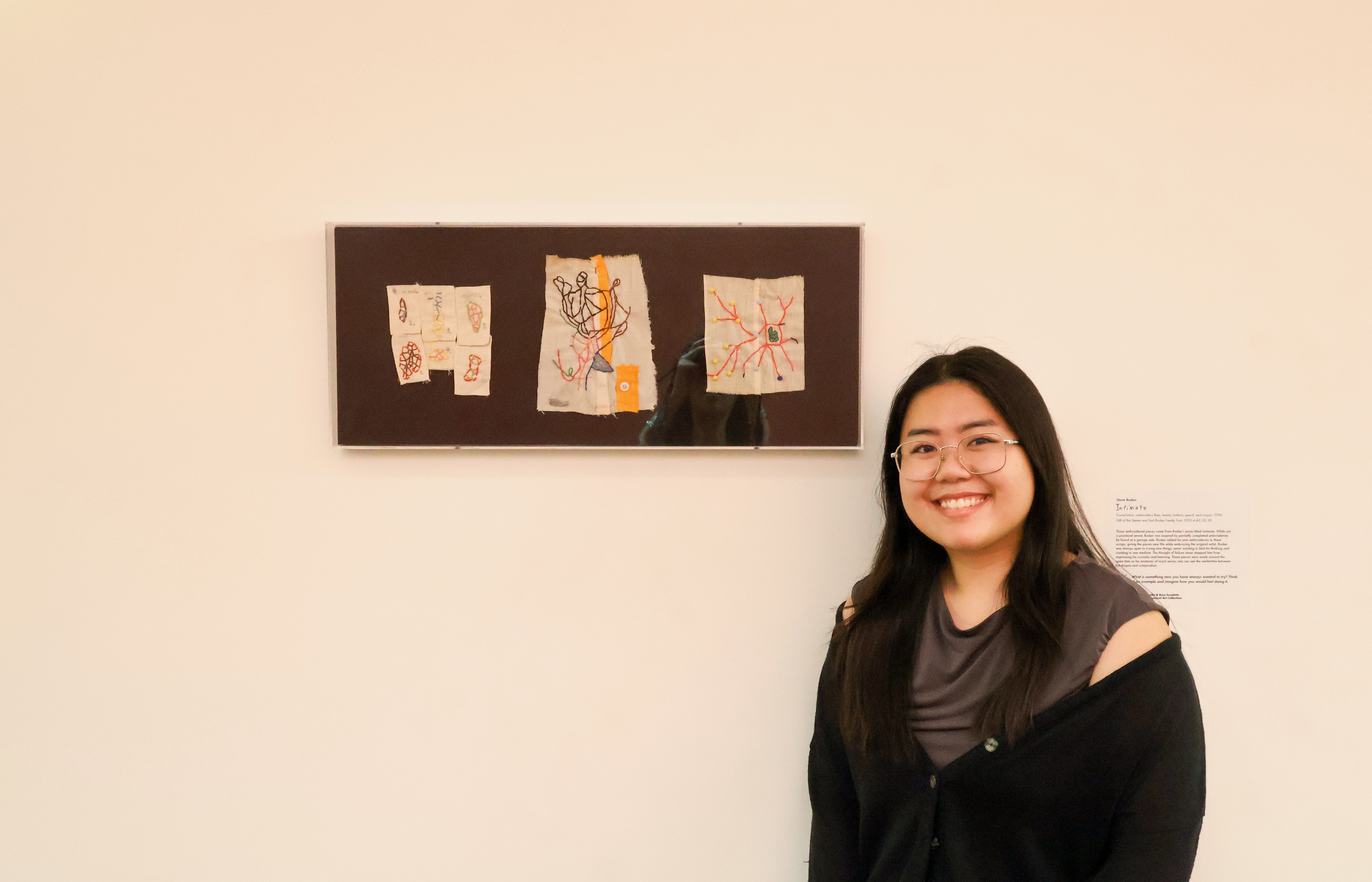
Rylie standing in front of the intimate series by Steve Roden.
At the end of junior year and entering senior year, I had absolutely no idea what I would spend a whole year researching and writing about. And now, almost a month before graduating, I have never felt more grateful to spend time with an artist who truly loved what he did. I am super grateful for the opportunity the Escalette Collection provided to learn about museum operations and to gain an utmost appreciation for art. Contemporary art was never my thing, but now, by working with the Escalette, I realized that it’s one of the few genres that convey that art is for everyone, a motto I will cherish and hopefully continue to embrace after college.
We invite you to explore all the works in the Escalette Collection by visiting our eMuseum.
Wilkinson College of Arts, Humanities, and Social Sciences is the proud home of the Phyllis and Ross Escalette Permanent Collection of Art. The Escalette Collection exists to inspire critical thinking, foster interdisciplinary discovery, and strengthen bonds with the community. Beyond its role in curating art in public spaces, the Escalette is a learning laboratory that offers diverse opportunities for student and engagement and research, and involvement with the wider community. The collection is free and open to the public to view.