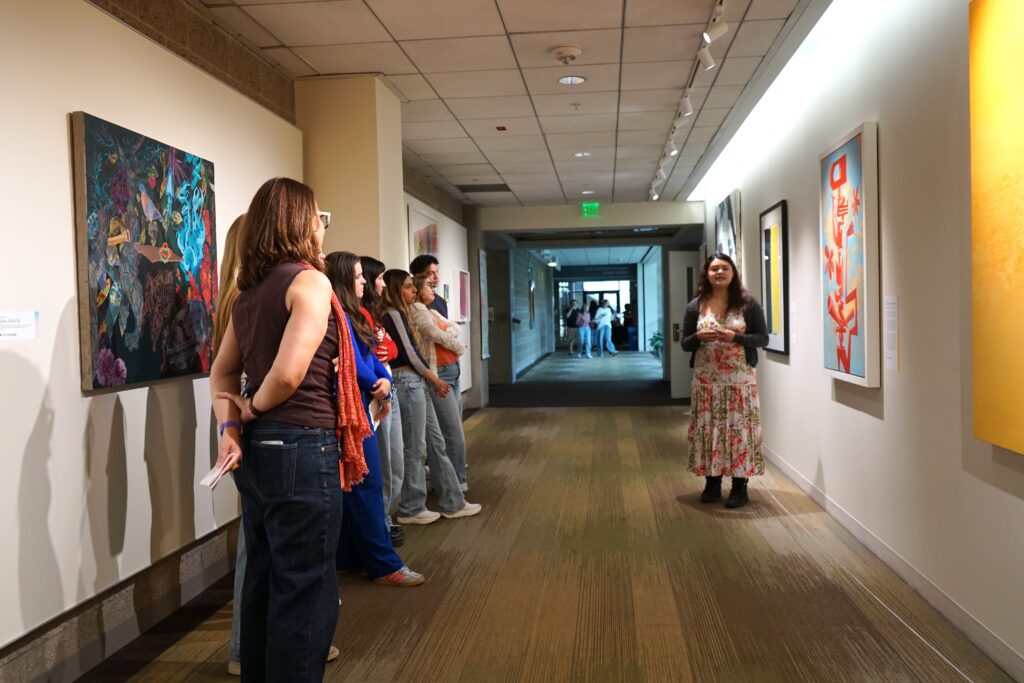
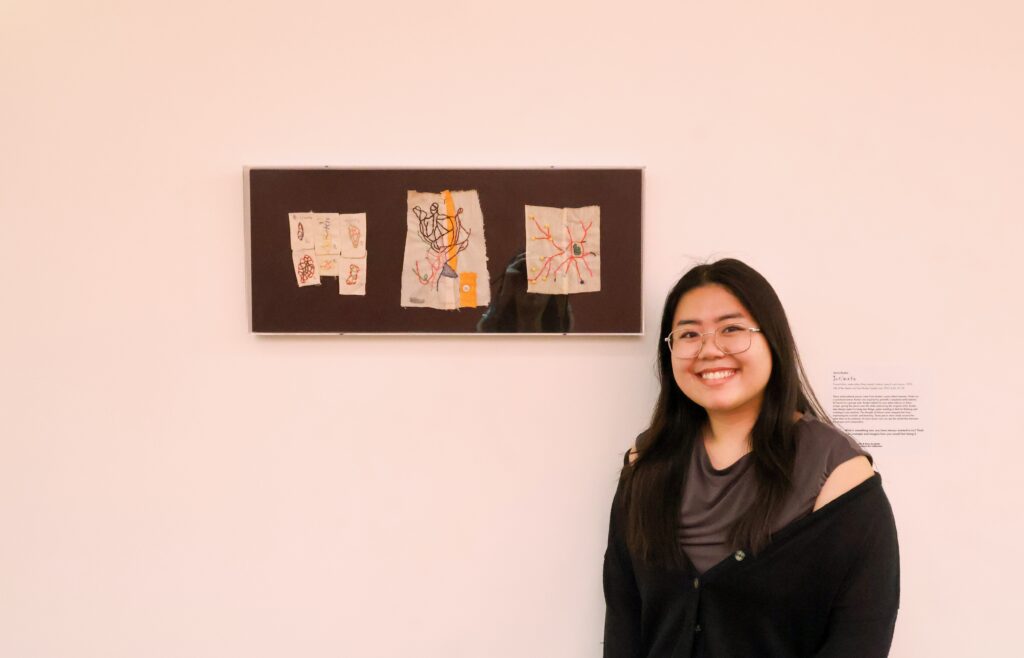
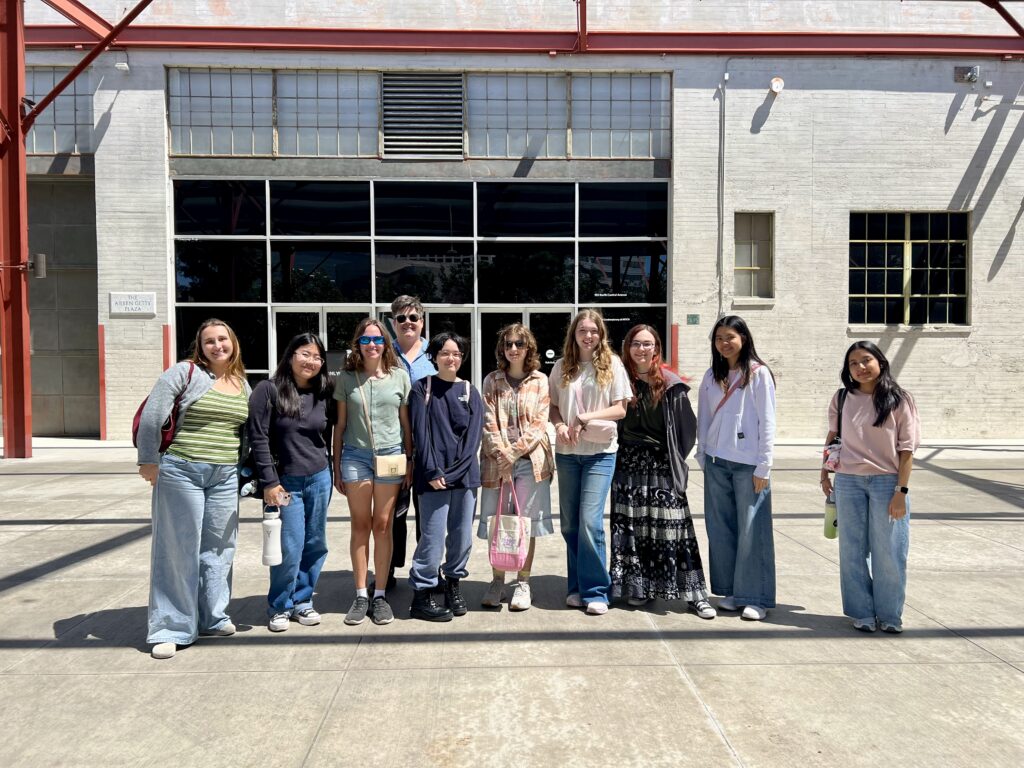
The Escalette Collection of Art invites you to visit Background/Foreground: New Acquisitions from the Phyllis and Ross Escalette Permanent Art Collection, a new exhibition located in the fourth-floor hallway of Beckman Hall. Background/Foreground was curated by students in Georgia Lassner’s Contemporary Gallery Practice class during the Spring 2026 semester. Working closely with the Escalette Collection, the students selected artworks, researched and wrote the accompanying didactics, and participated in the installation of the exhibition.
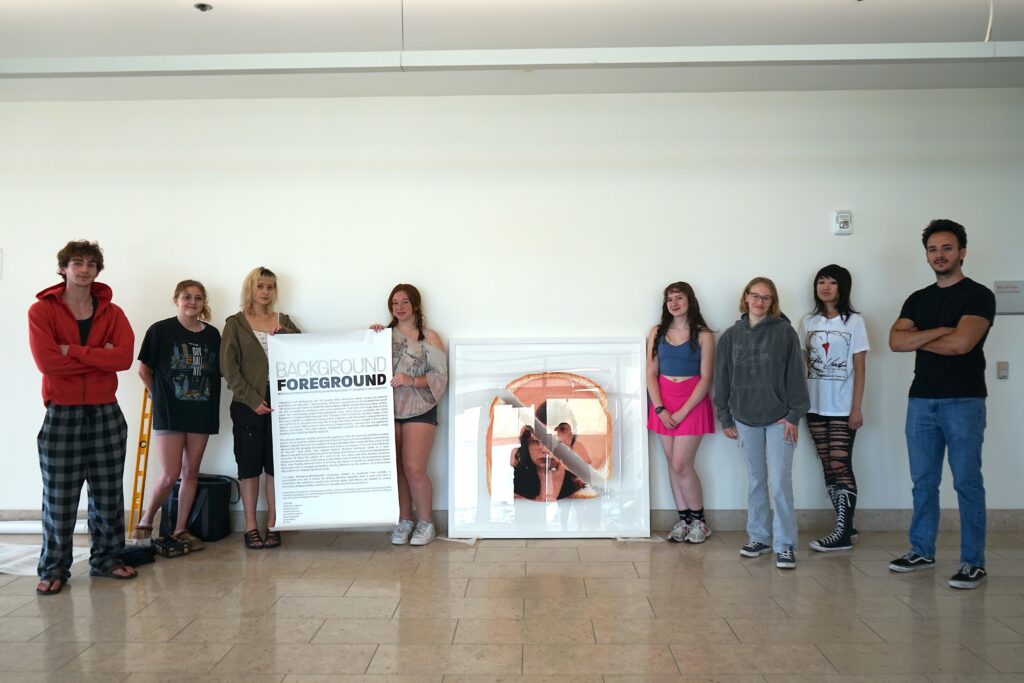
For the students, curating Background/Foreground provided an opportunity to apply the curatorial concepts they encountered in the classroom and through visits to galleries throughout the semester to an exhibition of their own creation. As Professor Lassner explains: “Collaborating with the Escalette gives Chapman students the kind of hands-on, real-world experience that can be elusive in undergraduate art programs, but is ultimately so rewarding. The basis of Contemporary Gallery Practice (Art 296) is observation—learning to immerse yourself in contemporary art through the act of looking (a fancy way of saying, lots and lots of field trips!). Working with the Escalette with the end-goal of organizing our own exhibition of contemporary art gave students a context for their observations, allowing them to engage in concepts that are outside the realm of studio work. Not only are they thinking about materials, but they are noticing the way interpretative content affects the visitor experience, they’re thinking about conceptual ways artworks work together and tell different stories, they’re thinking about accessibility, sightlines, conservation.”
“Collaborating with the Escalette gives Chapman students the kind of hands-on, real-world experience that can be elusive in undergraduate art programs, but is ultimately so rewarding.”
This kind of experiential learning also allows students to develop practical skills that can translate directly to their resumes and future professional opportunities. Lassner notes: “ At the end of the semester, all of my students can say, ‘I curated an exhibition,’ and then apply those skills to their future professional lives—critical thinking, of course, but also research, writing, editing, spatial planning, collaboration, you name it. I’m impressed with their work, and I’m proud to be a stepping stone towards whatever professional paths they choose to take, as artists or in one of the many fulfilling roles open to them in the field of art.”
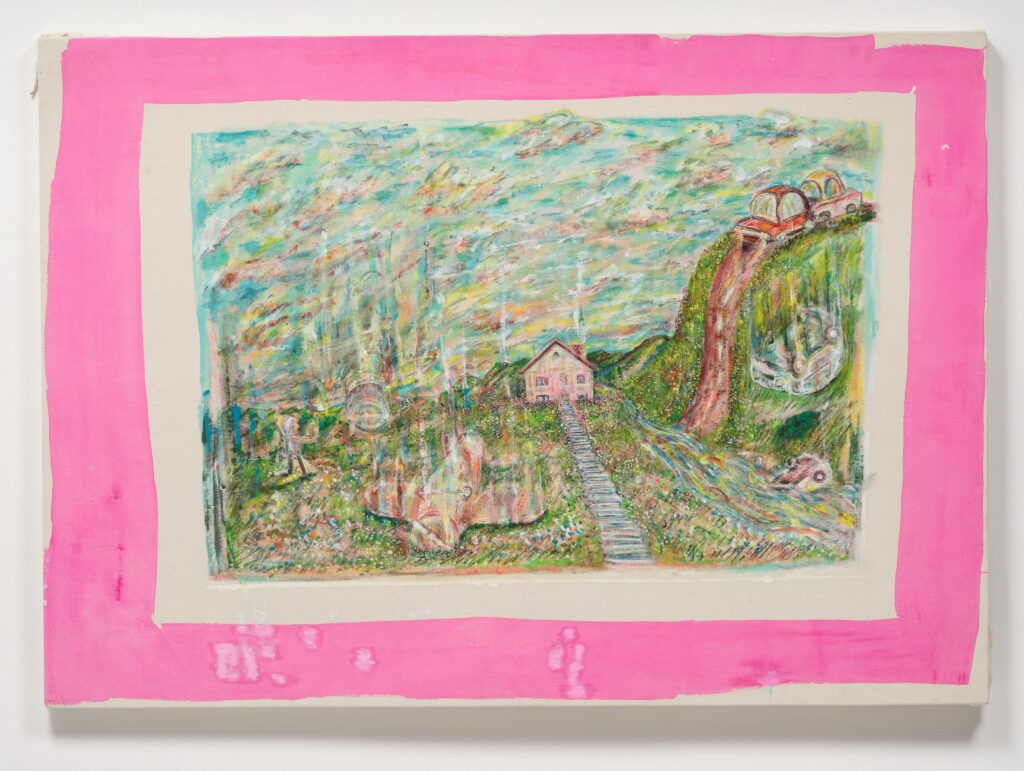
Background/Foreground features recent acquisitions to the Escalette Permanent Art Collection by California-based artists. The works span a range of media and ideas, yet are connected by their centering of voices and experiences that have historically been pushed aside. The exhibition’s title speaks to both the formal concept of depth of field and the broader question of what—and who—is given prominence in our society. As Lassner explains: “The title of our exhibition, Background/Foreground, refers to depth of field, but has the double meaning of considering what is valued in our society, and what is relegated to the back—to the shadows… Themes of marginalization, of using art to speak truth to power, emerged in our discussions, and one student just kind of blurted out, background foreground! And we all loved it. It’s an open-ended but legible concept that each student could bend to their point of view and incorporate into their own writing and thinking, using their own voice.”
The artists featured in Background/Foreground draw influence from California’s complex history, shaped by Indigenous displacement, migration, and Chicano/a/x cultural formation, and continue to explore experiences that shape everyday life in ways that can remain invisible. In these works, place is not simply a setting but an active force, shaping identity, memory, and lived experience across generations. The exhibition brings these perspectives to the foreground, including through portraits of people and communities whose stories have historically been overlooked.
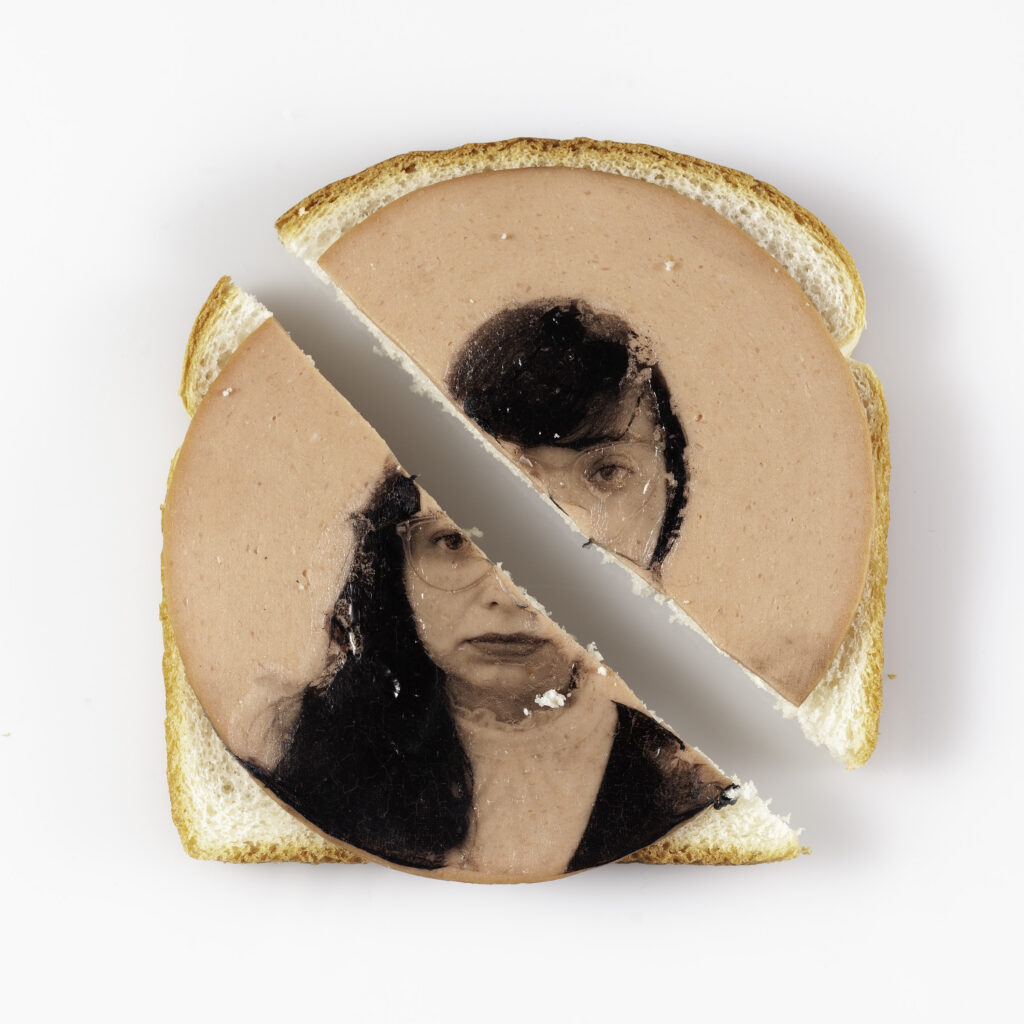
Reflecting on themes of strength and resilience present throughout many of the works, the students sought to incorporate a sense of power into their curatorial choices. Lassner describes one particularly bold decision: “The class chose to make a very bold curatorial statement by hanging Lorena Ochoa’s Bologña alone on the longest wall—you walk off the elevator and just see this giant piece of bologna with a woman’s face on it—it’s perplexing, engaging, haunting, and satirical all at the same time—a wonderful example of the power of the curatorial gesture.”
We invite you to explore all the works in the Escalette Collection by visiting our eMuseum.
Wilkinson College of Arts, Humanities, and Social Sciences is the proud home of the Phyllis and Ross Escalette Permanent Collection of Art. The Escalette Collection exists to inspire critical thinking, foster interdisciplinary discovery, and strengthen bonds with the community. Beyond its role in curating art in public spaces, the Escalette is a learning laboratory that offers diverse opportunities for student and engagement and research, and involvement with the wider community. The collection is free and open to the public to view.