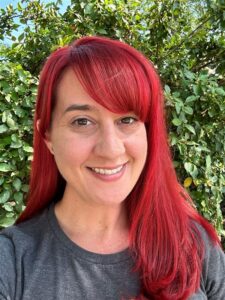
Janelle Favreau is the Master Electrician for the College of Performing Arts (CoPA) here at Chapman University. She oversees lighting, sound, and projection design for Theatre, Opera, and Dance across three buildings.
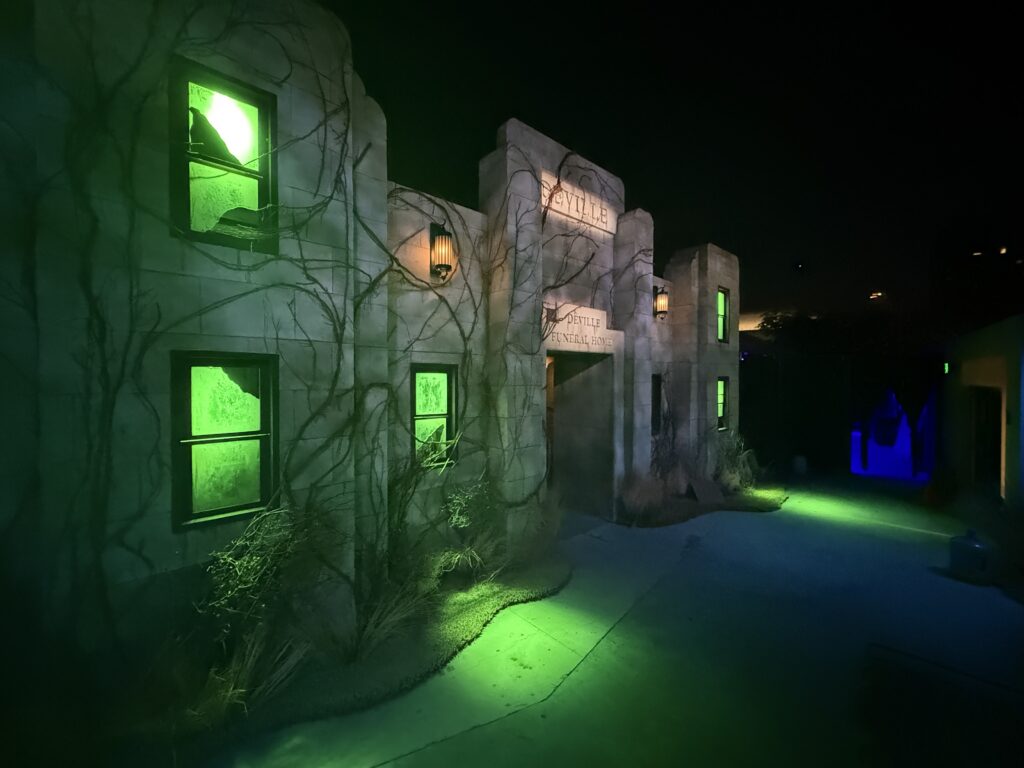
For Halloween Horror Nights 2026 at Universal Studios Hollywood, Janelle is a lighting designer for the Dead, Deader, Deadest house. We had the chance to chat with her about her background in the performing arts, passion for production design, and experience with Halloween Horror Nights.
This interview has been edited and condensed.
Industry Experience Brought to Chapman Students
With staff like you, who work in both the entertainment industry and CoPA productions, how does that impact our students?
Janelle Favreau: I think the impact I have on our students due to working both in education and in the professional world shows them that there is a world and a life after college. I can speak to all of the different things that I still get to learn and grow with.
“I have friends all over the industry and the world that I can call and help a student get an introduction for an internship or job.”
I help students learn safe practices and become better theatre makers after they leave us. Students can see that there are so many different avenues to this industry and that I am having a blast doing it.
Furthermore, they see that the community they are stepping into after graduation is changing for the better, becoming even more inviting, inclusive, and attainable. Being able to work with our students in a professional manner, but with a safety net, allows them to take that next step and grow into professional theatre makers while also having the freedom to learn, ask questions, and grow.
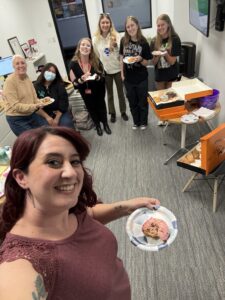 What’s it like to have students work with you to bring CoPA productions to life?
Working with students here at Chapman and within CoPA is the whole reason why I am here. I very much enjoy working in education and passing along all of my knowledge. There are even times I get to learn and grow from them. Students at this age are becoming adults. They want to be here. And I get to be a part of that by helping shape the next generation of theatre makers. This is a big deal to me. Getting to see them create things and learn new skills makes working at Chapman so special.
My favorite thing to watch is when a student fully grasps a concept, and you can see in their face the excitement that it actually worked! But also, that they want to keep learning and keep trying to get that skill down. I get to be a part of an amazing section in our students’ lives, and it honestly makes all of this worth it. Every single time.
What advice would you give to Chapman students who are interested in pursuing a career in lighting, design, or technical production?
 My advice to students pursuing a career in technical theatre is to be aware of the people they work with and around. These people could be the reason why you get that job. Being a great collaborator is huge! Theatre runs on a community of people, and that community can be quite small. If you have a good attitude on one show, that can propel you to get the next great opportunity because someone has spoken highly of you to their manager.
For example, I have been hired for several jobs not because of my resume, but because someone has worked with me previously and wanted to work with me again due to my attitude and my abilities. It’s all about being kind, hardworking, and inclusive within the theatre community. As long as you are willing to keep educating yourself, learn to ask for help, and strive to stay open to new opportunities, you can make anything happen.
Background in Entertainment
How did you first get introduced to working in theme parks and lighting design?
My first job was working as an usher at Knott’s Berry Farm. As my time went on, I learned more and more about the technicians running the backstage aspect of all the shows. Eventually, I transferred departments and became a Day Operations Technician at Knott’s, where I worked for 10 years.
While in college, I also found Stage Management and later, Lighting Design. I assisted the then-department chair on a show for lighting, and I was hooked! It was amazing to learn how to create time, place, and emotion with color and light. I learned how to be a good electrician, which led to being a Master Electrician.
I was working all over Southern California when I found education. I worked for a few performing arts high schools and colleges, including Pomona College in Claremont, California.
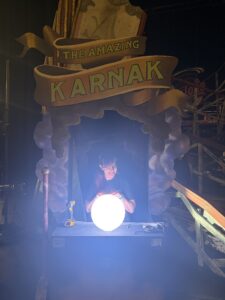
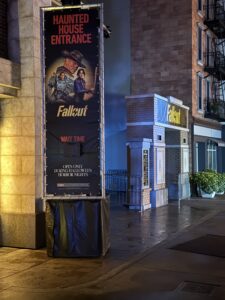
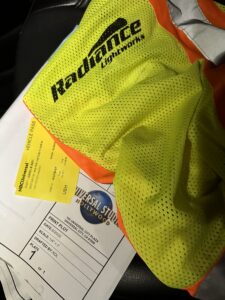
In January of 2023, I came to Chapman University for a new adventure and a bigger department. I also recently completed my eighth year with Universal Studios and am officially a Lighting Designer for the house Dead, Deader, Deadest at Halloween Horror Nights 2026.
 Congratulations on this year’s Halloween Horror Nights (HHN)! What are the similarities and differences between designing lighting for a Halloween Horror Nights house versus a live theatrical production?
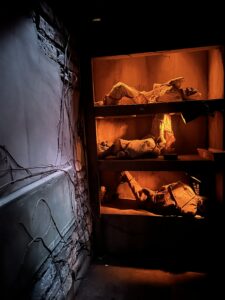
The similarities between designing lighting for HHN versus a live theatrical production are in the details of the design itself. HHN requires a plot and paperwork just like any production. It has a timeline and a crew. HHN requires a focus and programming time. We have onset practicals [physical, real-world special effects and light fixtures built directly into the set], LED tape, and a story to tell. Each room is like a new scene in a play or musical. There are effects and movement to draw the audience’s eye as they come and experience the environment we have created.
The differences between HHN and a live theatrical production are in the broader strokes. The audience doesn’t come and sit in one place. So I need to help push them to walk forward and learn more and take in the scare. In a theatrical production, we want to see the full face of the actor and what they are saying, singing, or doing. For HHN, I need to make it shadowy and divisive. We don’t want to see the full form of the actor.
 Another major difference is how thighs [fixtures mounted on the sides of the stage, aimed at a performer’s mid-body and upper legs] are programmed. The house [the seating area for the audience] needs to run for hours without fail. It’s the same set of lights in each room affecting at the same speed and intensity from 5:30 p.m. to 2 a.m., five days a week, for two months. There are the regular burn outs and such. But we try to make things as simple as possible so that fewer things fail. We also have to contend with the elements, especially the rain.
What first drew you to the performing arts?
I have been in the performing arts for as long as I can remember. My mother put me in dance classes when I was a child and I never really turned back. I was in choir in elementary school, band in middle school, and then in color guard and jazz band in high school. I had my first job at Knott’s Berry Farm as an usher. While in college, I changed majors from Aerospace Engineering to Theatre. I realized at that point that I knew I would do some kind of theatre for my chosen career for the rest of my life. And I have been here ever since. Being able to be so creative in different ways really brings me so much joy. I have had some of my most fun and memorable moments while being in the performing arts and live entertainment.
What excites you about lighting design?
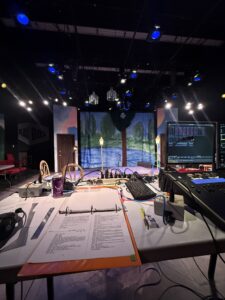 Lighting Design can really change the momentum and the understanding of the emotion and story on stage. While lighting is not the complete storyteller, it is for sure one of the bigger parts of telling that story. Finding the right gobo [a stenciled or etched plate placed inside or in front of a lighting fixture to project a specific shape, pattern, texture, or logo onto a surface], learning how to use color and saturation to shape mood and story, and putting all the pieces together is the exciting, creative process I get to discover. Then getting into the room and being a part of the production team to see it all come together is thrilling.
“Being able to move an audience in emotion while playing with lighting and color brings me back to it every single time.”
Have there been any CoPA productions in recent years that you are particularly proud of?

The one CoPA production that I worked on that I am the most proud of would be Ride the Cyclone in February 2025. The sign took so many hours to create and get it to fully work. There was also LED tape all over the set, a 3-circuit chase in the false proscenium, and so many moving parts, while also being in the Musco Center, the world-class performing arts center on Chapman’s campus.
During the build and load in for this show, my father, Gary, had passed. There were so many times that I wanted to call and tell him about this amazing work that I was doing and how complicated it all was. But the day I got the sign to work completely, I somehow knew that he could see it wherever he was. I knew that he would have been so proud of me and would have been so excited to have seen it. This show also really showed how the Production Management Team really knows how to support and uplift everyone around us. We worked very closely with the team from Musco, which was also an amazing experience. I’m very proud of the work that we did for that show.
To learn more about Chapman’s College of Performing Arts, for which Janelle is the Master Electrician, visit our website.