$1.7 Million Awarded To Cintia Citterio To Unravel Hypothyroidism Research
November 10, 2025
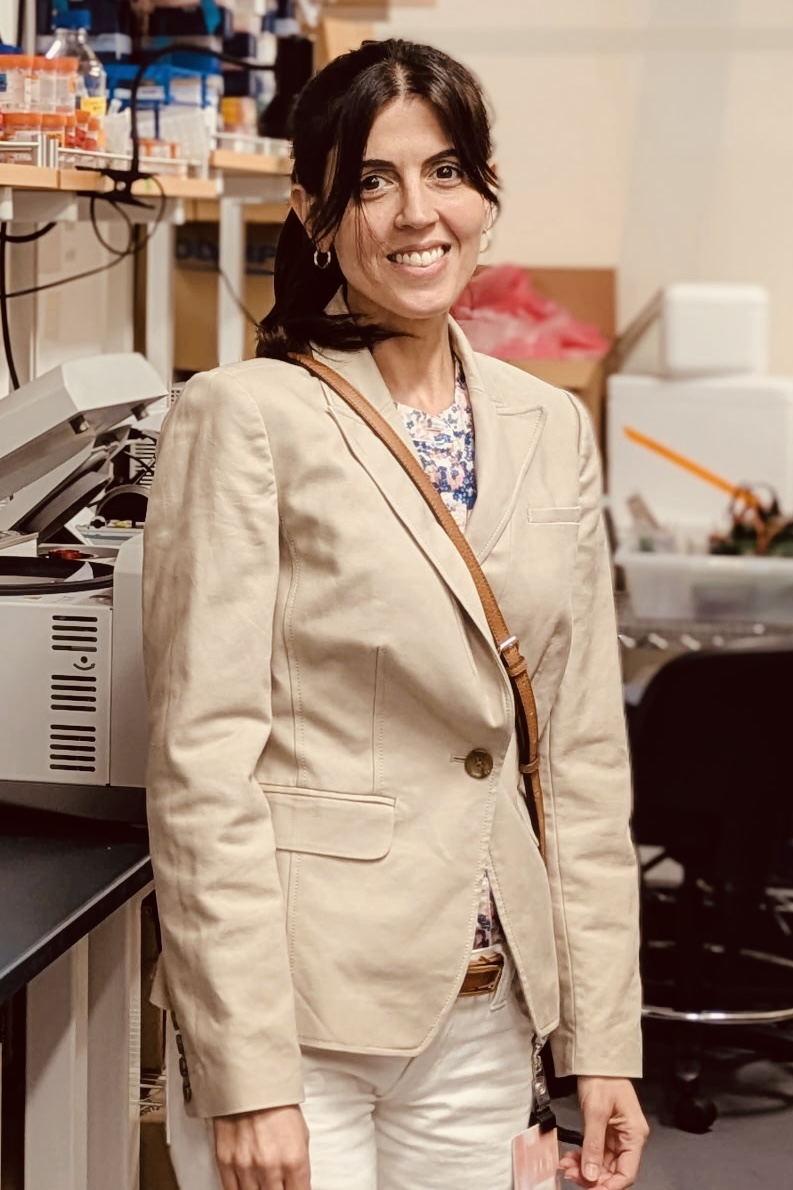
The National Institute of Diabetes and Digestive and Kidney Diseases (NIDDK) has awarded Cintia Citterio, Ph.D., a $1.7 million, five-year R01 grant as the sole Principal Investigator.
Citterio joined CUSP in August of 2023 as an Assistant Professor funded by a K01 award from the NIDDK. This major award builds on the success of that work, building the Citterio lab’s unique model of thyroid dysfunction, and will allow them to further dissect the relative importance of two key thyroid hormones in important aspects of physiology, including thyroid disease, energy homeostasis, thermal control, and weight regulation.
Her study, “Dissecting the relative roles of thyroid hormones T3 and T4 in energy homeostasis and thyroid growth,” will contribute to the understanding of how two thyroid hormones, triiodothyronine (T3) and thyroxine (T4), each contribute to metabolism and thermogenesis. Thyroid hormone deficiency, or hypothyroidism, affects 5–10% of the population and is often characterized by goiter, reduced energy expenditure, and weight gain.
Although T4 treatment normalizes TSH in hypothyroid patients, it often fails to restore energy expenditure, and weight gain persists. T3 treatment aids weight loss but results in wide fluctuations in blood T3 levels. T4 and T3 are synthesized in the thyroid gland at two opposite ends of the protein known as thyroglobulin under TSH regulation.
Leveraging this biology, Citterio’s laboratory has genetically engineered experimental models that produce normal levels of T3 but negligible levels of T4, allowing for the investigation of a “T3-only” hormonal environment and its metabolic consequences. In this R01 project, a novel model will be used (along with other models) to study how the body utilizes T3 when T4 is nearly absent, including its impact on the body’s ability to produce heat, utilize energy, regulate body weight, and control thyroid gland mass.
Collectively, the findings from this project are clinically relevant for improving the treatment of human hypothyroidism and goiter, as well as for targeting pathways therapeutically that promote weight loss.