This past May, Chapman University recognized Schmid College faculty members for their scholarship, teaching, service, and research excellence. Here is what to know about the Summer 2026 Faculty Awards.
Wang-Fradkin Professorships
The Wang-Fradkin Professorship is one of Chapman University’s highest honors for faculty members, recognizing professors from Schmid and Wilkinson Colleges for scholarship, teaching, and service. The 2026 Wang-Fradkin Professorships for Schmid College recognized Dr. Richelle Tanner and Dr. Gregory Goldsmith, awarding each research funding along with the professorship.
Dr. Tanner is a professor of environmental science and policy and director of the environmental science program at Schmid. She also leads the Socio-Ecological Adaptation and Climate Resilience (SEACR) Research Lab, and recently returned from conducting an ecological survey of eelgrass populations from San Diego to up north in the San Juan Islands of Washington State. She is working with indigenous communities to learn how traditional knowledge can help preserve eelgrass, a type of sea grass that protects coastlines from erosion. Dr. Tanner said that her Wang-Fradkin Professorship represents how important community-based, environmental justice research is to the university.
“I have always felt that I didn’t want to do research in academia the traditional way. There are a lot of ethical values and community based values that I think are really important, that traditionally don’t jive very well with how academics rewards faculty members. So it was really a treat to see my work rewarded in this way,” says Dr. Tanner.
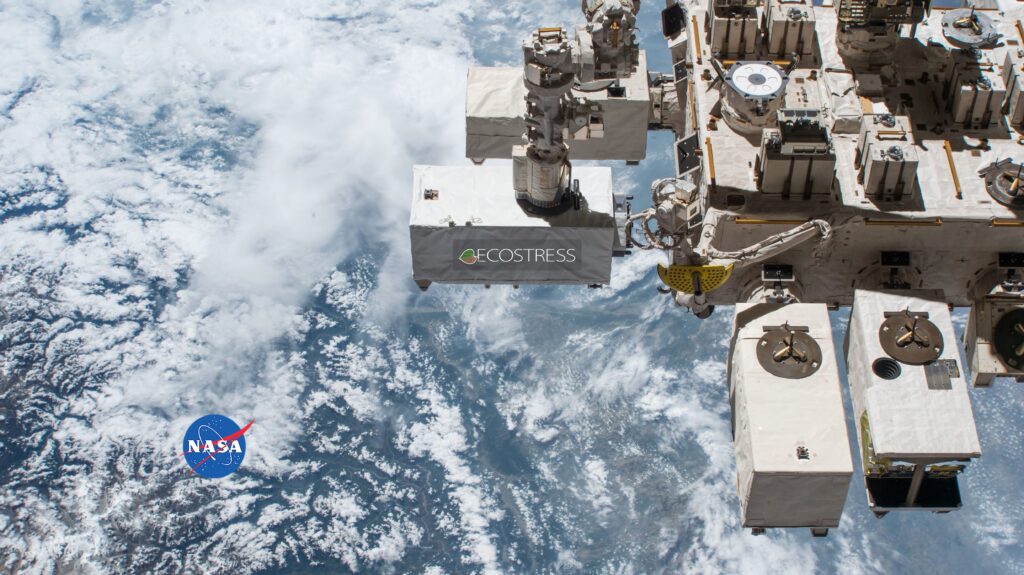
Dr. Goldsmith is a professor of biology. His current research focuses on using satellites and space-based technology to study Earth’s ecology and biodiversity from orbit. Dr. Goldsmith says that the grant from his Wang-Fradkin Professorship will support research on ways to remove carbon dioxide from the atmosphere, as well as continued study of the effects of climate change on global ecosystems.
“It is a privilege to work with exceptional colleagues both within Schmid College of Science and Technology and across the university. I feel honored by their recognition of our research group,” says Dr. Goldsmith.
Research and Creative Activities Course Grants
Schmid College awarded Dr. Yiran “Ella” Wang a $10,000 grant for the creation of a new chemistry elective course called “CHEM 329: Structural Chemistry.” Dr. Wang is a professor of chemistry and an inorganic chemist, who wanted to give students a taste of the research experience in a lower-stakes classroom environment.
CHEM 329 focuses on synthesizing new materials in the lab, and determining their structures using advanced equipment and techniques that students might not have encountered in other courses. The course will culminate in a hands-on project where students will attempt to synthesize a brand new chemical material, testing their hypotheses, synthesis plans, skills with synthesis techniques, and ability to determine the structure of their chemical sample using what they’ve learned.
“This is a fun thing about the research. You never know what will happen. You might want to synthesize one thing and in the end you are actually synthesizing something totally different. But no matter what, it is a good result,” says Dr. Wang.
Pedagogical Innovation & Co-Teaching Grants
Dr. Samuel Stein is the recipient of two grant awards this year: one for pedagogical innovation and one for co-teaching, alongside Dr. Kyle Harp-Rushing of Wilkinson College. Both are professors of environmental science and policy, a degree program that combines disciplines from both Schmid and Wilkinson.
The Pedagogical Innovation Grant recognizes Dr. Stein’s “Living Laboratory,” a model for field-based research learning. The lab changes with the socio-ecological issues it studies, and with the needs of its students and community partners. The lab has multiple field sites used by several environmental science classes designed to mimic professional fieldwork. Dr. Stein says that his students consistently report that they feel more engaged when outside of the classroom, “touching grass.” This grant will be used to fund new field equipment and monitoring, as well as trips for students to visit historical archives and gain experience with archival research.
The Co-Teaching Award recognizes a new collaborative course that Dr. Stein and Dr. Harp-Rushing have been developing using the Living Laboratory model. The course is called “Mixed Methods in Environmental Statistics.” Because environmental science and policy is an interdisciplinary major, this course aims to introduce students to the different types of statistical methods and data required to do environmental research. Students will spend time at field sites, including Living Laboratory’s location in the Santiago Valley, and sites around the Inland Empire. All data used in the class will come from those sites, and students will develop their own research projects in the Santa Ana River Watershed for the final project.
“I’ve been very invested in this Living Lab model, and novel methods for experiential, student-centered learning in general, for years. I’ve been touched by the positive response I’ve had from students, colleagues, and our community partners to our pilot efforts last year. It’s very validating that the Faculty Development Council and the campus community also see the potential in this model, and I’m excited to see how we can keep sustainably growing it over the years to come,” says Dr. Stein.
On Campus Conference Awards
The 2026 On-Campus Conference Award went to Dr. Seung Hee Kim, a data science professor and meteorologist, alongside his colleague Dr. Zhen Cong at Crean College, for their work bringing the International Workshop on Aviation Meteorology to Schmid College in June 2026.
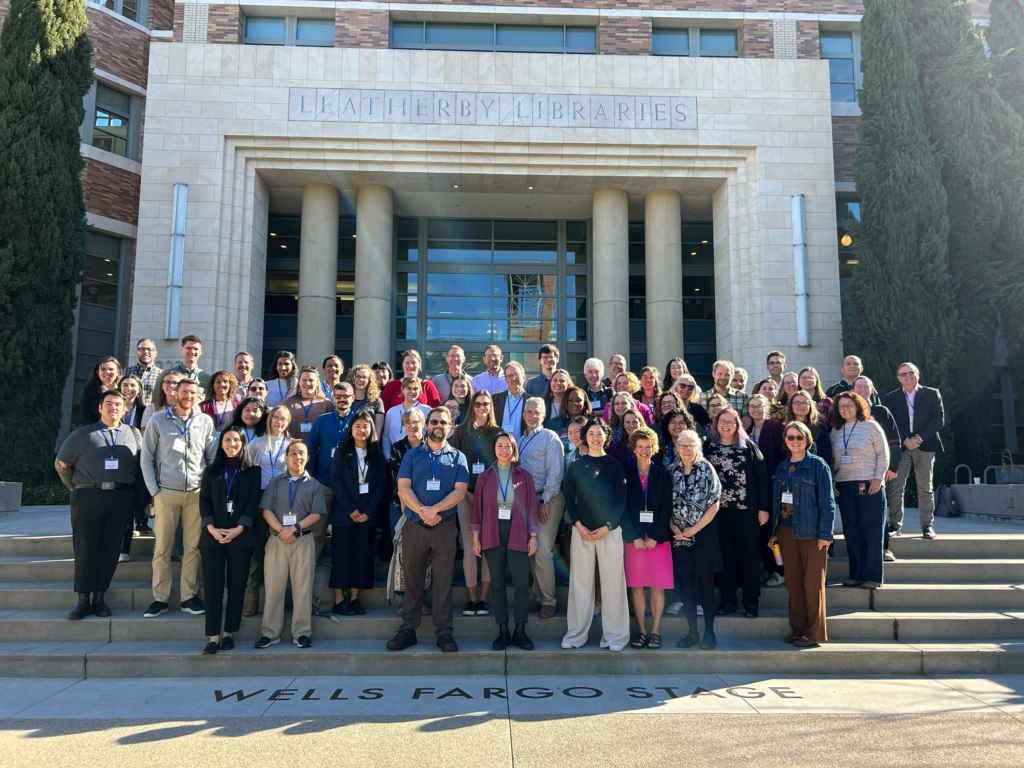
The workshop brought together 40 experts from various universities around the world, including the National Ocean and Atmospheric Administration and the Air Force. The attendees discussed weather phenomena that impact air travel, such as turbulence and thunderstorms, and presented their research on improving forecasting and aerial navigation. The workshop occurs annually, but this was the first time Schmid College has hosted, thanks to the conference award funding, and Dr. Kim‘s volunteer efforts.
Dr. Kim says that the award helped him introduce Chapman to the international meteorology community, as well as paying to house visiting scientists.
“I was really excited, not because of the funding, but because I could introduce Chapman to these international community members. Most people don’t know about Chapman. So when these 40 people come to Chapman campus and see the beautiful campus and nice facilities, they will spread the word that Chapman is a leading institute on aviation meteorology,” says Dr. Kim.
SOARS Awards
Three Schmid professors, Dr. Gennady Verkhivker, Dr. Melissa Rowland-Goldsmith, and Dr. Joshua Fisher, were awarded the “Supporting Open Access Research and Scholarship” Award (SOARS) this year. The SOARS Award is a grant provided through the Leatherby Libraries, supporting faculty members in publishing their papers to open access journals.
Dr. Rowland-Goldsmith, a biological sciences professor, used her SOARS award to publish a class exercise she developed for a cancer biology class. She says that she chose CourseSource, an open-access journal for science educators to share teaching resources, because she wanted other professors to be able to use what she had learned freely.
“I used CourseSource myself when I was developing my cancer biology class. I thought, why reinvent the wheel? So if I created this resource for somebody who’s teaching an upper division of molecular biology, they now can go through CourseSource and say, ‘this is perfect.’ They can take parts of my activity, whatever’s best for them,” says Dr. Rowland-Goldsmith
Dr. Fisher, an environmental science professor, applied for the SOARS award , allowing his work to continue uninterrupted when research funding was temporarily halted nationwide. He says that publishing open-access is important to him for a few reasons:
“The selfless reason is like really so everyone can access the science. But I also want people to read my science, specifically, and be able to cite it,” says Dr. Fisher.
Faculty Excellence, Teaching and Mentorship Awards
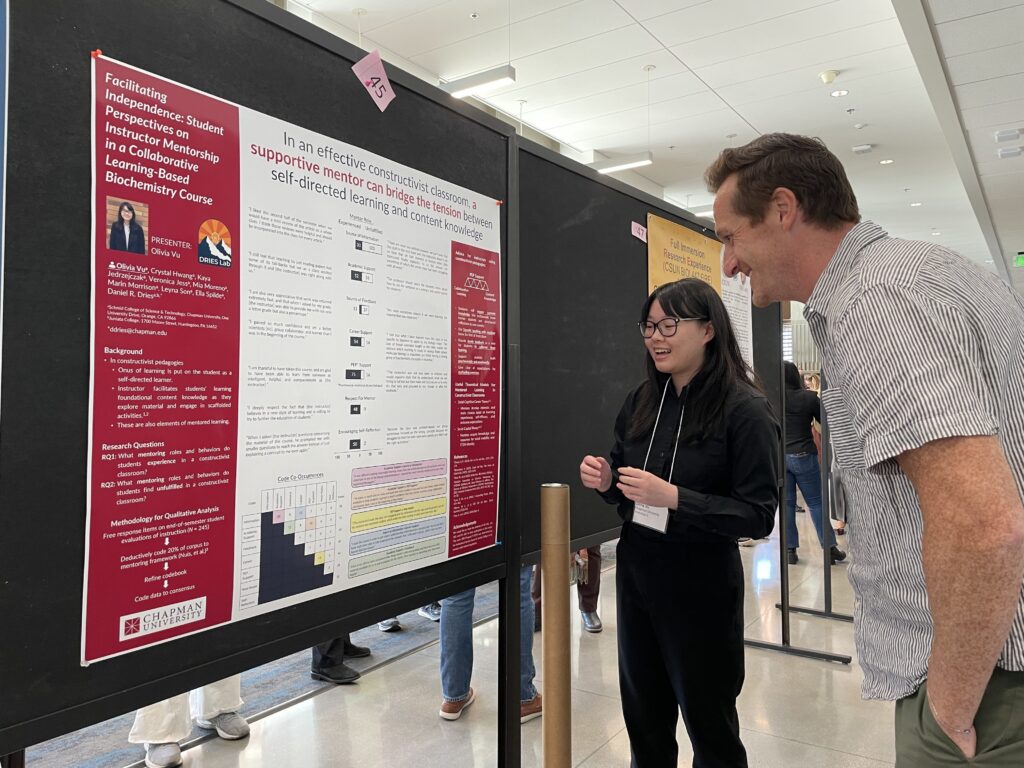
Chapman presented Dr. Jeremy Hsu with a Teaching and Mentorship award. Dr. Hsu is a professor of biological sciences and evolutionary geneticist, and frequently studies factors impacting student learning. Unit Faculty Excellence Awards were awarded to Schmid College professors Dr. Jill Dunham, Professor of Mathematics, Dr. Richelle Tanner, Professor of Environmental Science and Policy, and Dr. Cassandra Zalman, Professor of Biological Sciences.
Congratulations to our Schmid College faculty, who continue to innovate, discover, mentor and lead in their fields!