 What can literature teach us about the human mind? For Dr. Richard Ruppel (English and Peace and Justice Studies), answering that question became a journey that spanned more than a decade.
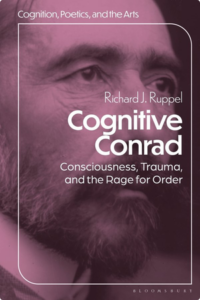
In 2013, a mentor of Dr. Ruppel asked him to write a conference paper exploring the relationship between Joseph Conrad and neuroscience. That was followed by an editor asking him to expand his research into a book. He had just finished a book on Conrad’s politics and was ready to move his focus to other writers, so he went in a different direction, researching iconic novels, such as George Eliot’s Middlemarch and Bram Stoker’s Dracula, only to find himself refocusing the project and bringing his research together into the book readers can explore today, Cognitive Conrad: Consciousness, Trauma, and the Rage for Order.
This book celebrates Conrad through the lens of cognitive literary studies and historicism, demonstrating how literature can offer a deeper understanding of human thought, behavior, and experience.
“As a humanist, I’m most interested in asserting the power of the arts and humanities to supplement and correct the sciences, which most often look to generalize and categorize. I argue that one key role of the arts is to highlight the anomalous, to champion the peculiar,” he said.
Having written several books about Conrad, this latest project represents another opportunity to explore the novelist’s work from a different perspective. The book is intended for readers interested in modernist fiction, as well as anyone curious about how literature and science can inform one another. He hopes a few neuroscientists might pick it up to see how a humanist interprets and adapts scientific concepts and findings.
“I want to demonstrate the power of cognitive literary studies to open texts to new readings, and I hope to demonstrate the vitality of the humanities in a time when the humanities tend to be denigrated.”
By bringing cognitive literary studies into the conversation, Dr. Ruppel hopes readers will discover new ways of interpreting familiar texts and gain a greater appreciation for the complexity of human experience.
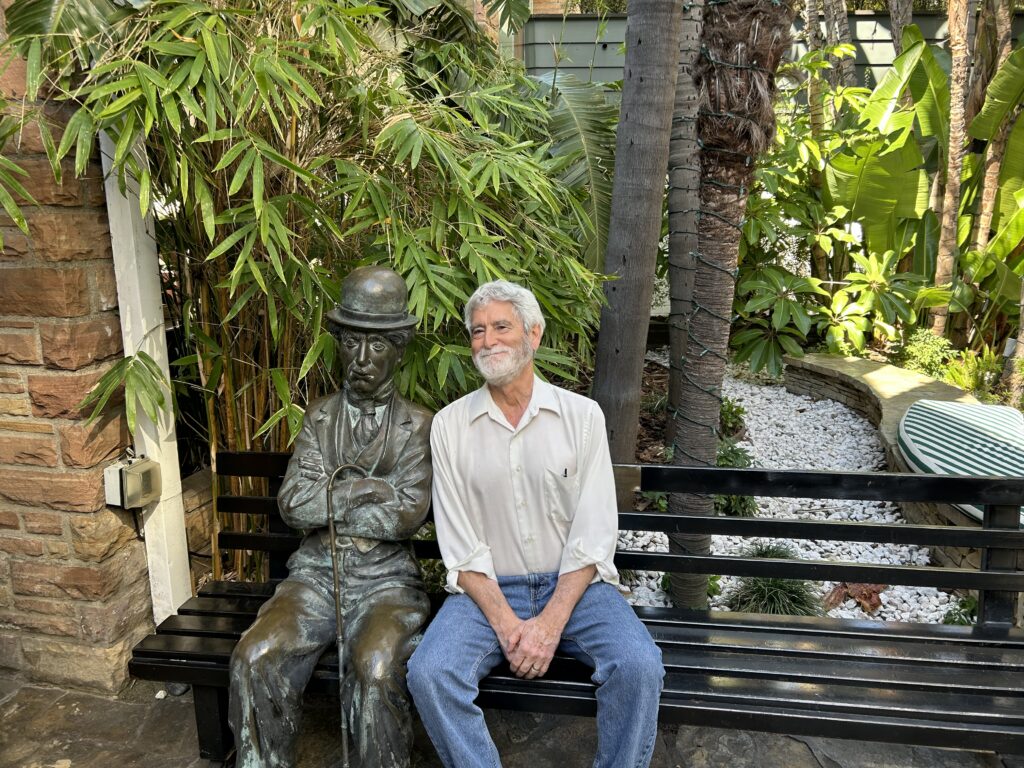
(Photo header: Dr. Richard Ruppel (English and Peace and Justice Studies). Photo courtesy of Ruppel.)