Inside Chapman’s Film Music Program Students Share Their Creative Collaborations and Recording Studio Experiences
May 18, 2026
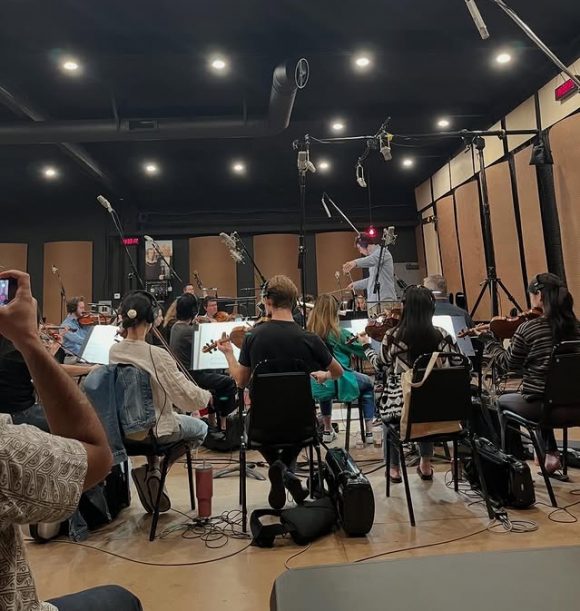
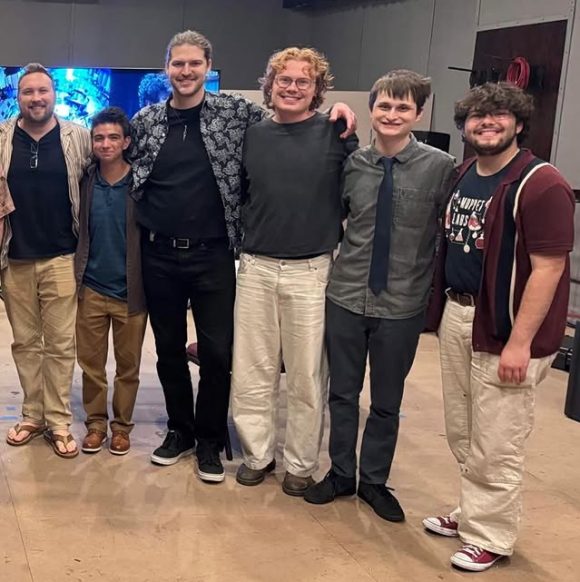
Over the course of the semester, students in David Volpe’s Film Music Composition III course had the incredible opportunity to compose and record original scores for film. The newly composed pieces were created for senior thesis films by Dodge College students. The score recordings were played by professional, world-class musicians and took place at Hollywood Scoring, a cutting-edge music production company and recording facility in Los Angeles. Here, our students got a glimpse into the everyday activities of working professionals in the music industry.
We got to ask a few students about their experience with the film composition course, the recording studio process, and Chapman as a whole.
These interviews have been edited and condensed.
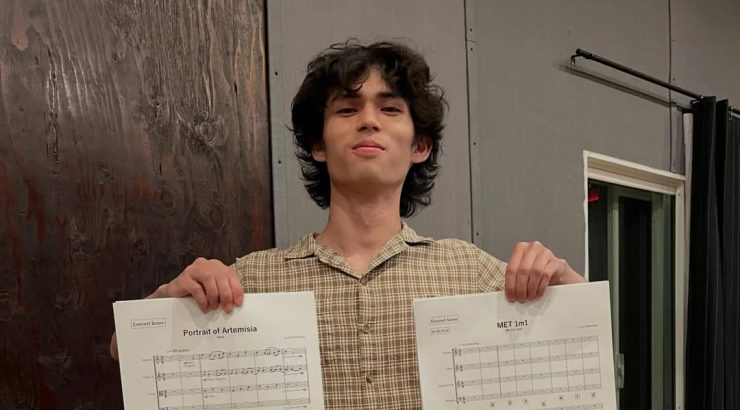
Can you describe your overall experience taking Film Composition III?
Luca Bistrong (BM Music Composition, BM Piano Performance, Film Music minor, ‘28): Film Comp III is great! It’s a smaller, more specialized class, so Professor Volpe is really able to give us the individual attention that is needed for a process such as film music
Lars Kahn (BFA Writing for Film & Television, Film Music minor, ‘26): I owe my terrific experience in Film Comp III to the hands-on workshop approach of our fantastic instructor, Dave Volpe, and the endless support of my peers in the course. This program wouldn’t work without committed and passionate people, and I’m thankful to say we’ve got a great group here. Feedback on our scores is honest, smart, and productive. The scoring session, which I had a taste of last year, getting to record three pieces, was once again a dream come true. Long nights of formatting and taping scores to prep for the session couldn’t have been done without the help of one another, so the sense of community and teamwork in the class is exceptional.
Mitchell Oeth (BS Computer Science, Film Music minor, ‘27): Having the privilege to hear my friends’ music has to be the best part of it all. It’s easy to focus on one’s own project(s), but getting to hear everyone else’s music during class every week has been my single greatest source of inspiration and motivation throughout my composing journey thus far.
How has this class/project prepared you for a career in film scoring or the music industry? In other words, what’s the most valuable thing you learned from it?
Luca Bistrong ’28: This is pretty much how film scoring goes in the real world, and I don’t think any other school in the country is able to give you a simulation this accurate: writing original music for original films with professional musicians.
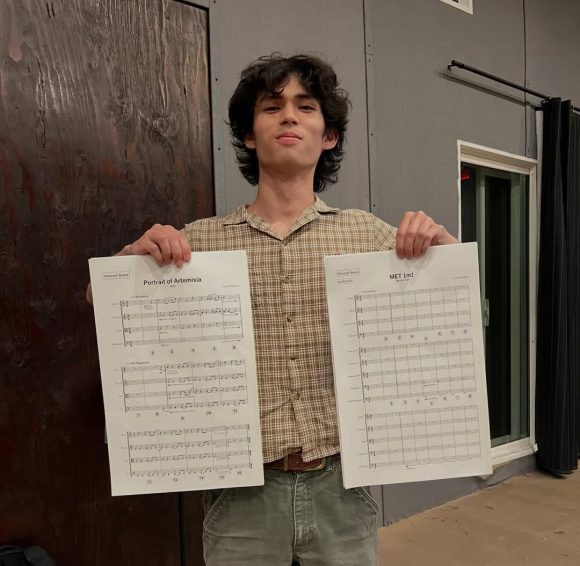
What was it like collaborating with student filmmakers from Dodge College on their thesis projects?
Luca Bistrong ‘28: It’s a wonderful privilege to be able to collaborate creatively on such interesting and personal stories! Every film is a glimpse into the director’s life so it’s an honor to get to contribute to that in some way.
Lars Kahn ‘26: Collaborating with student filmmakers is great because it’s like real life! The beauty of working with other peoples’ visions is that, in the professional world, composers need to make tough choices, find compromise, and learn how to communicate effectively to get music everyone loves. Dodge is very unique by letting student films be scored as opposed to clips from previously released films.
This experience is invaluable and sets our composing program as an example to other programs of how to organically teach critical teamwork and decision-making skills.
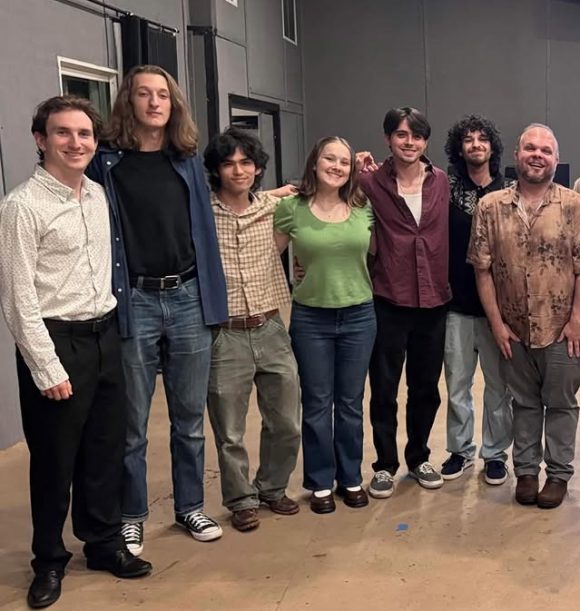
Can you walk us through your creative process for scoring a film in this class?
Mitchell Oeth ‘27: There’s a lot to unpack here. Before I can be creative, I need to understand my director first. I need to be able see the film how they see it while retaining my own unique perspective on how music can serve their creative vision. Film Scoring is a collaboration between composer and director, and it’s my job to find the intersection between what my director wants and what I think best serves the film. This discovery might be done before they’ve shot the film, during a spotting session, and/or through the act of composing itself. Score can completely alter the meaning of scenes and entire films, which is why understanding what my director wants is critical.
Once I have picture lock and think I understand my director’s vision, I can take a stab at writing. The style and instrumentation of the music that I write will largely depend on the conversations I’ve had with the director. Often, I have a pretty good idea of the kinds of things I’ll incorporate into the score before I’ve put any notes down.
As far as the specifics of my process, I write scene by scene and start each by mapping out the tempo such that the important moments in the scene land on downbeats in my DAW. This synchronization step is the main difference between writing for films and writing music in general.
As film composers, we’re limited by time. We only have a specific number of beats to convey the emotional context for a scene, and must find ways to work within that restriction.
The next step of writing the music is the easy part. Once I’m confident in what my director wants (tone, instrumentation, spotting, and general function of music for the film), it’s more of a question of the time that I have to write the music.
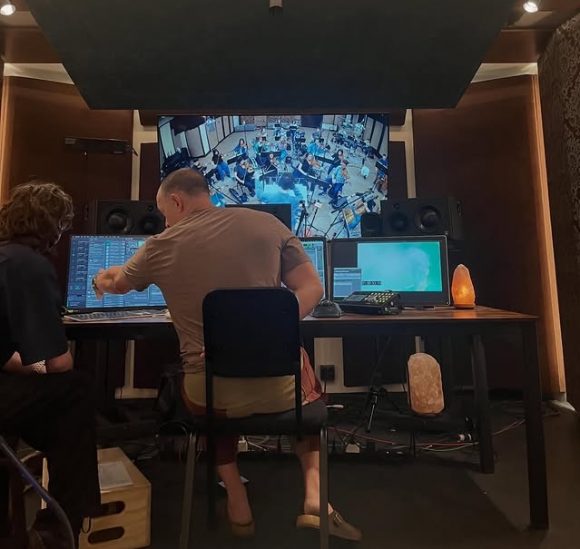
What does it mean for you to have your music recorded with live musicians in a professional studio? What did you gain from this experience?
Luca Bistrong ‘28: Everything moves really fast. These people literally do this everyday, and time is money, so it’s important to be very organized both in terms of your physical music but also in the way that you communicate with the players.
Elijah Hill (BM Music Composition, Film Music minor, ‘28): I think that having the chance to compose, prep, and record for a real live orchestra has so many benefits. Obviously, it’s great to get quality recordings for the films we’re scoring. But outside of the music itself, what’s really helpful is to pay attention to the orchestra while they’re reading your music. The direct feedback you get from watching your own score while listening to the orchestra playing is some of the most valuable insight into orchestration that you could ever have.
Mitchell Oeth ‘27: This experience is exclusive to Chapman. Currently, no other school is recording live studio musicians for student films. To have an opportunity like this as an undergraduate is simply unheard of, and I’m incredibly grateful to have had the opportunity to do it for the second year in a row!
What drew you to study music at Chapman’s College of Performing Arts specifically?
Luca Bistrong ’28: The proximity to Dodge College and being able to work with talented filmmakers.
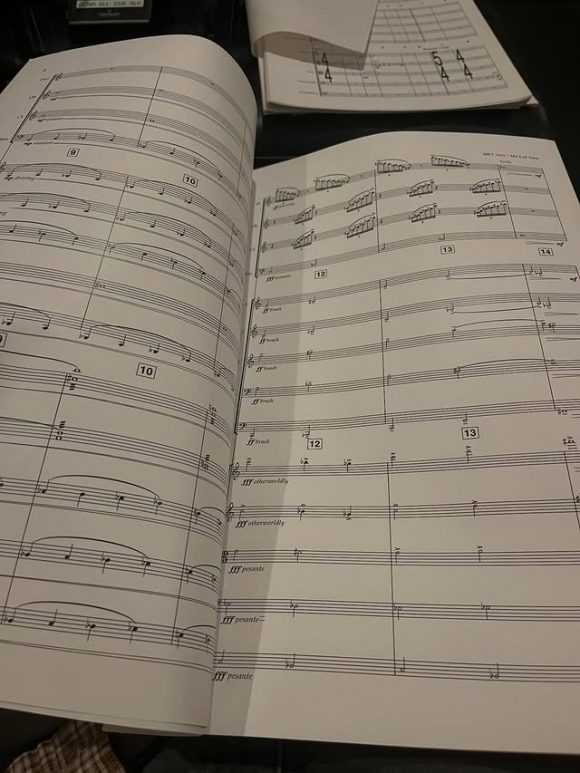
How have CoPA faculty influenced your growth as a musician/composer?
Mitchell Oeth ‘27: All of Professor Volpe and Markey’s classes are incredibly engaging and instructive. I learn more in their classes than any other, and I especially admire how naturally they cultivate a community rooted in cooperation rather than competition.
What kinds of resources or opportunities at Chapman have been most valuable to you as a musician?
Luca Bistrong ’28: The film music department and the professors who are currently working in the industry.
Is there anything surprising and/or beneficial you have learned throughout your time at CoPA that you’d like to share with prospective students?
Mitchell Oeth ‘27: If you’re trying to improve at writing music, I have a couple suggestions.
- Write in new genres as much as possible. This forces you to write for new instruments, or use old instruments in new ways. It’s also very helpful in improving at mixing your own tracks, as how each instrument fits in the mix changes by genre and song.
- Everything is interconnected. Writing, arranging, and mixing are all tools to solve the same problems. Fluency in one will enable you in the others. For many starting composers, mixing is the last of these three to develop, as the barrier to entry feels higher (you need to know what your tools can do first before deciding how to use them). The sooner you can understand how to use EQ in particular, the better you will be able to judge your music effectively.
To learn more about the Film Music minor that many of these students are pursuing, visit our catalog.