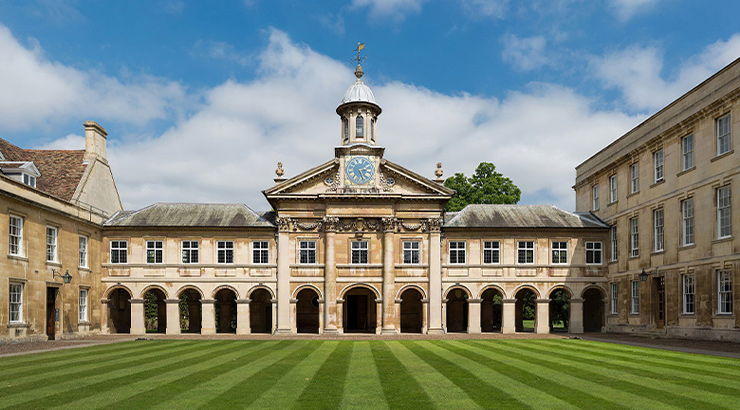
Summer at Cambridge, 2025: A Unique Educational Experience
July 16, 2025
Summer Programs for law students are transformative, creating once-in-a-lifetime experiences and opening doors to unanticipated career prospects. The Fowler School of Law is proud to have revived its participation in the summer program based at Cambridge, England, hosted by Samford University’s Cumberland School of Law. Representing the school this year were FSOL students Maegen Dillon and Christine Panshi, as well as Fowler faculty member Professor Nahal Kazemi. Dean Paul Paton, KC, launched this year’s edition with an opening address at the Cambridge Union Society on June 30 and accompanied the group on their field trip to Strasbourg for extraordinary exposure to the Council of Europe, the European Court of Human Rights and the European Parliament.
The five-week summer program is designed to introduce students to the legal systems of the U.K. and the European Union and explore their relationship in the looming shadow of Brexit, global political transformation and conflict. Students combine courses in the English Legal System and Law of the European Union with two elective courses of their choice.
One new option available to students this year is Professor Nahal Kazemi’s timely offering on Law, Technology and Society, exploring how major world powers and economies set policy and regulation for technology in the digital space. Students compare how the United States, the European Union and China address issues like data privacy, cybersecurity, artificial intelligence, cryptocurrencies and digital surveillance. The course also considers the political economy, national security and the civil liberties dimensions of these issues, including how they affect Big Tech companies, other economic actors, ordinary citizens, journalists and activists alike.
Kazemi brings an extraordinary wealth of experience as a professor and as a former political-military affairs officer in the United States Foreign Service. Her postings included Casablanca, Morocco; Baghdad, Iraq; Budapest, Hungary; and Washington, DC. Another of the stellar teaching cohort, Lithuanian diplomat Loreta Raulinaityte, not only teaches the Law of the European Union but also arranged extraordinary access to the key European institutions. She is the Coordinator of the Parliamentary Dimension of the upcoming Lithuanian Presidency of the Council of the EU, leading the preparations for its 2026 term.
Drawing on his experience as a debater for the Cambridge Union Society during his keynote address, Dean Paton introduced the cohort to both the history and place of the University and of the Union, the oldest debating society in the world and a unique forum for the free exchange of ideas and the art of public debate. Guests have included world leaders such as Winston Churchill, Theodore Roosevelt and the Dalai Lama, and the Union continues to provide Cambridge students with the opportunity to meet and question people who shape the world. Paton reminded the law students that while content matters, it is rhetoric, argument and the ability to advocate forcefully — and always with professionalism and respect — that has shaped leaders (many of them lawyers) who have gone on to transform the world.
In Strasbourg, summer program students visited the Parliamentary Chamber and learned about the unique place of the Council of Europe and its three pillars — democracy, human rights and the rule of law. Kristian Bartholin, Head of Data Protection Unit for the Council of Europe, addressed the law students on the intersection of artificial intelligence and international law during an hour-long private session on July 3. Bartholin spearheaded the diplomatic staff team behind efforts resulting in the Council of Europe Framework Convention on Artificial Intelligence and Human Rights, Democracy and the Rule of Law. The 2024 Treaty is intended to address specific challenges that arise throughout the lifecycle of artificial intelligence systems and encourage the consideration of the wider risks and impacts related to these technologies, including human health and the environment, and socio-economic aspects, such as employment and labor. As Bartholin noted, the provisions of this Convention aim to ensure that activities within the lifecycle of artificial intelligence systems are fully consistent with human rights, democracy and the rule of law, separate and apart from the ordinary economic considerations driving forward AI discussions.
At the European Court of Human Rights, students heard from two UK lawyers — one a former prosecutor, one a former government lawyer – appointed for four-year terms to the court’s legal teams, exploring for an hour the unique role of the “Jurisconsult” plays in assisting the Judges of the Court; the ability to access Rule 39 “interim measures” to protect human rights and the myriad claims arising from Ukrainians during the current war; and the outcome of recent cases. The lawyers also shared their personal and professional stories, offering insight into career paths and opportunities students might consider now and in the future. Bartholin, who started his career in the Danish diplomatic corps, had situated his experience as an international diplomat in the arc of a career that students might themselves pursue.
Life-changing. Eye-opening. Inspirational. Important (and fun!). What an incredible opportunity!
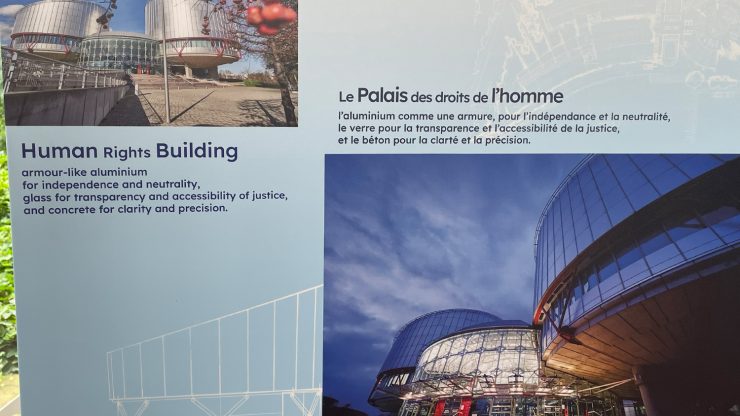
Architectural significance and meaning of the Palais des droits de l’homme, designed by British architect Lord Richard Rogers, opened in 1994
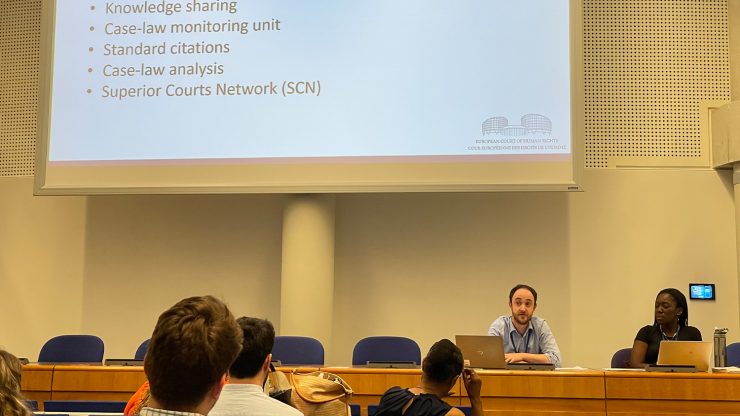
Staff lawyers from the UK discussing Rule 39 orders of the European Court of Human Rights: urgent orders issued by the European Court of Human Rights (ECtHR) in ‘exceptional circumstances’, where there is an ‘imminent risk of irreparable harm’
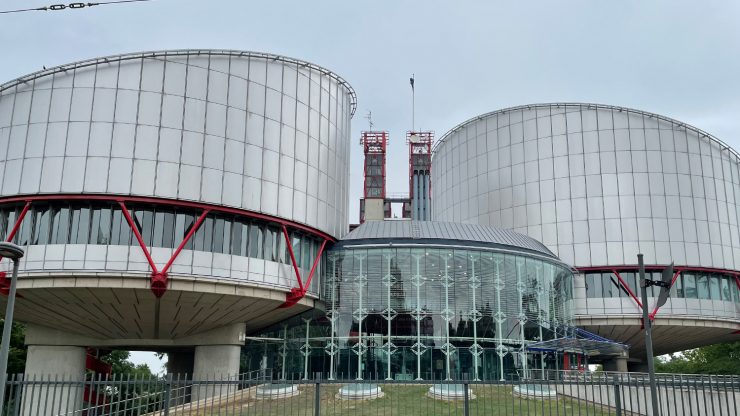
European Court of Human Rights, Strasbourg
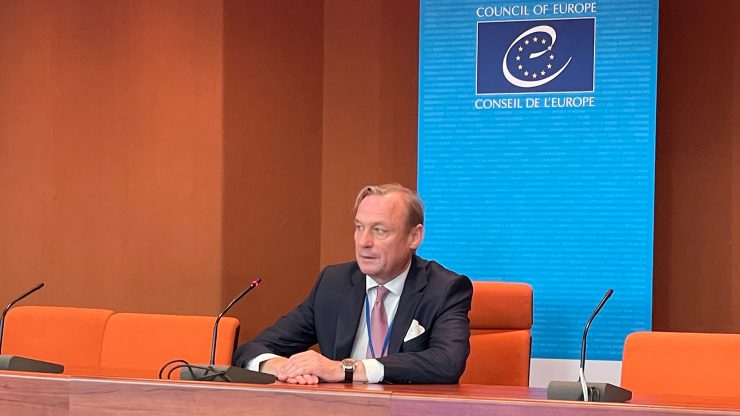
Kristian Bartholin, Head of Data Protection Unit, Council of Europe, addressing the law students during the visit to the Council of Europe on July 3
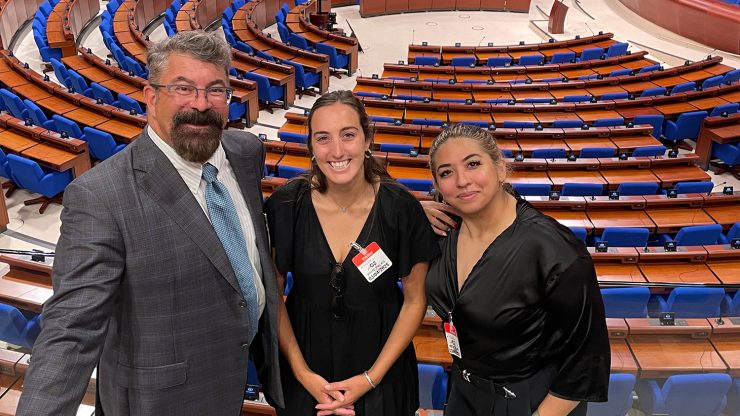
Dean Paton with FSOL students Megan Dillon and Christine Panshi in the Council Chamber of the Council of Europe
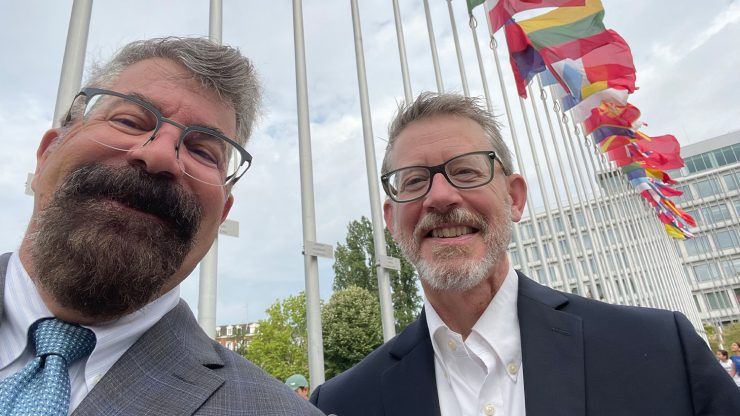
Dean Paton with Kerry McInerney, Director of Graduate and International Programs for the Cumberland School of Law, Samford University, lead partner on the summer abroad program