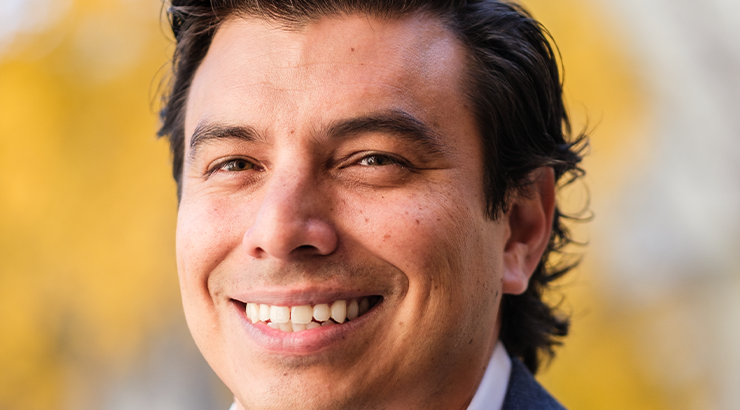
Alumni on the Move: Clay O’Neal
April 7, 2026
Law school trains students to research, memorize and perfect legal arguments. The Alternative Dispute Resolution (ADR) student advocacy program does the opposite: It teaches students to listen, adapt and respond in real-time. That difference is exactly what drew alumnus Clay O’Neal (JD ’13) to Chapman’s ADR program and what continues to bring him back each year as a coach and leader, long after graduating. O’Neal has built a legacy in competitive student advocacy rooted in mentorship, high standards, kindness and his remarkable passion for mentoring law students.
O’Neal’s connection to ADR began early in law school, where, as a Chapman student, he gravitated toward experiences that felt practical and dynamic. While many advocacy programs emphasize research and scripted arguments, ADR immediately stood out to him for another reason: it was skills-based and interactive with immediately observable results. Most importantly, it required students to think on their feet. Much like sports, ADR demands preparation and discipline, but once competition begins, the choices that matter and outcomes they precipitate happen in real time. Competitors may walk in with a carefully crafted game plan, but the opposition’s playbook is always unpredictable, a challenge that was more than a little enticing as O’Neal earned his stripes in competitive dispute resolution as a student.
As a student, O’Neal served as President of the ADR team and participated in Mock Trial contests. Through ADR, he had the opportunity to compete internationally, traveling to places like Paris, Dublin, and Kyiv, and credits his time in student advocacy as one of the most profound aspects of his law school experience. When he speaks with law students about the realities of legal practice, he likes to remind them that most cases never reach trial. Instead, disputes are usually resolved through conversations, compromise and strategic problem-solving between lawyers. The training he advocates in ADR coaching teaches students how to gather information, understand opposing interests and their pain points, and how to communicate effectively, skills that translate beyond the context of advocacy competitions.
O’Neal assumed his role as a student advocacy coach while still a student at Chapman, initially helping his classmates prepare for competitions and work through challenging concepts and strategies. After graduating, he remained involved, taking on additional responsibilities until he was officially appointed to Fowler School of Law’s alumni-led student advocacy coaching staff.
For O’Neal, coaching has always been deeply personal: “Coaching ADR,” he says, “gives me that same sense of purpose. The excitement is not about trophies or rankings. It comes from watching students take what they learned into practice and apply it under pressure.”
For this much-admired coach and alumnus, watching students perform at their best, build confidence in their abilities and surprise themselves with competition success never seems to get old. Still, O’Neal is no pushover and is known for holding his students to the highest standards. He expects maximum effort and thorough preparation for practice sessions and holds that “mistakes are only problematic when they are preventable.”
His approach is demanding. For students interested in pursuing ADR, O’Neal’s advice is simple and practical: Raise your hand, show up, get involved, be willing to learn and take the skills you learn seriously. The skill set built during practice matters more than the details of a resume, he adds, “How you treat others, how you support your peers, and how you show up in a community will stay with you long after graduation.”Photo of alumnus Clay O’Neal
Through his dedication to coaching and mentorship, this singular alumnus and celebrated competitions coach continues to shape the outstanding successes of the Chapman Law ADR program and the lives of the students who pass through it. His impact is measured not only in trophies, but also in the confidence gained, skills sharpened and moments when students realize they are capable of far more than they ever thought possible.