The Leatherby Libraries’ Meet the Librarian interview series shines a spotlight on our amazing librarians as we welcome them to the Chapman University campus. These interviews inform the community about different areas in the library and the incredible work our librarians accomplish each day! Our new Health Sciences Librarian, Rachel Maggio, was kind enough to answer some questions!
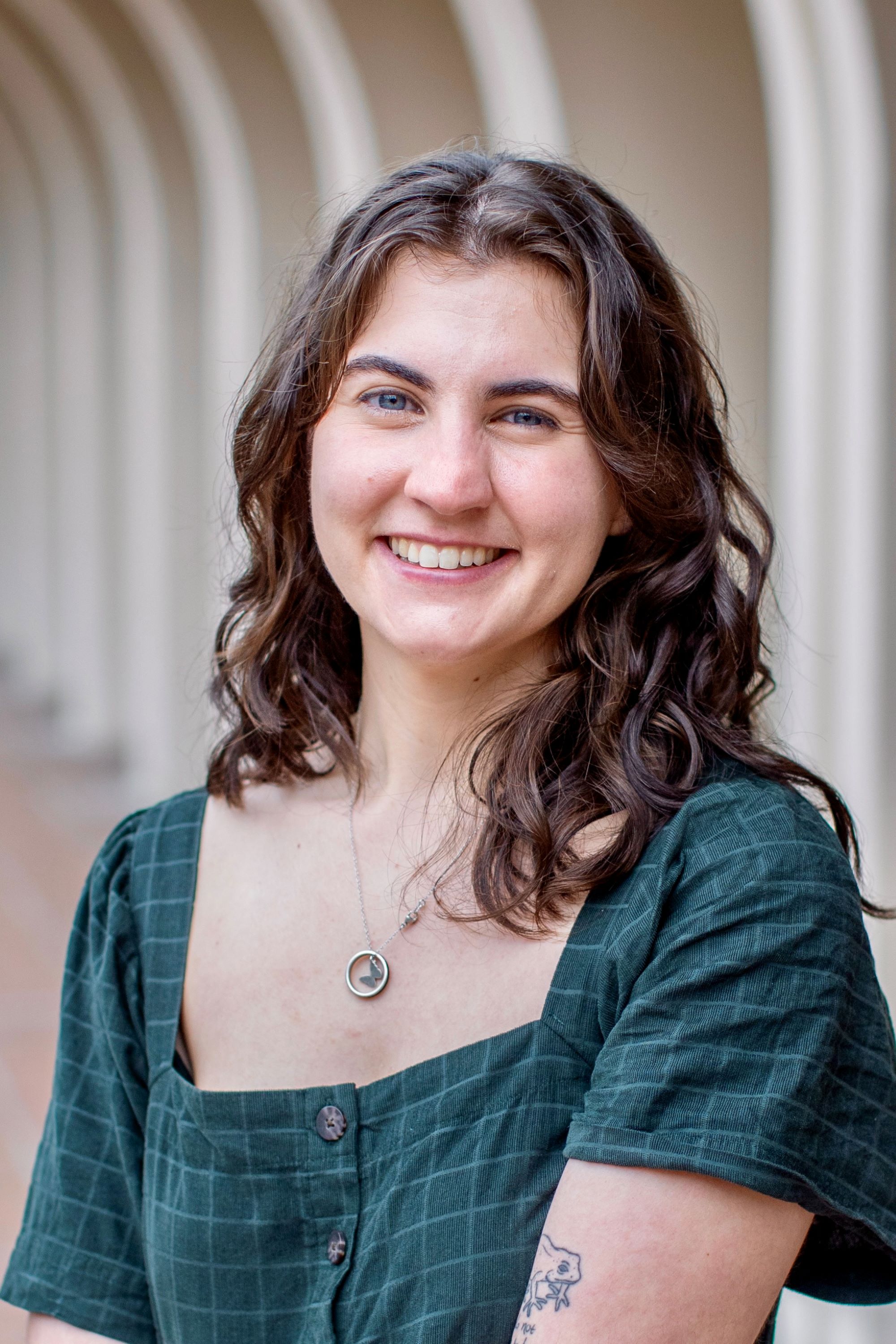 What is your name and title?
My name is Rachel, and I am the Health Sciences Librarian. I am also the Subject Librarian for the Psychology, Communication Sciences and Disorders, Health Sciences, Marriage and Family Therapy, Physician Assistant, and Physical Therapy programs.
- In what department of the Leatherby Libraries do you work?
I work at the Rinker Health Science Campus, in the Campus Center near the Library Services Desk.
- How long have you been at Chapman University?
I started in December 2024.
- What is your job in a nutshell?
This is such a hard question, but part of what I love about libraries and what drew me to being a librarian is that every day is a little different! In the most distilled terms, my job is helping students and faculty with Health Sciences-related reference questions and research. Sometimes, I support them through teaching; sometimes, it’s through research consultation; sometimes, it’s explaining how to use databases and which databases to use for what and when; sometimes, it’s information and/or health literacy instruction; and sometimes, it’s just checking in and out Dry Erase Markers. But I enjoy supporting the Chapman community at every step in their academic journey.
- Have you held any jobs at other universities or libraries?
I’ve worked as a high school librarian and have experience working in other academic libraries, including in digital scholarship, circulation and information services, research, and a writing center. As a graduate student, I even worked in a children’s library in Boston!
-
- What are your passions/interests outside of work?

So many things! I love reading, crafting, watching documentaries/docuseries, hanging out with my cat, trying new coffee shops with friends, and volunteering. I work with Clinic in the Park, an organization that provides the OC community with child safety and early literacy education and materials, like books, safe sleep information, car seats, and life jackets, as well as writing policy briefs to strengthen existing safety laws.
- Where did you get your degree?
My BA is from OSU, and my MLIS is from Simmons University.
- Where is your hometown?
I grew up in Torrance. My mom still lives there, and my dad is close by. They’re very happy I’m so close now that I work at Chapman instead of across the country like I was in grad school.
- What is the last book you read or the last book you loved?
I read a lot, and I always joke that the best book I’ve read is always the most recent one because it’s usually the one I remember best. But, my favorite recent fiction read is Sing Unburied Sing by Jesmyn Ward, and my favorite nonfiction read is What’s Eating Us by Cole Kazdin.
- Any fun facts about yourself?
I don’t know how to ride a bike. That usually surprises people. I guess I just never really felt the need. I do know how to roller-skate, though!
- Why is having a Science Librarian important for academic libraries?
Information literacy in the health sciences is important for everyone, whether they plan to become a healthcare professional or not; we all have a body that needs healthcare. Information literacy is something all librarians are experts in, and they teach others skills to become more information literate.
I hear a lot that librarians are going to be, or already have been, replaced by Google or the internet more broadly, but I don’t think that’s true. Google can get you information quickly, but it won’t necessarily be right. It won’t be neutral; if I and anyone who reads this Google the same thing, we’ll get different results based on our algorithms. The internet also spits out large amounts of information that can be difficult to sort through effectively, which means you might, and most likely will, miss important or impactful sources. Librarians can help you get an accurate answer in a quantity that’s possible to sort through and understand so that you can do it on your own if/when you need to.
You’ve probably heard that knowledge is power, and that’s certainly true, but information is too! And neither information nor knowledge nor their acquisition or spread is impartial. Knowing what to do to get that information and knowledge, rather than relying on someone else. Learning to sort out facts from fiction empowers and protects us all. In Health Sciences, this is especially important because health disinformation can have long-lasting and severe impacts on us and those we love.