Explore NotebookLM
Are you juggling too many PDFs, websites, and notes for a class or research project? Google’s NotebookLM can help turn that information overload into clarity within minutes! Join Leatherby Libraries’ hands-on workshop to discover how this free, AI-powered research assistant can summarize materials, generate study guides, and even create podcast-style audio overviews, all from your

Librarian Interviews: Amy Telarico
The Leatherby Libraries’ Meet the Librarian interview series spotlights our wonderful librarians and the incredible work they do every day. This series offers a closer look at the people and services that support our campus. Meet Amy Telarico, our newest reference librarian! 1. What is your name and title? My name is Amy Telarico, and
Celebrating Love Data Week with Our New Book Display!
In celebration of International Love Data Week, the Leatherby Libraries has curated a book display to celebrate data and promote data literacy on our campus! This year, the theme for Love Data Week is “Where’s the Data?”, which invites participants to consider how data moves through its entire lifecycle, from collection and storage to preservation.

Level Up Your Skills: Join Leatherby Libraries' March & April Workshops!
Want to boost your computer or AI literacy skills, or learn to use R or ArcGIS Pro? Spring workshops at the Leatherby Libraries will help you become more efficient in research, data management, and the use of AI tools. Workshops are open to Chapman students, faculty, and staff and are offered both in person and
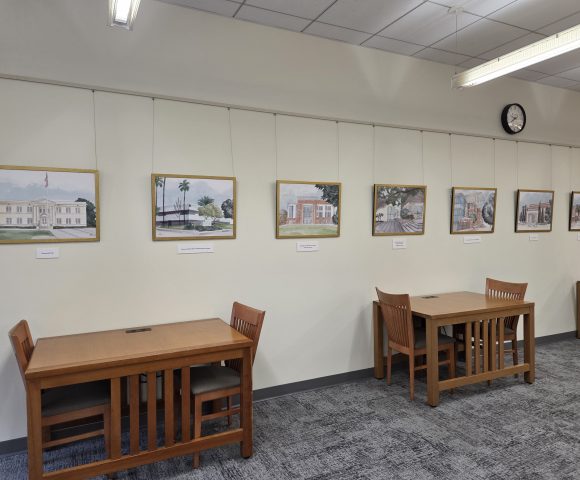
Sketching Chapman
Visit the newest exhibit in the Leatherby Libraries’ Hall of Art, Sketching Chapman, illustrated by Chapman University Senior, Lizzie Bork ’26. Her work includes drawings of many of Chapman’s iconic buildings, including Memorial Hall, The George and Julianne Argyros Forum, The Arnold and Mabel Beckman Business and Technology Hall, and more! Bork drew inspiration from the
Where's the Data?
International Love Data Week is an annual event hosted by the ICPSR (Inter-university Consortium for Political and Social Research) at the University of Michigan, during the week of Valentine’s Day, to celebrate data and foster greater appreciation for data literacy across universities, non-profits, government agencies, and other organizations. This year, the theme for Love Data
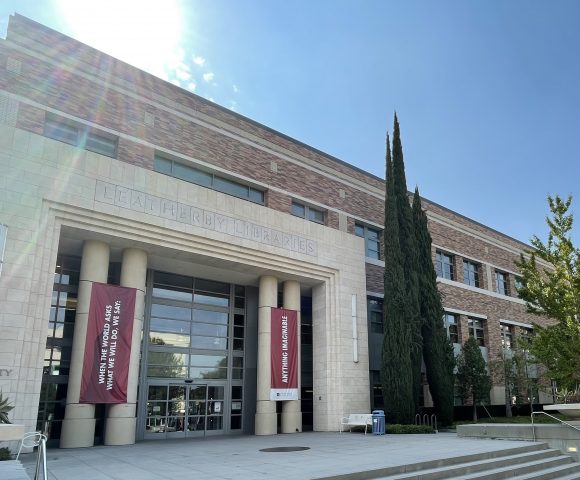
Chapman Authors Can Now Publish Open Access Research for Free or Discounted Rates in Sage Journals
The Leatherby Libraries is pleased to announce that Chapman University has joined a three-year read-and-publish agreement with Sage. This agreement allows Chapman-affiliated authors to publish their articles Open Access in Sage’s journals at no or reduced cost to themselves for articles accepted between January 2026 and December 2028. This agreement fully covers the Article Processing
Leatherby Libraries Renews American Chemical Society (ACS) Read-and-Publish Deal
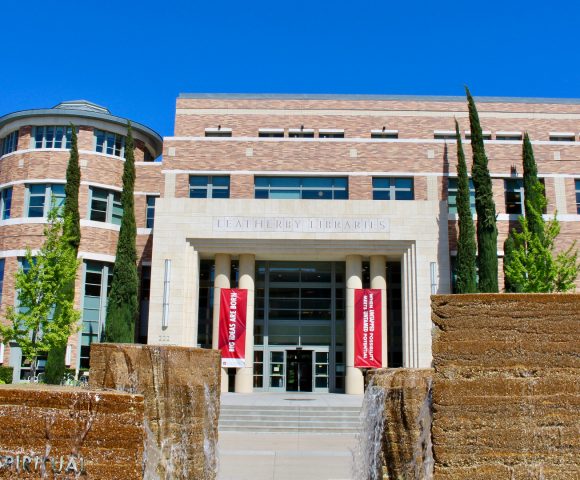
The Leatherby Libraries is pleased to announce the continuation of its read-and-publish agreement with the American Chemical Society (ACS) from 2026 to 2028. This agreement allows Chapman-affiliated authors to publish their articles Open Access (OA) in hybrid ACS journals by covering the Article Processing Charges (APCs) for Chapman authors’ research articles that those journals have accepted
Share Your Library Research Experience for the Chance to Earn a Cash Prize!
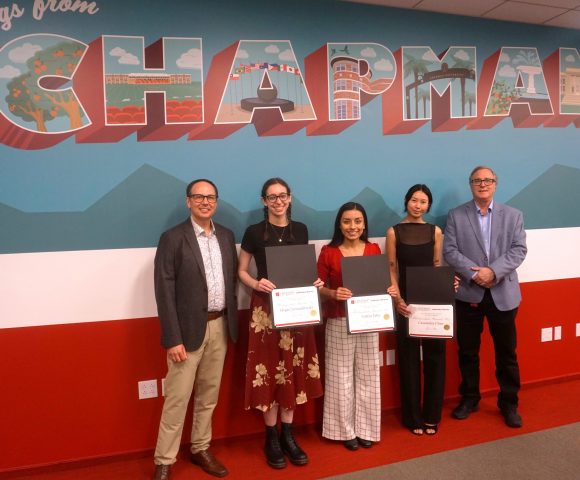
Calling all Undergraduate students at Chapman University! Have you used library resources to write a research paper or complete a project this year? If so, the Leatherby Libraries invites you to apply to the 2026 Kevin and Tam Ross Undergraduate Research Prize! This prize recognizes the effective usage of library resources that results in excellent
Submit Your Application for the Third Annual Eric M. Scandrett Graduate Research Prize
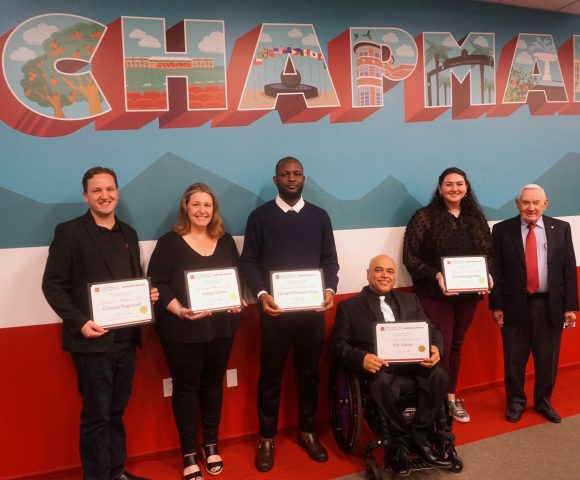
The Leatherby Libraries is pleased to announce that applications for the third annual Eric M. Scandrett Graduate Research Prize are now open! This prize recognizes the extraordinary work done by Chapman University graduate students who’ve effectively utilized library resources to complete their research. The Library Graduate Research Prize is endowed by Eric M. Scandrett. Graduate