Cultivating Community: The Orange Home Grown Education Farm
October 28, 2025
Tucked away on a residential side street, in the shadow of a parking garage, something is growing.
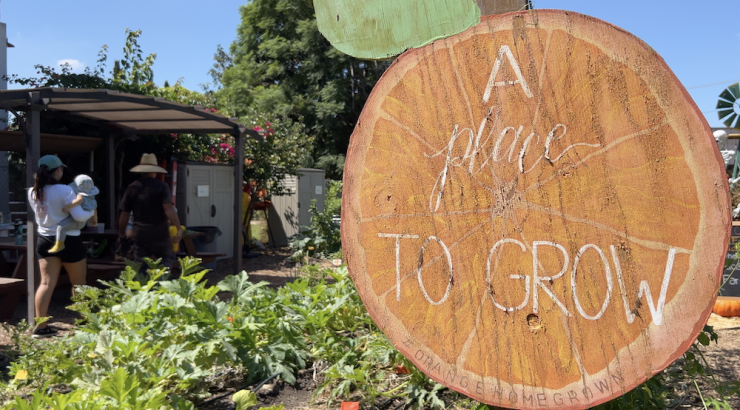
The Orange Home Grown Education Farm, located two blocks away from Chapman University’s main campus, aims to teach the community about agriculture. The Orange Home Grown Foundation is a local Orange Country nonprofit best known for their weekly Farmers and Artisans Market, held on Saturdays in Orange.
“People come to the farmer’s market and go, ‘gosh, it’s really expensive to buy organic.’ So we thought it’d be cool if we had a space where we could show people firsthand what it takes to grow food. It’s not that easy, especially when you’re doing it organically,” says Megan Penn, Co-founder and Executive Director of Orange Home Grown.
The Orange Home Grown Foundation first started working with Chapman over 15 years ago, when the university set aside space for the farmer’s market in a faculty parking lot, according to Penn.
Five years later, Penn pitched the idea of starting an education farm. Chapman cleared out some land for the foundation to lease, and the Orange Home Grown Education Farm was born. The farm is open every Friday to anyone who wants to volunteer.
“We’re not a typical garden, where most people would have plots that they lease. We do everything together. The food is harvested once a week and given to volunteers that come out to lend a hand, or they’re used for different events. A lot of people think that we grow food here to sell at the farmer’s market, and that’s not the case. It’s really all about education and getting the food out to our local neighbors in need,” says Penn.
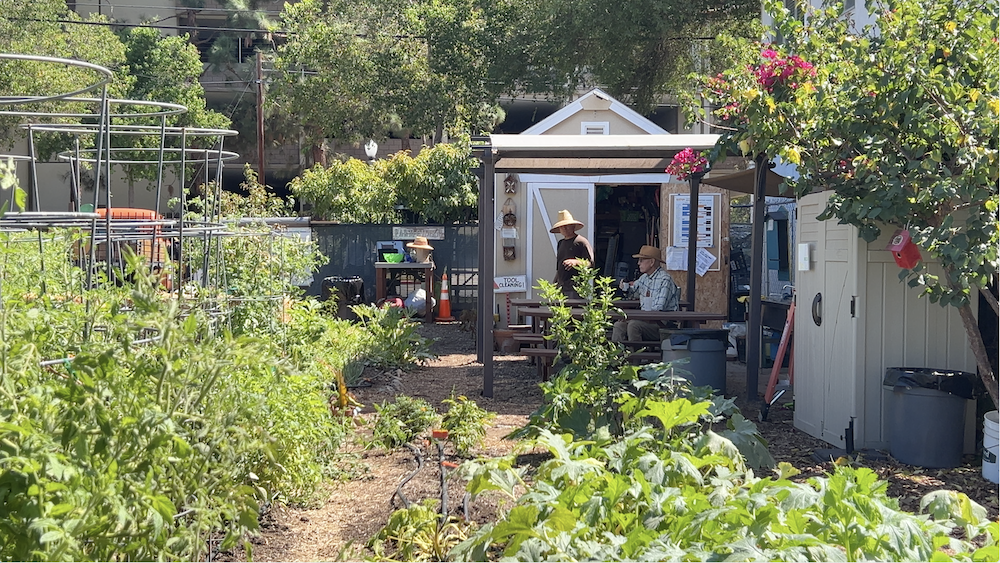
The Education Farm raises a variety of crops, from trellis-climbing tomatoes, to squash and fruit trees. (Photo Credit: Mariel Sheets)
The Education Farm also aims to give back to the land itself. Volunteers practice regenerative farming, a sustainable approach which prioritizes soil health and preserves nutrients season after season. They also avoid using pesticides, which leads to unique challenges for this urban farm.
“We definitely have issues with bugs, with mildew. So sometimes we’ll lose an entire crop because there’s just no way to combat the bugs. If we were a larger space and we were growing just one variety of a plant, we’d spray the whole thing, but that’s just not something that that we do,” says Penn.
The Education Farm takes growing fresh fruits and veggies seriously, but the farmers here are also cultivating community. For volunteers like Timea Steingart, a Chapman student, the farm has fostered new friends and a new passion.
“It’s been like a second home to me, mainly because of the people, because they’re so lovely and so nice, and secondly, because it’s rewarding to plant and to harvest and to learn something that I haven’t learned before,” says Steingart.
She’s not alone; many volunteers are Chapman students and faculty. The Education Farm also hosts field trips for food science, food writing and food law classes. They’ve even held an informal graduation party for students who spent their four years volunteering on the farm. Melissa Rowland-Goldsmith, professor of molecular biology at Chapman, says that volunteering at the education farm is her favorite part of the week.
“It’s a time for me to reflect on the past week and truly ‘smell the roses.’ Last spring, I even scheduled my teaching to start at 11 a.m. so I could volunteer for most of the morning—volunteers work at the garden from 9 to 11:30 a.m. every Friday. I also encourage Chapman STEM students to volunteer at the education farm when their schedules allow,” says Rowland-Goldsmith.
Doug Turner, Penn’s father and fellow Orange Home Grown board member, says teaching student volunteers is one of his favorite parts of working on the Education Farm.
“It’s just so rewarding to see all these kids come here and go, ‘wow, that’s where my carrots come from?’ We get kids who think all the vegetables come from McDonald’s. I’m not kidding. Inner city kids pull a carrot out of the ground, and they’re just astounded. It’s just a wonderful thing to see, and for them to learn about,” says Turner.
Now that the weather is cooling off, the Education Farm is getting ready to plant for the season. Orange Home Grown holds farming workshops on the second Friday of each month for new volunteers. Sign-ups are available online.