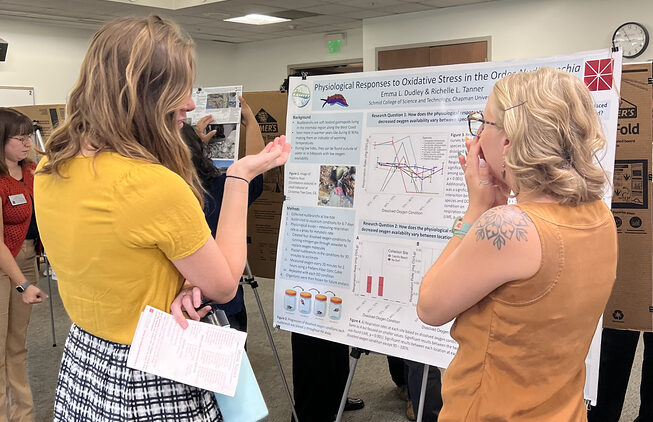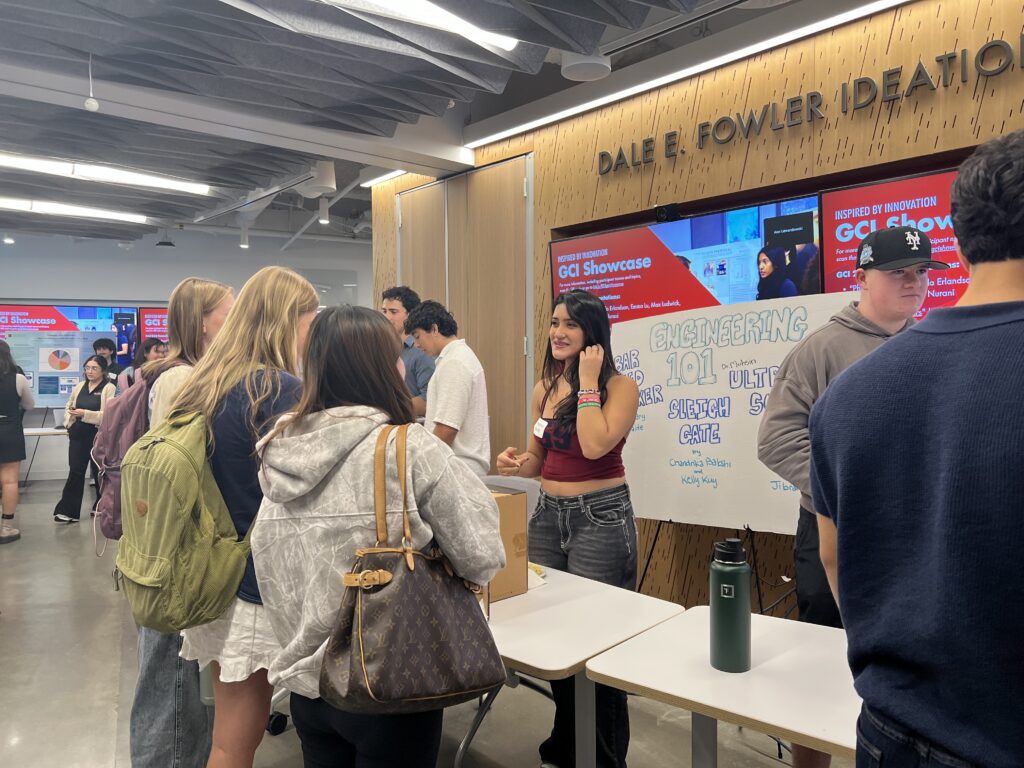
In December, Chapman students presented their Grand Challenges Initiative projects, each tackling pressing problems in science and engineering.
The Grand Challenges Initiative (GCI) is a two year program that invites students from Schmid and Fowler Colleges to research pressing problems in science and technology. Four to six students work together under a research mentor to propose solutions to challenges in climate change, data security, medicine and more. This December, four teams from the GCI program presented their findings at the Fall 2025 GCI Showcase.
This was one of the first joint GCI-Fowler showcases, featuring additional independent projects from the Fowler School of Engineering. Alexandra Lewandowski, the coordinator for GCI, called the showcase “a huge hit.”
“I can’t believe how crowded the room is. Our fall showcases are usually pretty small; it’s usually four or five posters. This time we wanted to include some extra projects from Fowler so that we could fill up the room, and give the GCI students–who are generally a little younger–an opportunity to network with students doing research in higher level classes,” said Alexandra.
This semester’s projects delved into digital literacy, medical screening software, car oil waste, and even stress assessment for dogs.
“F.E.T.C.H.” – How a Collar Could Monitor Dogs’ Stress Levels
Many dog owners believe they know how their furry friends feel based on behavior. According to the team behind the F.E.T.C.H. project, behavioral cues aren’t the best indicators of stress and pain in dogs. Torki Alghamdi ‘26, Tristan Horgan ‘27, Michael Kenny ‘27, Ben Lehrer ‘26, Soren Marius ‘26, and Sofia Morales Vilchis ‘27 set out to find a way to recognize stress in dogs earlier and more accurately using “F.E.T.C.H.,” a “smart” collar that monitors canine heart rates.
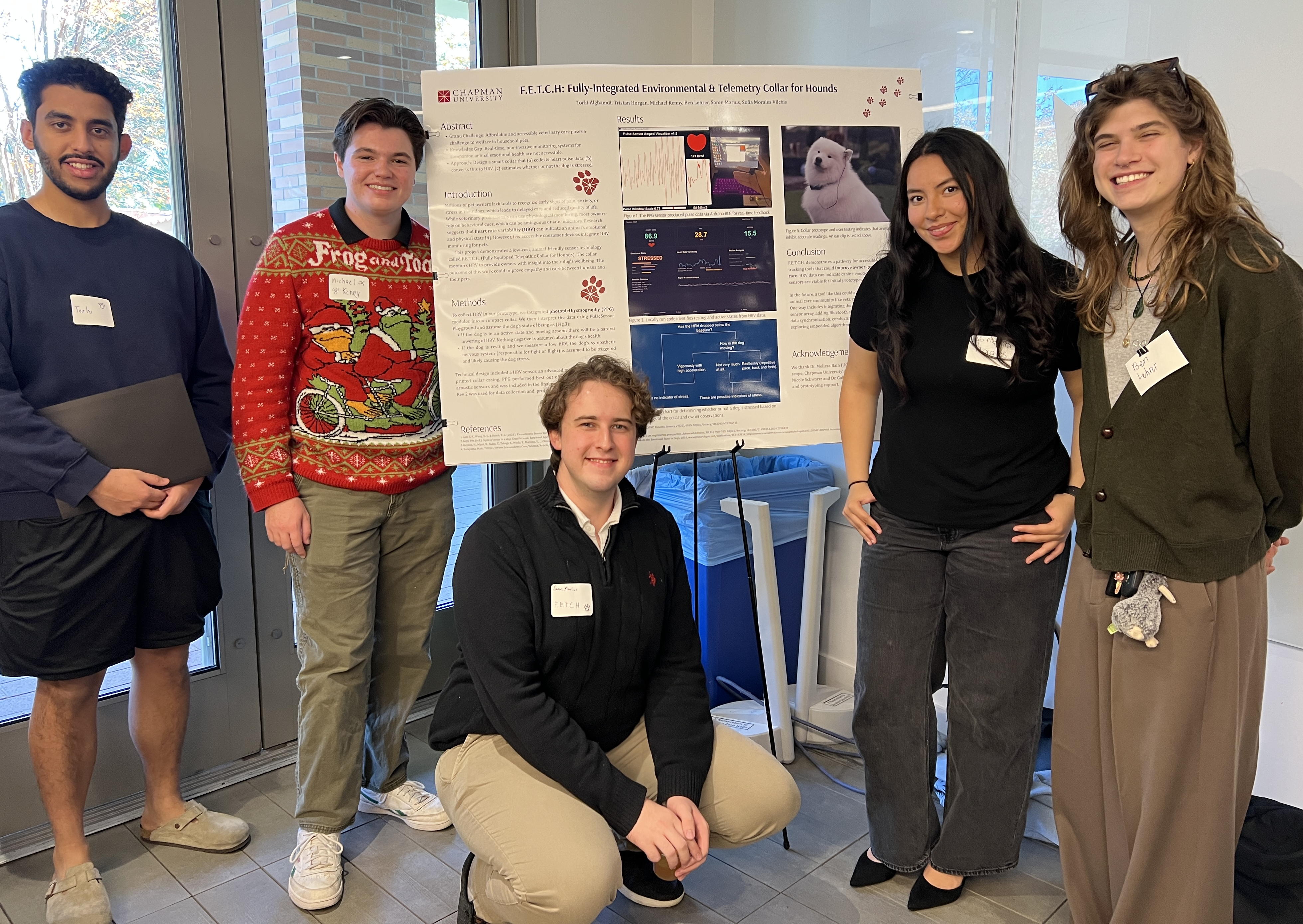
Wearable technology like smart watches are readily available for humans, and are often used to monitor heart rate. For animals, the process of monitoring vital signs can be invasive and a source of stress. F.E.T.C.H. is short for “Fully-Integrated Environmental and Telemetry Collar for Hounds.” The project aims to understand dogs’ physical and emotional wellbeing without stressing them out.
F.E.T.C.H. monitors heart rate variability (HRV), through sensors in the collar and a clip on the dog’s ear. According to the team, research shows that HRV can reflect an animal’s physical and emotional state. The less a dog’s heart rate varies at rest, the more stressed the dog likely is.
The collar itself is still in the experimental stage, but they’ve already conducted field tests with a dog wearing a prototype. The team believes that one day, F.E.T.C.H. could be connected to an app through Bluetooth, so that owners can check on their dogs using their phones.
“Small Oil” – How Lasers Could Check Your Car’s Oil Health
Gasoline car engines generate large amounts of oil waste over a car’s lifetime. The GCI team behind “Small Oil” says that a lot of standard oil changes waste car oil that is still usable.
Motor oil checks rely on distance driven to measure oil health, but the “Small Oil” team has been studying how light transmittance might indicate oil breakdown. Hunter Belleville ‘26, Charlie Conner ‘26, Zack Corr ‘26, Marshall Longtin ‘27, and Maks Popov ‘26 say that many cars will likely continue to use fossil fuel-based oil for the foreseeable future, and their research could help reduce waste. They tested clean and dirty engine oil samples, as well as oil contaminated with water (as in a coolant leak), to see how different wavelengths of light travel through them.
The team found that clean oil consistently lets more wavelengths of light pass through it than dirty or contaminated oil do, making lasers and light wavelengths a reliable method of determining oil clarity and health. So far, they have only tested this technique in the lab. But they have plans for a compact prototype that would record oil degradation data under the hood of a car, and send accurate, immediate updates to the dashboard.
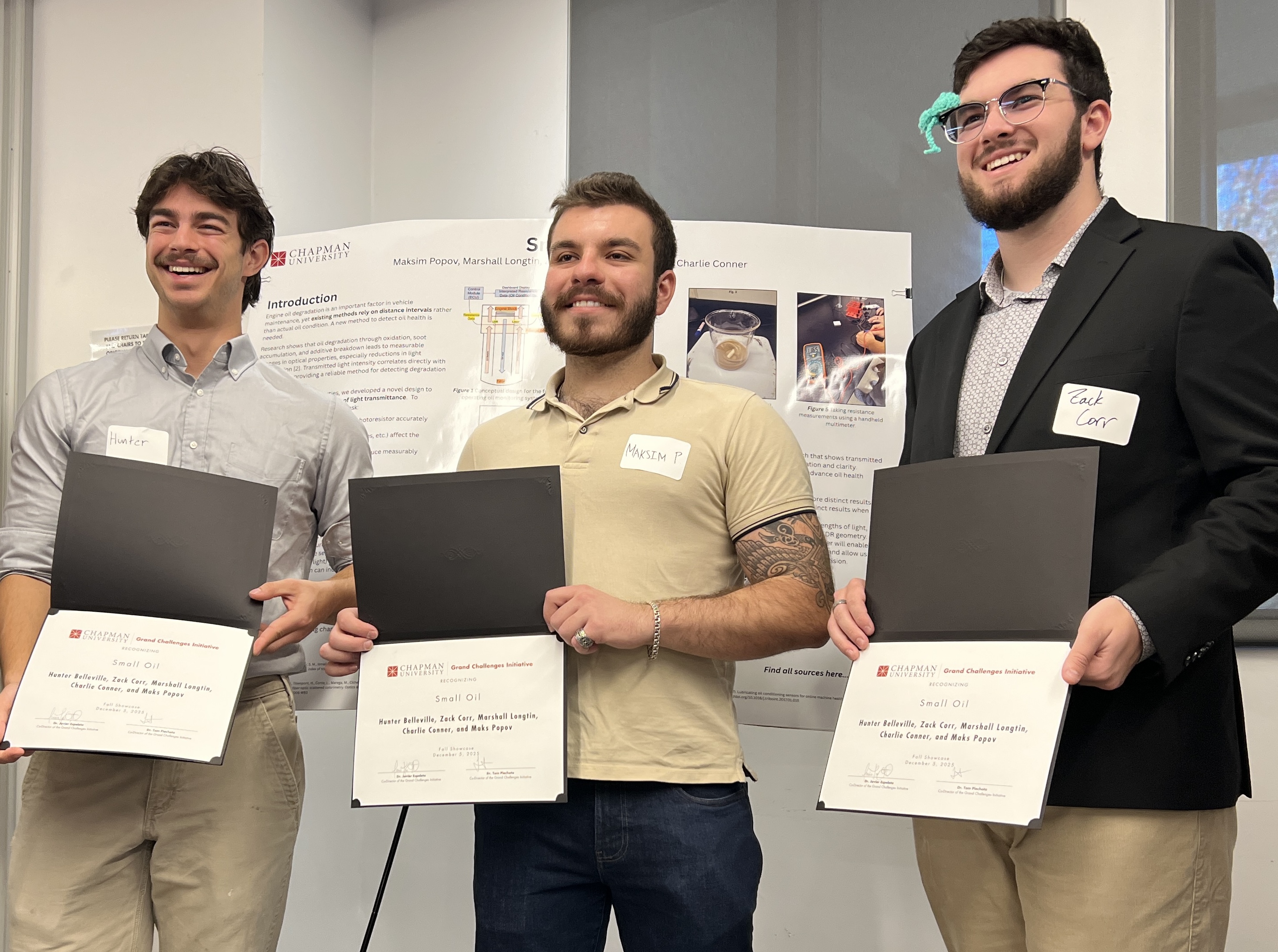
Popov, ‘26, a software engineering major, described sustainability as a major motivator for this project. “I think that being able to work towards a protected environment is really nice. I was happy that I was able to find a group and work on something that was interesting to me, and the group in terms of oil filters, cars and sustainability, which we all agree were very important topics.”
“Diabetes Risk Calculator” – How New Software Could Make Diabetes Risk Assessment More Affordable
According to the CDC’s National Diabetes Statistics Report, one in eight Americans have diabetes, and one in three are pre-diabetic. CDC data suggests that roughly 8.7 million adults in the US have undiagnosed diabetes. One of the biggest barriers to diabetes diagnosis is access to affordable screening. Jude Abatangelo ‘27, Lina Al-Barkouli ‘27, Katia Hnatiw ‘28, Dylan Massaro ‘27, Christy Nader ‘27, and Andrea Sanchez ‘27 challenged themselves to make diabetes risk assessment cost-effective with their Diabetes Risk Calculator.
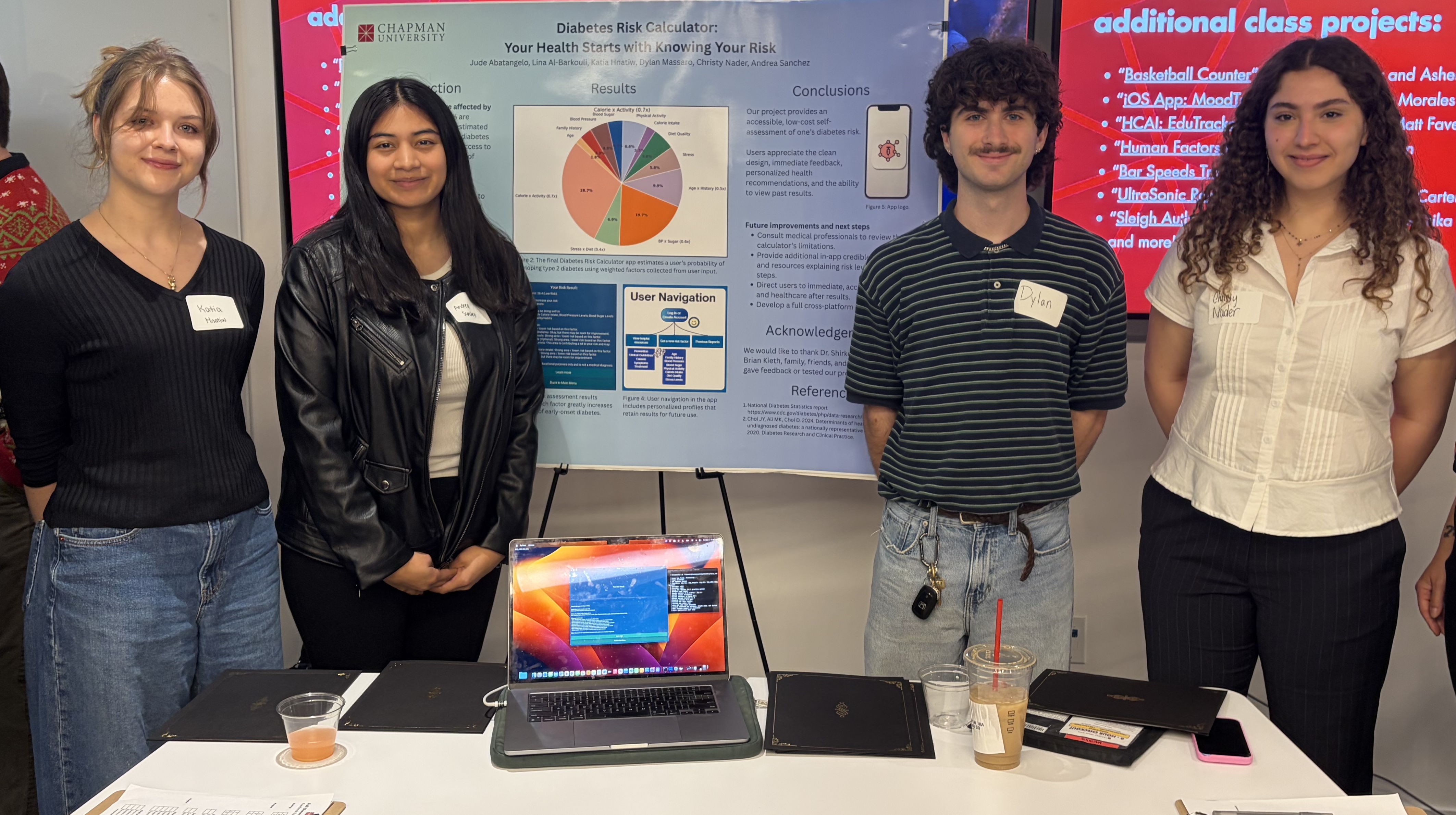
The Diabetes Risk Calculator calculates an individual’s likelihood of developing diabetes based on the user’s diet, blood pressure, age, family history, and stress. The app is designed to be user-friendly, and to help people self-assess and make informed decisions. The calculator also provides feedback and health recommendations to the user.
The team say that the next steps would include connecting with medical professionals to understand the limitations of the calculator, and connecting users to immediate healthcare post-assessment through the app.
“Who’s Phishing My Emails?” – How an Educational Game Could Help Combat Phishing Scams
Phishing scams steal money and personal data from millions of people every year. The students behind “PhishFighters” say that their project could help improve digital literacy. Stella Erlandson ‘27, Emma Lu ‘27, Max Ludwick ‘26, Thuan Luu ‘27, and Nalia Nurani ’26, developed “PhishFighters,” an educational video game that challenges players to identify scam emails and respond accordingly.
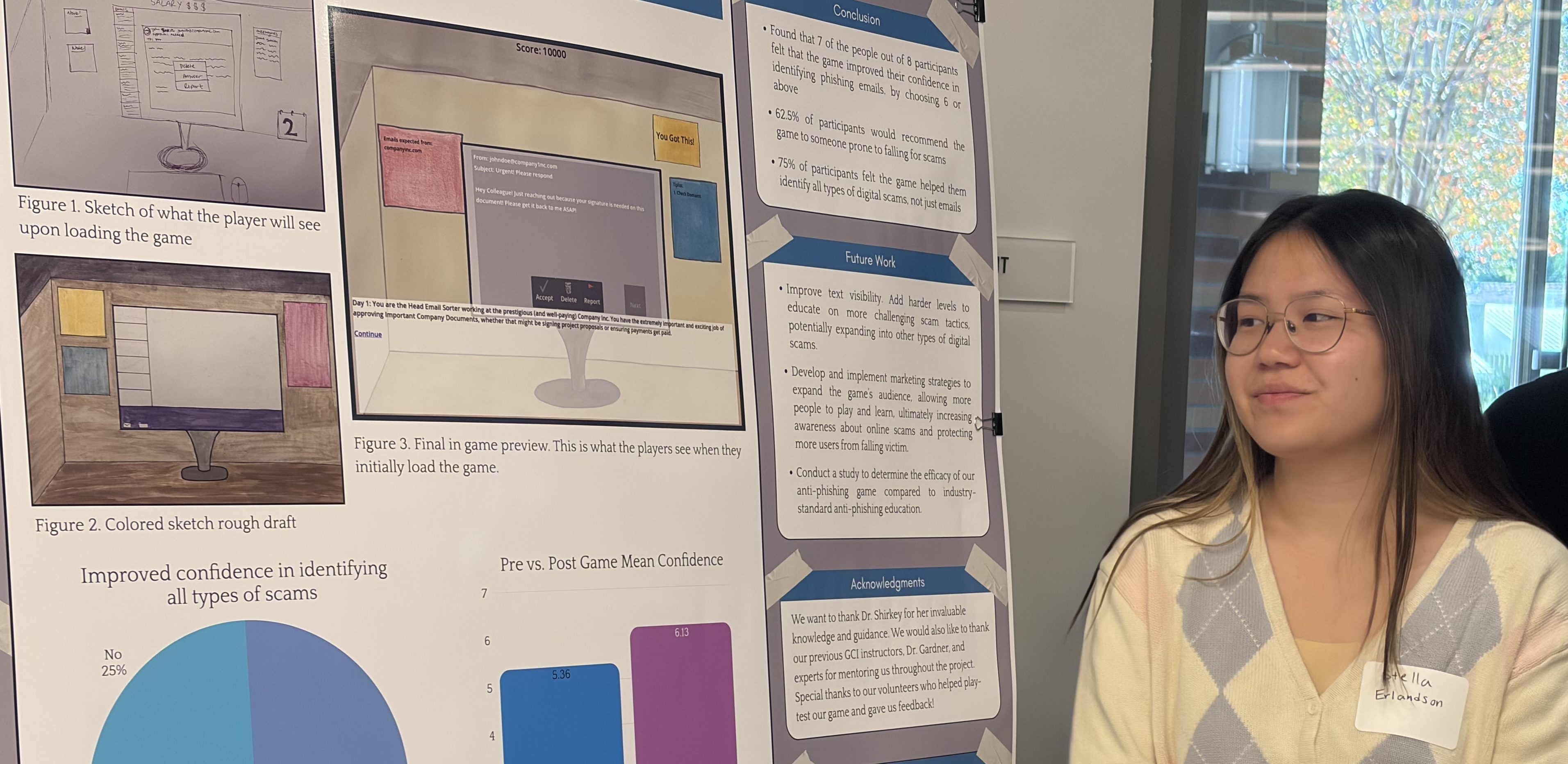
According to the team’s data from test-play volunteers, 75% of players reported increased confidence in identifying digital scams, not just phishing emails. The team talked about expanding the scope of the game to educate about other kinds of digital scams, as well as adding harder levels going forward.
Thoughts from the Dean
Schmid College Interim Dean Christopher Kim attended the Fall GCI Showcase and encouraged the students to leverage their GCI experience to stand out in their future careers.
“I was really impressed, as I often am, by the quality of the GCI projects this semester and the articulateness with which the different groups could talk about what challenges they faced. GCI is a lot of things to a lot of people. I hear consistently that students who do it learn something about themselves; they learn what it means to work in a team; they learn what it means to tackle an open challenge that doesn’t necessarily have a pre-determined answer. All of those things are highly valued in the broader workplace, in graduate institutions, and in fellowship selection committees.”
The GCI Showcase is held at the end of every semester, with the much larger Spring Showcase coming up in May of this year. To learn more about the Grand Challenges Initiative, visit their blog here.