Dr. Hesham El-Askary of Schmid College has been appointed by the UN as a co-author on the latest climate change assessment report.
Dr. El-Askary is a professor of Remote Sensing and Earth Systems Science at the Schmid College of Science and Technology. He leads the Earth Systems Science and Data Solutions Lab, studying Earth’s atmosphere, magnetic field and other environmental phenomena to better understand the impacts of climate change. Dr. El-Askary formerly served as the Vice-President of the Egyptian Space Agency, and is now a co-author on the UN’s latest report on climate change.
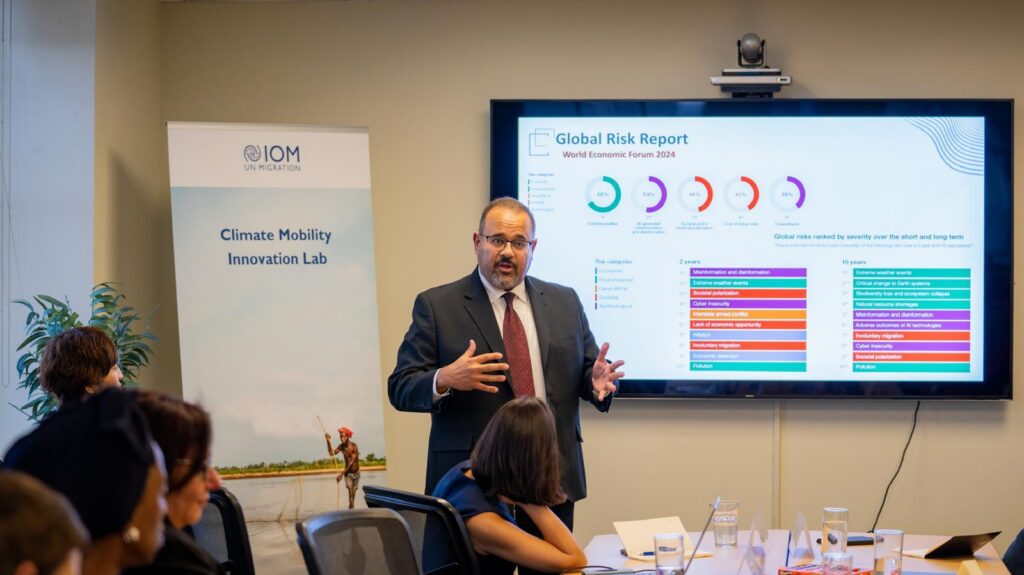
In late 2025, Dr. El-Askary was nominated by the Egyptian government to work with the Intergovernmental Panel on Climate Change (IPCC) on the latest climate assessment report, called the AR7. The AR7 is a compilation of all the current research on climate change that is presented to the UN to inform international policies. According to the IPCC’s website, the review process for the AR7 began in 2023, and is set to conclude in 2029.
“I feel recognized, which is a great feeling because being part of the IPCC comes after years of work and years of effort. I am now in the position where I am trying to not only conduct scientific research, but to contribute to shaping a policy or a decision-making process based on scientific discoveries. All of this makes me quite thrilled. It’s a lot of work. It’s a lot of commitment and a huge responsibility,” says Dr. El-Askary
The IPCC and the AR7 review process are independent of any one government, as are the co-authors on the report. Dr. El-Askary is one of 664 climate change experts from 111 countries who were selected as co-authors out of over 3,700 nominees from around the world.
“The IPCC has three working groups: ‘physical climate science,’ ‘mitigation of climate change,’ and ‘impacts, adaptation and vulnerability,’ which is the working group I am in right now,” says Dr. El-Askary.
The goal of IPCC’s climate assessment report is to provide the latest, most urgent information on climate change to governments worldwide. The panel aims to help inform international climate policy, such as the Paris Accords, rather than prescribing specific plans or guidelines.
For researchers like Dr. El-Askary, the AR7 is a chance to participate in a decision-making process that impacts the entire planet, as well as to help Schmid students prepare to do the same.

“I think it’s good representation for Schmid and for Chapman to have one of their scientists be recognized at a global stage. It speaks to the level of knowledge and expertise that we have in-house. Our future students should know that you will be working with people who are shaping global policies.”
When we spoke with Dr. El-Askary, he was on sabbatical in Saudi Arabia, studying and mapping arid habitats under the International Union for the Conservation of Nature. He talked about the urgency of such studies, and of the AR7.
“Climate change is a fact. Climate change is not about the future. Climate change is about the present. We are observing and noticing a change, massive change in the magnitude and in the frequency of natural disasters, levels of frost, unprecedented wildfires, droughts, floods, and atmospheric rivers. We are witnessing climate change impacts now. It is not a luxury to wait for something in the future.”
The AR7 is set to submit for UN review in 2029.