Faculty Notes
January 2015
Chris Kim has just accepted the role of co-chair for the following national conference Promoting High-Impact Practices With the Council on Undergraduate Research Biennial Conference. Also, the following papers he co-authored with former students were published in Geochimica et Cosmochimica Acta, the journal of The Geochemical Society and The Meteoritical Society:
- “Aggregation of nanoscale iron oxyhydroxides and corresponding effects on metal uptake, retention, and speciation: II. Temperature and time”
- “Aggregation of nanoscale iron oxyhydroxides and corresponding effects on metal uptake, retention, and speciation: I. Ionic-strength and pH”
Hesham El-Askary and Menas Kafatos co-authored the recently accepted research article “Studying air pollutants origin and associated meteorological parameters over Seoul from 2000 to 2009” with Sunmin Parka, I. Sabbahe, Hanbin Kwakg, Anup K. Prasadh and Woo-Kyun Leeg. The article appeared in Advances In Meteorology (In Press, 2015).
Hesham El-Askary’s paper published in early 2014 was recognized by NASA Observatory on January 15, 2015.
Rosalee Hellberg co-authored the a “Effects of climate change on the persistence and dispersal of foodborne bacterial pathogens in the outdoor environment: A review” which published in Critical Reviews in Microbiology.
William Wright was a co-author in Marine Ecology Progress Series on the paper “Shifts in attack behavior of an important kelp forest predator within marine reserves.” This paper started with Wright’s sabbatical research and included collaboration with Chapman undergraduates John Berriman and Daniel Goldstein. The research team traveled to the Wrigley Marine Science Center marine reserve on Catalina to conduct the research. Since then they teamed up with other researchers at UC Santa Barbara and showed that the reserve effect occurs in the northern channel islands as well.
December 2014
Michael Macpherson co-authored the article “The Genetic Ancestry of African Americans, Latinos, and European Americans across the United States” which was published in The American Journal of Human Genetics 96, 37–53 (2015). The article was later cited by Carl Zimmer in his New York Times article “White? Black? A Murky Distinction Grows Still Murkier”.
Jennifer Funk, Cyril Rakovski and Michael Macpherson (all of whom are Schmid College faculty members!) co-authored “On the analysis of phylogenetically paired designs” which was accepted by in Ecology and Evolution.
Jennifer Funk co-led a project with alumna Madison Hoffacker ‘14 which has resulted in their research article “Summer irrigation, grazing and seed addition differentially influence community composition in an invaded serpentine grassland” that was published in Restoration Ecology, the journal of the Society for Ecological Restoration.
Hesham El-Askary co-authored the recently accepted research article “Study of Aerosols’ Characteristics and Dynamics over the Kingdom of Saudi Arabia using a Multi Sensor Approach Combined with Ground Observations” with Ashraf Farahat and Abdulaziz Al-Shaibani. The article will appear in Advances In Meteorology (In Press, 2015).
Ramesh Singh gave an invited talk, “Ground water Fluctuations, Gas Emissions and Land Surface Temperature: A Possible Link to Atmospheric Anomalies Associated with Earthquakes” in December at the 4th Bi-Annual International Geohazards Symposium (IGRS 2014) held at the NASA AMES Research Park, Mountain View, Calif. In addition, Singh attended the AGU Fall meeting in San Francisco where he gave an oral presentation on “Agriculture Crop Burning in Northwestern India and Its Impact on Atmospheric Pollution and Air Quality,” co-authored by his collaborators from India and Harvard University, and presented three posters related to dust problems in China and long-term radon measurements associated with recent Wenchuan and Lushan earthquakes. Finally, Singh’s essay, “India’s ‘no’ to emission cap deadline is unfortunate” was published on Yahoo! News India.
November 2014
Rosalee Hellberg co-authored the paper “Microbial safety and quality of fresh herbs from Los Angeles, Orange County, and Seattle farmers’ markets” which was published in Journal of the Science of Food and Agriculture.
Ramesh Singh gave a talk, “Enhanced Chl-a concentrations associated with Coastal Earthquakes” at the 12th Biennial Conference of Pan Ocean Remote Sensing Conference (PORSEC2014) “Ocean Remote Sensing of Sustainable Resources” held in Bali during Nov. 4-7, 2014. During Nov. 18-22, 2014, Singh was invited to give a key talk, “Anomalous Changes in Water Level and Carbon Monoxide Associated with Earthquakes in the Mid and Eastern Parts of US” at the GeoRisk 2014 Conference (www.georisk2014.com/) held in Madrid, Spain. He also attended Business meeting of IUGG GeoRisk Commission held on Nov. 21. The main agenda was IUGG General Assembly to be held in Prague during June-July 2015. Singh was invited by the University of Valencia where he gave a talk on “Land, Ocean and Atmosphere Coupling in Changing Environment – Monitoring through Multi Satellite Sensors” on Nov. 25, 2014.
May 2014
Rosalee Hellberg, Ph.D., assistant professor of food science, recently published a paper entitled “Comparison of DNA extraction and PCR setup methods for use in high-throughput DNA barcoding of fish species” in the journal Food Analytical Methods. The paper may be read online at http://link.springer.com/article/10.1007%2Fs12161-014-9865-z#.
Faculty awarded prestigious honors at the 19th Annual Chapman University Faculty Honors Convocation. Dr. Christopher Kim was awarded Chapman University’s elite Senior Wang-Fradkin Professorship. Other awards presented to Schmid College faculty included:
- a Valerie Scudder Award to Anuradha Prakash, Ph.D., professor, Food Science and Nutrition
- an Excellence in Service award to Drew Moshier, Ph.D., professor, School of Computational Science
- an Excellence in Research award to Peter Jipsen, Ph.D., professor, Department of Mathematics
- two Excellence in Teaching awards: one to Matthew Gartner, Ph.D., instructor, School of Earth and Environmental Sciences, and another to Melissa Rowland-Goldsmith, Ph.D., assistant professor, Crean School of Health and Life Sciences
March 2014
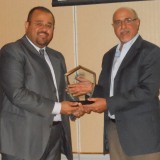 Dr. Hesham El-Askary, Director of Hazards, Global and Environmental Change and Computational Science Programs at Chapman University travelled to Saudia Arabia to the Earth Science Department (ESD) of King Fahd University of Petroleum &Minerals. There, he met with Dr. Ashraf Farahat of Prep Year and toured the different Lab/research facilities of the university. He also gave a one-day workshop on “Introduction to Remote Sensing” and, later in the week, delivered a seminar entitled “Earth’s Spheres and the Changing Climate: Are we in Denial?”
February 2014
Ramesh P. Singh, Ph.D., professor, School of Earth and Environmental Sciences, Schmid College of Science and Technology, was conferred a Fellowship of the Indian Geophysical Union for his contributions in the field of Earth Sciences during 50th Annual Convention “Sustainability of Earth System – The Future Challenges” of the Indian Geophysical Union held at the National Geophysical Research Institute, Hyderabad, India, Jan. 8-12. His visit was partially supported by the Sustainability Committee of Chapman University. Dr. Singh gave an invited talk titled “Melting of Himalayan Glaciers: Impact of Dust or Black Carbon?” at the convention.
Dr. Singh also gave an invited talk titled “Increasing Atmospheric Pollution and Solar Dimming” at the Gujarat Energy Research & Management Institute (GERMI), Gandhinagar. India on Dec. 24 and “Land-Ocean-Atmosphere Coupling Associated with Earthquakes” on Dec. 26, at the Indian Seismological Research Institute, Gandhinagar, India.
January 2014
Hesham El-Askary, Ph.D., has been selected to edit a collection of papers on the newest research regarding aerosols and their impacts on global climate issues for the journal Advances in Meteorology, a peer-reviewed, open access journal that publishes original research articles as well as review articles in all areas of meteorology.
Jennifer Funk, Ph.D., assistant professor in the School of Earth and Environmental Sciences, Schmid College of Science and Technology, recently published a paper entitled “The physiology of invasive plants in low-resource environments” in the journal Conservation Physiology. The paper may be read online at http://conphys.oxfordjournals.org/content/1/1/cot026.
Ramesh P. Singh, Ph.D., professor, School of Earth and Environmental Sciences, Schmid College of Science and Technology, has been conferred as a Fellow of Indian Society of Remote Sensing by the Indian Society of Remote Sensing (ISRS) for his scientific contributions to the field of remote sensing. Singh is a life member of the ISRS. Previously he was a member of the Executive Committee of the Society for two terms during 1998-2000 and 2000-2002 and the chief editor of the Indian Society of Remote Sensing Journal during 2001 – 2007 published by Springer. The fellowship was conferred on him in December 2013 at the Inaugural Function of the Indian Society of Geomatics (ISG) – Indian Society of Remote Sensing (ISRS) National Symposium on “Remote Sensing and GIS for Environment with Special Emphasis on Marine and Coastal Dynamics.”
November 27, 2013
David Frederick, Ph.D., assistant professor of psychology, explained his “who pays for the date” research, Huffington Post.
Walter Piper, Ph.D., professor of biological sciences, discussed his latest research uncovering new insights into how loons choose their nesting sites, Inkfish.fieldofscience.com.
November 11, 2013
Jennifer Funk, Ph.D., assistant professor of biological sciences, recently published a paper entitled “Leaf traits within communities: Context may affect the mapping of traits to function” in the journal Ecology. The paper may be read online at www.esajournals.org/doi/pdf/10.1890/12-1602.1
Ramesh P. Singh, Ph.D., professor, was invited to attend the Third International Workshop on Diagnosis of Environmental Health by Remote Sensing, DEHRS, 2013 and The 10th Anniversary of the Founding of the Centre for Applications of Spatial Information Technologies in Public Health held in Shenzhen, China in September. He gave an invited talk titled “Remote Sensing of Atmospheric Pollution and Its Impact on Health” and also chaired a scientific session for young researchers.”
October 7, 2013
Georgiana Bostean, Ph.D., assistant professor, School of Earth and Environmental Sciences, recently published a research paper titled “Cardiovascular health: associations with race-ethnicity, nativity, and education in a diverse, population-based sample of Californians” in the Annals of Epidemiology 23:388-394.
Hesham El-Askary, Ph.D., associate professor, School of Earth and Environmental Sciences, and Director of Hazards, Global and Environmental Change and Computational Science Programs, gave a lecture at the Orange Public Library Foundation’s STEAM (Science, Technology, Engineering, Arts, and Math) for Teens program. El-Askary covered various topics including global climate change and the technology and methods used in weather and climate research. The lecture marked the opening of the STEAM for Teens series.
September 26, 2013
Julia Boehm, Ph.D., Assistant Professor Psychology, was recently awarded a National Institutes of Health (NIH) grant of $204,379 over 2 years, for her research entitled, “Adaptive Aging: Psychological Well-Being and Favorable Cardiovascular Health.”
July 1, 2013
Hesham El-Askary, Ph.D., associate professor and director of the Hazards, Global and Environmental Change and Computational Science Programs in the Schmid College of Science and Technology, co-authored six chapters in the prestigious three-volume book series on Regional Climate Change in the Mediterranean published by Springer. El-Askary’s chapters appear in volume three of the series and are case studies focused on the impact of climate change on sea level rise over the Delta region in Egypt. The books involve many of the leading earth systems scientists from around the world and are a result of four years of work on the part of the contributors. The trio of books was funded by Mega project CIRCE at $13 million euros, making it one of the most highly-funded science projects. El-Askary’s chapters were selected from the participating scientists to focus his work on Egypt, serving as the principal investigator for his work package and the lead on the case studies for that region. The book may be previewed online at the Springer website.
June 17, 2013
Jennifer Funk, Ph.D., assistant professor in the School of Earth and Environmental Sciences, Schmid College of Science and Technology, recently published a paper entitled “Differential Allocation to Photosynthetic and Non-photosynthetic Nitrogen Fractions Among Native and Invasive Species” in the journal PLOS ONE. The paper may be read at the PLOS ONE website.
Ramesh Singh, Ph.D., professor, School of Earth and Environmental Sciences, Schmid College of Science and Technology, was invited to serve as Deputy Organizer for the scientific event, “Towards Scientific Exploitation of Operational EO Missions for Land Processes and Natural Hazards,” to be held during 40th COSPAR Scientific General Assembly to be held in Moscow in August, 2014. The COSPAR scientific assembly is held biennially in different countries.
May 16, 2013
Jason Keller, Ph.D., assistant professor, School of Earth and Environmental Sciences, Schmid College of Science and Technology, recently published a paper titled Solid-phase organic matter reduction regulates decomposition in a bog soil in the journal Ecosphere. Kimberly Takagi, Ph.D., ’05 and a previous post-doc in Keller’s lab is a co-author on this manuscript. This work demonstrates, for the first time, that the novel microbial process of “breathing” organic matter in place of oxygen dominates decomposition and suppresses the production of methane in a wetland soil. A copy can be found here – http://www.esajournals.org/doi/pdf/10.1890/ES12-00382.1.
Ali Nayeri, Ph.D., assistant professor, School of Computational Sciences, Schmid College of Science and Technology, was invited by the mayor of Pasadena to speak on May 20 in honor of Norooz, the Iranian New Year, which falls on the vernal equinox. At the occasion, Nayeri received several resolutions from local elected officials; including Congresswoman Judy Chu, State Senator Carol Liu and the City of Pasadena.
Ramesh P. Singh, Ph.D., professor, School of Earth and Environmental Sciences, Schmid College of Science and Technology, was invited to give a talk in a session titled Health and Wellbeing organized by Professor Chunxiang Cao (Institute of Remote Sensing and Digital Earth, China) during 35the International Symposium on Remote Sensing of Environment (ISRSE35) held in Beijing on April 22-26. Singh also chaired a session on Atmospheric Pollution and Atmospheric Remote Sensing. ISRSE is held biennially at international locations. The next symposium will be held in Europe in 2015. He was also invited by the China Earthquake Network Center (CENC) in Beijing where he give an April 25 talk titled Satellite Remote Sensing in Understanding Earthquake processes.
March 13, 2013
David Frederick, Ph.D., assistant professor, Crean School of Health and Life Sciences, Schmid College of Science and Technology, has been named a “Rising Star” by the Association for Psychological Science (APS) and will listed in a new section of its publication, The Observer.
The Rising Stars program is APS’s spotlight for recent Ph.D’s and junior faculty who are the movers and shakers of psychological science. Schmid College faculty, Dr. David Frederick, was recently chosen to be a part of these young luminaries. Frederick’s research examines how social transmission processes and our evolved psychology interact to influence our perceptions of what is attractive and our close relationships.
Jennifer Funk , Ph.D., assistant professor in the School of Earth and Environmental Sciences, Schmid College of Science and Technology, recently published a paper titled “Physiological mechanisms drive differing foliar calcium content in ferns and angiosperms” in the journal Oecologia. A copy can be found here – http://link.springer.com/article/10.1007/s00442-013-2591-1.
February 15, 2013
Lisa Sparks, Ph.D., professor, Crean School of Health and Life Sciences, Schmid College of Science and Technology, and have been awarded the Best Paper award from the Global Health 2012 conference held recently in Venice, Italy. The paper is titled: “Introducing the Global Advocacy Leadership Academy (GALA): Training Health Advocates Around the World to Champion the Needs of Health Care Consumers.”
February 15, 2013
Peter Jipsen, Ph.D., associate professor, School of Computational Sciences, Schmid College of Science and Technology, traveled to Switzerland in January to give three lectures at the “Proof and Computation” session of the CUSO Winter School in Mathematics and Computer Science.
February 15, 2013
Menas Kafatos, Ph.D., professor and director for the Center of Excellence in Earth Systems Modeling and Observations, Schmid College of Science and Technology, spoke at two conferences recently. In November he spoke on “Climate Change, Hazards and Regional Impacts with a Focus on Agriculture and Ecosystems” at the 2nd International Workshop on CORDEX-East Asia in Jeju, Korea. In December he presented “Climate Change and Regional Impacts on Agriculture and Ecosystems in Semi-Arid Regions” at the EWACC 2012 Building Bridges Conference in Nicosia, Cyprus.
Professor Kafatos serves on the International Advisory Board for EWACC. EWACC2012 Building Bridges brings together a broad range of expertise – distinguished scientists from various research fields and communities, the private (energy) sector, primary stakeholders, policy makers, and high-level officials, to foster sustainable development by broadening and deepening the Euro-Mediterranean dialogue.
February 15, 2013
Jason Keller, Ph.D., assistant professor in the School of Earth and Environmental Sciences, Schmid College of Science and Technology, recently published a paper entitled “Soil Organic Carbon Storage in Restored Salt Marshes in Huntington Beach, California” in the journal Bulletin of the Southern California of Sciences. This paper is based on a semester-long research project conducted by students in Dr. Keller’s Fall 2011 Ecosystem Ecology (BIOL319) course and demonstrates that the amount of carbon stored in wetlands does not necessarily increase following time since restoration. Co-authors on this paper include Dr. Kimberly Takagi ‘05, a post-doc in Keller’s lab, as well as 10 undergraduate students. A copy can be found here. http://scholar.oxy.edu/scas/vol111/iss2/5/
Dr. Keller is also a co-author on a paper titled “Methane emissions from wetlands: biogeochemical, microbial, and modeling perspectives from local to global scales” to be published in the journal Global Change Biology. In this review paper, new frontiers in the field of wetland methane cycling are explored. A copy can be found here. http://onlinelibrary.wiley.com/doi/10.1111/gcb.12131/pdf
February 15, 2013
Ramesh P. Singh, Ph.D., professor, School of Earth and Environmental Sciences, Schmid College of Science, has been elected as honorary member of the Executive Committee of the IUGG GeoRisk Commission. The Executive Committee of the Commission consists of only three Honorary members, two are past Chairs of the Commission. The nomination was made at the Business meeting of the Commission held during the First IUGG Conference held on Chapman University campus, December 8-11, 2012.
In addition, Dr. Singh was also nominated as Chair of the Award Committee of the International Pan Ocean Remote Sensing Conference Association (PORSEC) by its president. The award committee consists of four members. Committee responsibility is to select scientists for two awards constituted by PORSEC for promotion of science and service related to remote sensing related to Ocean Science.
February 3, 2013
Peiyi Zhao, Ph.D., associate professor, School of Computational Sciences, was invited to serve as speaker and co-chair the session on High Performance Integrated Circuits at the 2nd Annual World Congress of Emerging Info Tech 2013 at the Dalian World Expo Center in Liaoning, China.
February 3, 2013
Hesham El-Askary, Ph.D., associate professor, School of Earth and Environmental Sciences, will give a talk on April 25-27, 2013 at the World Congress of Biodiversity, Ecology and Environment in the Nanjing International Expo Center Jinling Convention Center, Nanjing, China.
December 14, 2012
Jennifer Funk, Ph.D., assistant professor, School of Earth and Environmental Sciences, Schmid College of Science and Technology, traveled to Santiago, Chile to conduct research funded by a grant from the National Science Foundation. The research project examines the physiological and morphological differences between native and exotic plant species from the five Mediterranean-climate regions: California, Chile, Australia, South Africa, and the Mediterranean Basin. The goal of the project is to find a standard protocol to eliminate exotic species and restore native plant communities in all five regions. California poppy is an abundant weed in Chile and was one of the focal species on the trip.
December 14, 2012
Ramesh P. Singh, Ph.D., Professor, School of Earth and Environmental Sciences attended 11th Biennial Pan Ocean Remote Sensing Conference PORSEC – 2012 held during November 5-9, 2012, Kochi, India and presented a research paper titled, “Atmosphere-Ocean Coupling Associated with Dust Events”. He convened a session on Early Warning of Tsunami together with Dr. Tony Song, JPL, CA. Dr. Singh is member of the Science Organizing Committee of the PORSEC and attended Scientific Organization Committee meeting, the next 12th Biennial PORSEC will be held in Bali, Indonesia during 4-7 November 2014.
October 22, 2012
Ramesh P. Singh, Ph.D., professor, School of Earth and Environmental Sciences, Schmid College of Science and Technology, attended an international workshop on Electromagnetic Phenomena Associated with Earthquakes and Volcanoes during October 1-4 in Shizuoka, Japan and presented a research paper titled, “Perturbations in Extra-Terrestrial Magnetic Fields Prior to Major Earthquakes.” His French collaborator presented a paper on Taal Volcano in Philippines, for which Dr. Singh was one of the co-authors contribute in satellite monitoring of CO emissions from this volcano. He chaired a scientific session on October 2 and also attended business meetings as one of the members of the EMSEV Bureau.
October 22, 2012
Christopher Kim, Ph.D., associate professor, School of Earth and Environmental Sciences, on Oct. 4 gave an invited lecture as part of the Shell Colloquium series at the University of Oklahoma’s School of Geology and Geophysics entitled “Arsenic Distribution, Speciation, and Bioaccessibility in Mining Environments.”
October 22, 2012
Tatiana Prytkova, Ph.D., assistant professor, School of Computational Sciences, Schmid College of Science and Technology, has received a prestigious research grant from one of the nation’s oldest science foundations, Research Corporation for Science Advancement (RCSA), to study “The Protein Structure and Mobility Control of Electron Transfer Reactions in Ru-Modified Proteins.”
Prytkova’s work may one day have broad implications for solar energy production. The two-year grant is $35,000 with a $10,000 match from Chapman University.
At the very heart of solar power technology is the ability of an electron, the tiny particle “orbiting” the center of an atom, to absorb the energy of a photon, the tiniest packet of light energy. When trillions upon trillions of photons from the sun strike billions of electrons in the atoms that make up the leaves of trees, photosynthesis occurs. But to power machines efficiently with clean, inexhaustible sunlight, researchers must concentrate on the basics – they must better understand precisely how those photons in sunlight interact with the electrons in atoms.
Prytkova is focusing on what happens in the instant after an electron is “excited” by contact with a photon. She is studying “electron transfer reactions.”
October 5, 2012
Tatiana Prytkova, Ph.D., assistant professor, School of Computational Sciences, Schmid College of Science and Technology, has received a research grant from the Research Corporation for Science Advancement (RCSA) to study “The Protein Structure and Mobility Control of Electron Transfer Reactions in Ru-Modified Proteins.” The research is aimed at improving efficiency in solar power.
October 5, 2012
Lisa Sparks, Ph.D., professor, Crean School of Health and Life Sciences, Schmid College of Science and Technology, was listed as the seventh most prolific author contributing to the journal Health Communication in a study of analyzed trends and patterns in the 22 years of research published in the journal. The listing was compiled from a content analysis of 642 articles that have appeared in Health Communicationsince its inception.
September 10, 2012
Ramesh Singh, Ph.D., professor, School of Earth and Environmental Sciences, Schmid College of Science and Technology, has had his journal Geomatics, Natural Hazards and Risk Journal published by Taylor and Francis, accepted for inclusion in in Web of Science by Thomson Reuters. The Journal includes research papers dealing with new concepts, approaches and case studies using geospatial (GIS and GPS) and remote sensing techniques to study monitoring, mapping, risk management and mitigation, risk vulnerability and early warning of natural hazards. All types of articles related to natural hazards associated with land, ocean, atmosphere, land-ocean-atmosphere coupling and those induced by climate change are included. In addition, also focuses on the emerging problems related to multi-hazard risk assessment, multi-vulnerability risk assessment, risk quantification, economic aspects of hazards, visualization and communication.
September 10, 2012
Hesham El-Askary, Ph.D., associate professor, School of Earth and Environmental Sciences, is the principal author of a paper in Wiley Interdisciplinary Reviews, Computational Methods for Climate Data. Co-authors include Schmid colleagues Mohamed Allali, Ph.D., associate professor; Cyril Rakovski, Ph.D., assistant professor; Anup Prasad, Ph.D., assistant professor, Menas Kafatos, Ph.D., professor, and Daniele Struppa, Ph.D., professor and chancellor.
August 20, 2012
July 23, 2012
Jason Keller, Ph.D., assistant professor, School of Earth and Environmental Sciences, recently published a paper entitled “Anaerobic metabolism in tidal freshwater wetlands: I. Plant removal effects on iron reduction and methanogenesis” in the journal Estuaries and Coasts. This paper explores the role of plants in regulating the competition between various microbial processes in wetland soils. The project involved a multi-year plant removal experiment conducted with collaborators at the Smithsonian Environmental Research Center. Dr. Keller is also a co-author on a companion manuscript exploring the microbial community structure in this plant removal experiment.
In addition, Dr. Keller co-authored a paper entitled “pH controls over anaerobic carbon mineralization, the efficiency of methane production, and methanogenic pathways in peatlands across an ombrotrophic–minerotrophic gradient” which recently appeared in the journal Soil Biology & Biochemistry. This article was published with collaborators from the University of Oregon.
July 23, 2012
Christopher S. Kim, Ph.D., associate professor, School of Earth and Environmental Sciences, had a paper titled Fluvial transport and surface enrichment of arsenic in semi-arid mining regions: examples from the Mojave Desert, California in the “Journal of Environmental Monitoring.” The article was selected as a Journal of Environmental Monitoring HOT Article and has been made free to access for four weeks.
January 27, 2012
Jason Keller, Ph.D. assistant professor, School of Earth and Environmental Sciences, Schmid College of Science and Technology, recently published an invited commentary entitled “Wetlands and the global carbon cycle: what might the simulated past tell us about the future?” in the journal New Phytologist. This commentary was in response to a paper in the journal and highlights some of the gaps that still exist in our understanding of the relationship between wetlands and the global climate. A copy is available online.
Dr. Keller also recently presented an invited talk to the Southern California Coastal Water Research Project. This talk highlighted the wetland-related work that he and student collaborators are conducting at Chapman and is available online.
January 27, 2012
Ramesh P. Singh, Ph.D., professor, School of Earth and Environmental Sciences, Schmid College of Science and Technology, convened two sessions, “Remote Sensing of Natural Hazards” and “Land-Ocean-Atmospheric Processes: Implication to Natural and Man-Made Hazards” in the recent Fall AGU meeting held in San Francisco Dec. 5-9, 2011. Dr. Singh chaired three oral sessions and also acted as judge for the AGU Outstanding Student Paper Awards for the Natural Hazards Focused Group sessions.
Dr. Singh presented a paper in collaboration with scientists from JPL and NASA, showing the impact of dust and biomass burning on the snow cover of the San Juan Mountains.
In addition, Dr. Singh was invited to attend Natural Hazards council meeting where he presented his plans of First International Conference IUGG (International Union of Geodesy and Geophysics) GRC (Geo Risk Commission) on Extreme Natural Hazards and Their Impacts to be held at Chapman University during Dec. 11-14, soon after the next Fall AGU 2012 meeting.
January 13, 2012
Virginia Carson, Ph.D., professor, and Melissa Rowland-Goldsmith, Ph.D., assistant professor, Crean School of Health and Life Sciences, Schmid College of Science and Technology, have both been named as a National Academies Education Fellow in the Life Sciences. This honor was given by their participation in the 2011 National Academies Regional Summer Institute on Undergraduate Education in Biology that was held Sept. 7-11, 2011 at The Evergreen State College, Olympia, Wash. The Summer Institute is the direct result of a key recommendation from the 2003 National Research Council report, Bio2010: Transforming Undergraduate Education for Future Research Biologists, which called for programs of professional development to engage faculty at research-intensive institutions in taking greater responsibility for high-quality undergraduate biology education. The report emphasizes the importance of new pedagogical approaches to teaching based on emerging evidence about how people learn and a greater emphasis on interdisciplinary teaching. It calls upon college and university administrators—as well as funding agencies—to support faculty in the development or adaptation of such approaches.
January 13, 2012
Hesham El-Askary, Ph.D., associate professor, director Hazards, Global and Environmental Change Program, Schmid College of Science and Technology, has just returned from attending the American Geophysical Union (AGU), an international gathering of more than 15,000 scientists. Dr. El-Askary chaired two oral sessions and a poster session titled “Atmospheric Dust: Interdisciplinary Studies” as well as served as judge for student poster awards. He and his co-authors on four papers presented their ongoing research. Prior to this trip, Dr. El-Askary attended the 3rd International Workshop on Environmental Geospatial Information that was held in Yeosu, Korea, during which he gave an invited talk in a workshop titled “Climate Change and Environmental Information.”
January 13, 2012
Christopher Kim, Ph.D., associate professor of Earth and Environmental Sciences, Schmid College of Science and Technology, recently co-authored a manuscript in Environmental Science & Technology, the top environmental science journal in the field. The study looked at the chemical speciation of mercury in sulfide-containing aqueous environments and discovered the formation of nanosized particles of metacinnabar (mercury sulfide) at concentrations lower than ever before identified through direct observation. This has impacts on the understanding of mercury biogeochemistry in natural systems.
December 5, 2011
Anup Prasad, Ph.D., assistant professor, School of Earth and Environmental Sciences, Schmid College of Science and Technology, made an oral presentation at World Climate Research Program (WCRP) Open Science Conference, Oct. 24-28, 2011 in Denver, Colo. The presentation, entitled “Impact of dust storms and anthropogenic emissions on the Indo-Gangetic Basin and melting of Himalayan Glaciers” analyzed multi-sensor dust and gaseous chemistry data over the Indian subcontinent and its impact over the melting of major Himalayan glaciers across the Himalayan range.
Dr. Prasad was also invited for “Early Career Scientist Assembly (ECSA) Workshop on Regional Climate Issues in Developing Countries,” an Advanced Study Program (ASP) at the National Center for Atmospheric Research (NCAR), Mesa Lab in Boulder, Colo., Oct. 19 and 22. The ECSA and ASP invited more than 35 early career scientists from about 20 countries to Boulder, to attend a 2½-day workshop prior the WCRP Open Science Conference in October 2011. The theme of the workshop was regional climate and climate impacts with breakout sessions for discussion. Dr Prasad made a presentation on his recent work based on the remote sensing observations from CALIPSO, MODIS and OMI AURA observations showing the long-range transport of desert dust and its mixing with local anthropogenic pollutants over the Indian sub-continent before reaching the Himalaya-Tibet snow and glacier cover regions.
Dr Prasad attended a conference “Third Santa Fe Conference on Global and Regional Climate Change” at Santa Fe, N.M., Oct. 30 to Nov. 4. He presented the recent work performed by the working group of NIFA/USDA/NSF Grant lead by the Professor Kafatos, Dean, Schmid College of Science and Technology. The title of the poster presentation is “Multi-Model Simulations and satellite observations for Assessing Impacts of Climate Variability on the Agro-ecosystems in California and Southwestern United States.” Three different meteorological models RAMS, WRF, and OLAM, utilizing the Cluster Computing and MODIS Direct Broadcast facility at Schmid College of Science, are producing high resolution historical and forecast runs of meteorological conditions over South West USA. The dynamic ecosystem model and crop yield models will eventually utilize model outputs to assess historical conditions and forecast regional changes with respect to crop yield of major crops of California and surrounding states.
December 5, 2011
Hesham El-Askary, Ph.D., associate professor, Earth System Science and Remote Sensing and Director Hazards, Schmid College of Science and Technology, has co-authored a paper titled “Aerosol Climatology over Nile Delta based on MODIS, MISR and OMI satellite data,” which was published in the Atmospheric Chemistry And Physics, a journal with impact factor 5.309 ranked number 1 in the world in the meteorology and atmospheric sciences discipline according to the ISI web of Knowledge. The authors presented a detailed analysis of the optical and microphysical aerosol properties, based on satellite data. Monthly mean values of Moderate Resolution Imaging Spectroradiometer (MODIS) aerosol optical depth (AOD) at 550 nm were examined for the 10-year period from 2000–2009. All of the results show that the air quality in Cairo and the Nile delta region is subject to a complex mixture of air pollution types, especially in the fall season, when biomass burning contributes to a background of urban pollution and desert dust. In this paper the authors argued that the main contributing factor to the black cloud pollution is the biomass burning of agricultural waste during the fall season. Our climatological results may provide a new approach to investigate the impact of air pollution episodes on regional climate systems.
December 5, 2011
Christopher S. Kim, Ph.D., associate professor, School of Earth and Environmental Sciences, Schmid College of Science and Technology, recently returned from the 14th annual Chinese-American Kavli Frontiers of Science symposium held on Nov. 5-7 in Shenzhen, China, and co-sponsored by the US National Academy of Sciences (NAS) and the Chinese Academy of Sciences.
The Academy’s Kavli Frontiers of Science symposia bring together outstanding young scientists to discuss exciting advances and opportunities in a broad range of disciplines. U.S. symposium participants are selected from among recipients of prestigious fellowships, awards, and other honors, as well as from nominations by NAS members and other participants. In addition to learning about research at the frontiers of fields other than their own, the program is intended to create a network of connections that can be maintained as participants advance in their careers. Since its inception, 136 program “alumni” have been elected to the NAS and eight have won Nobel Prizes.
Dr. Kim attended a wide variety of academic sessions on topics ranging from environmental nanomaterials to collisions in the solar system and autonomous intelligent systems, and gave a poster presentation on his work with using iron oxyhydroxide nanoparticles for remediation of metal-contaminated waters.
November 28, 2011
Ramesh P. Singh, Ph.D., professor, School of Earth and Environmental Sciences, participated in the annual meeting of the NSF funded project “Community Surface Dynamics Modeling System” (CSDMS), deals with the Earth’s surface – the ever-changing, dynamic interface between lithosphere, hydrosphere, cryosphere, and atmosphere Oct. 28-30. The PI of the CSDMS project is Professor James Syvitski, University of Colorado, Boulder. Dr. Singh participated in the discussion on the importance of modeling on the observed surface deformation due to ground water withdrawal in many countries including India. Dr. Singh chaired the first scientific session on impact of time and process scales on Oct. 28 of the meeting.
December 5, 2011
Atanas Radenski, Ph.D., professor, School of Computational Sciences, Schmid College of Science and Technology, has received an AWS in Education research grant award from Amazon. The grant provides access to $3,500 worth of Amazon’s cloud computing platform, the Amazon Web Services. AWS is the world’s first – and largest – public cloud computing platform that provides virtual computing resources on a metered, pay-per-use basis. The grant will support Dr. Radenski’s experimental research in the area of high-performance computing. The grant will benefit students who enroll in the graduate course on high-performance computing, part of the core curriculum for the MS in Computational Sciences program. Specifically, graduate students will be able to access some of the Amazon clouds to study and experiment with novel high-performance computing techniques.
October 31, 2011
Naveen Jonathan, Ph.D., LMFT, clinical assistant professor and director of the Frances Smith Center for Individual & Family Therapy, and graduate student Anselma Longoria in the Marriage & Family Therapy program, represented Chapman University’s MFT program at the American Association for Marriage & Family Therapy Conference in Fort Worth, Texas.
October 6, 2011
Fred Caporaso, Ph.D., professor, Crean School of Health and Life Sciences, Schmid College of Science and Technology, presented an invited paper at the 9th Annual Symposium on the Conservation and Biology of Tortoises and Freshwater Turtles- Joint Meeting of the Turtle Survival Alliance and the IUCN Tortoise & Freshwater Turtle Specialist Group, Aug. 14-17, 2011 in Orlando, Florida. The presentation entitled “The Pinzon Island Tortoise (Chelonoidis duncanensis) – From Certain Extinction to the Final Stage of a Conservation Miracle” updated the challenging natural history of a species of giant tortoise from a remote island in the Galápagos Islands. At the conference, Dr. Caporaso was invited to give presentations to both the San Diego Zoological Society and the Wildlife Conservation Society (Bronx Zoo).
October 6, 2011
The Center of Excellence in Earth Observing team at Schmid College of Science and Technology, Drs. Anup Prasad,Hesham El-Askary, Ghassem Asrar and Menas Kafatos, dean of Schmid College, have jointly published a crucial book chapter titled “Melting of Major Glaciers in Himalayas: Role of Desert Dust and Anthropogenic Aerosols” Chapter 5 in InTECH open access publisher “Book: Planet Earth 2011- Global Warming Challenges and opportunities for policy and practice” ISBN 978-953-307-733-8, 2011.
In this work the authors made a brief overview of the source and influence of desert dust and anthropogenic aerosols on the atmosphere, regional temperature change, evidences from ice-core studies, and retreat pattern of Himalayan and Tibetan glaciers. The study of the aerial extent of major Himalayan and Tibetan Plateau snow cover and glaciers using space-based sensors to study the several indicators of glacier dynamics such as glacier front, glacier lakes (melt-water lakes), and indicators of changes in the temperature of glaciers. Moreover, they studied the source and transport of desert dust aerosols and anthropogenic pollutants over the Indian sub-continent. The inter-annual variability in the aerosol loading over the Indian sub-continent and the surrounding regions, such as Arabian Sea, using Moderate Resolution Imaging Spectroradiometer (MODIS) observations during the last decade.
September 27, 2011
Michael Griffin, Ph.D., professor, Crean School of Health & Life Sciences, Schmid College of Science and Technology, recently published two papers in the Journal of Pharmacology and Experimental Therapeutics titled: ”Analysis of Functional Responses at G Protein-Coupled Receptors: Estimation of Relative Affinity Constants for the Inactive Receptor State” and “Analysis of Agonism and Inverse Agonism in Functional Assays with Constitutive Activity: Estimation of Orthosteric Ligand Affinity Constants for Active and Inactive Receptor States.”
September 27, 2011
Dimitar Ouzounov, Ph.D., associate professor, School of Earth and Environmental Sciences, Schmid College of Science and Technology, was the keynote speaker for the APSCO Third International Symposium on Earth Quake Monitoring and Early Warning by Using Space Technology held Sept. 13-15 in Beijing, China.
September 27, 2011
Hesham El-Askary, Ph.D., associate professor, Earth System Science and Remote Sensing and Director Hazards, Schmid College of Science and Technology, recently returned from a trip to Greece and Egypt. In Greece Dr. El-Askary attended the Sixth International Workshop on Sandstorms and Environmental Impact Assessments held in Glyfada-Athens, Greece. The workshop was organized and partially sponsored by the University of Athens, Department of Physics, Atmospheric Modeling, and Weather Forecasting Group. Dr. El-Askary presented a paper titled “Multi Sensor Observations on the Implications of Desert Dust transport to the Nile Delta, the Indo-Gangetic Basin and Himalayan Glaciers,” co-authored with Menas Kafatos, Ph.D., dean of Schmid College, and Anup Prasad, Ph.D., assistant professor, Physics, Computational Science and Engineering, School of Earth and Environmental Sciences.
Dr. El-Askary was also selected in the steering committee of the seventh workshop to be held in two years.
During his trip to Egypt, Dr. El-Askary gave a talk to the faculty of Science, Alexandria University and discussed possible ways of potential collaborations. He is in the process of establishing a collaboration between NASA, Chapman University and Alexandria University. An Aeronet station for monitoring air quality will be deployed by NASA in Alexandria having Dr. El-Askary (Chapman University) as the P.I.
September 16, 2011
Jason Keller, Ph.D. and Jennifer Funk, Ph.D., assistant professors, School of Earth and Environmental Sciences, Schmid College of Science and Technology, have received a Major Research Instrumentation grant from the National Science Foundation. The award will be used to purchase a carbon-hydrogen-nitrogen elemental analyzer for use in research and teaching. Carbon and nitrogen are key elements in ecological systems, and the acquired instrumentation will allow students to gain hands-on experience conducting ecological research on projects ranging from how plants respond to environmental conditions to soil development in salt marsh ecosystems.
September 16, 2011
Jason Keller, assistant professor, School of Earth and Environmental Sciences, Schmid College of Science and Technology, co-authored a paper titled “Personality type differences between Ph.D. climate researchers and the general public: implications for effective communication”, which appears in the journal Climatic Change. This work shows that the personality type of early career climate change researchers differs from that of the general public and highlights the potential for miscommunication between these two groups. A copy of this article is available at SpringerLink.com.
August 31, 2011
Ramesh Singh, Ph.D., professor, School of Earth and Environmental Sciences, Schmid College of Science and Technology, attended IUGG General Assembly held in Melbourne, Australia June 27 – July 7. Dr. Singh organized “Union Symposium on Grand Challenges in Natural Hazards” during IUGG General Assembly and chaired a session titled Earth on the Edge – Recent Pacific Rim Disasters.
Dr. Singh also presented two scientific papers at a symposium organized by the International Association of Hydrological Sciences and International Association of Cryospheric Sciences at the IUGG General Assembly.
In July, Dr. Singh was elected as one of the five new members of the EMSEV Bureau for a term of four years.
August 4, 2011
Jason Keller, assistant professor, School of Earth and Environmental Sciences, Schmid College of Science and Technology, recently returned from a joint meeting of the Society of Wetland Scientists and the International Wetland Biogeochemistry Symposium in Prague, Czech Republic. Dr. Keller presented a talk entitled, “Humic substances as key regulators of methane dynamics across an ombrotrophic-minerotrophic peatland gradient,” in a session which he organized. During the meeting he also took over the elected position of Chair of the Biogeochemistry Section.
August 4, 2011
Brennan Peterson, Ph.D., associate professor, School of Health and Life Sciences, Schmid College of Science & Technology, co-presented two papers at the 2011 meeting of the Copenhagen Multi-Centre Psychosocial Infertility (COMPI) Research meeting. The COMPI team is an interdisciplinary group of infertility scholars from the fields of medicine, public health, psychology, sociology, and anthropology. Dr. Peterson represents the United States while other countries represented include Denmark, the United Kingdom, Portugal, and Israel. The group examines the psychosocial impact of infertility on men and women and seeks to understand how infertility treatments and their outcomes are related to personal and social stress in couples. As a member of the team, Dr. Peterson presented papers on examining the role that secrecy regarding one’s infertility has on social support. He also co-presented about a new typology to identify types of coping strategies for men and women experiencing infertility. Dr. Peterson’s previous work with the COMPI group has examined the impact of couple coping patterns on an individual’s personal, social, and marital distress. He has also examine how the stress of infertility can also lead to long-term benefits in couples including increased marital benefit – when the stress of the infertility experience paradoxically brings the couple closer. His work has been published in Human Reproduction and Fertility and Sterility. The 2011 COMPI meeting was the 5th meeting of the research group which began in 2006.
August 4, 2011
Tatiana Prytkova, Ph.D., assistant professor, School of Computational Sciences, Schmid College of Science and Technology, published an article in the Journal of Physical Chemistry, a Tier 1 journal.
June 1, 2011
Andrew Moshier, Ph.D., professor, School of Computational Sciences, Schmid College of Science and Technology, has been named a Plumer Visiting Fellow at St Anne’s College, University of Oxford. Dr. Moshier will be at Oxford for two months this summer and return for part of January, 2011.