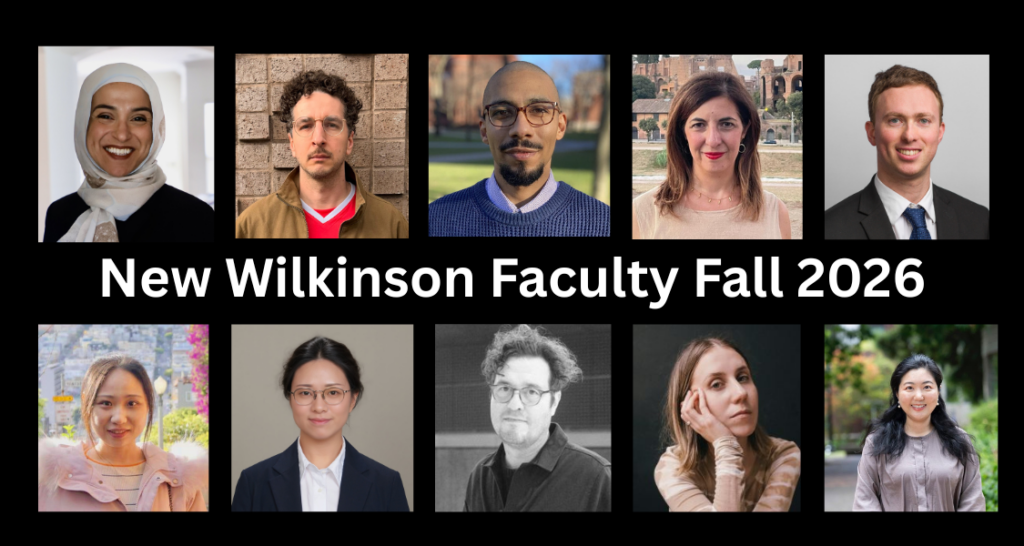
A new academic year brings new ideas, fresh perspectives, and inspiring voices to campus. As we welcome the newest faculty members to Wilkinson College of Arts, Humanities, and Social Sciences, we invited them to share a little about themselves—what drew them to Chapman University and a few fun facts that reveal who they are beyond their academic work. Get to know the scholars, creators, and mentors who are helping shape the future of Wilkinson College.
Marwa Abdalla, Assistant Professor, English

Voice of Wilkinson: Wilkinson is the heart and soul of Chapman University. What does being the heart and soul of this amazing university mean to you?
Marwa Abdalla: I love the metaphor of Wilkinson being the heart and soul of Chapman. I teach a course at a local community center called “Heart and Mind” in which I emphasize how cultures around the world recognize the importance of the human heart as both a spiritual and physical organ. For example, the Ancient Egyptians viewed the heart as the repository of ethics and the center of intelligence and emotion, and it was the only organ preserved in the mummification process. Similarly, the Abrahamic faiths place significant emphasis on the heart as the center of spiritual and moral life. Today, research in biomedicine and psychology shows that practices that strengthen both the physical and spiritual heart positively affect physiological functioning, activate the body’s calming systems, and improve mental health and emotional resilience.
When we use the heart as a metaphor for the role Wilkinson plays at Chapman University, we underscore the role that the arts, humanities, and social sciences play in the strength of our university community. These fields provide opportunities for creativity, critical thinking, and deep engagement with some of the most challenging problems we face as a society. This means so much to me, and I am excited to contribute to Wilkinson College’s mission and Chapman University as a whole.
VoW: What would the personal section of your Wikipedia page say?
MA: Marwa Abdalla was born in Minneapolis, Minnesota, and grew up in small cities and towns across the Midwest. As a teen, she became interested in the resilience of negative stereotypes and the ways in which individuals and groups challenged them. She began volunteering with local organizations as a community educator and working with underrepresented youth. This led her to much of the work she does now as a scholar of cultural rhetorics and cultural studies. She also began long-distance running. She trained for and completed her first marathon in her early twenties and continues to run (albeit at a slower pace!) in road races in Southern California. When not working or running, she enjoys spending time with friends and family, gardening, and completing do-it-yourself projects in her home.
VoW: Tell us the most interesting place you have traveled to.
MA: One of the most interesting places I have traveled to is southern Egypt, where I toured the Ancient Egyptian temples in Luxor and Aswan. I was shocked to see that the pigment in the paint used in the hieroglyphics and images on the temple walls is still preserved due to the hyper-arid desert climate. As someone interested in the power of narratives to shape society and in how symbols construct meaning, I find it fascinating to learn how ancient communities engaged in storytelling and knowledge construction.
VoW: What did you read over the summer?
MA: Over the summer, I read the following: Searching for Solidarity: Revolutionary Dreams and Radical Social Movements, by Noor Ghazal Aswad, Total Market America: Race, Data, and Advertising, by Marcel Rosa-Salas, and Deep Work: Rules for Focused Success in a Distracted World, by Cal Newport.
VoW: Share a fun fact with us!
MA: I am a theater kid! I participated in musical theater and sang in a competitive show choir in high school, and continued acting as an undergrad. I have auditioned for T.V. commercials and done voice-overs for radio. A lifelong goal of mine is to write, produce, and perform my own one-woman show based on my research and work as a community educator and activist.
VoW: Why Chapman?
MA: There are many things I love about Chapman, but one of the things that appeals to me the most is the combination of personalized education and interdisciplinary collaboration. The low student-to-faculty ratio and the emphasis on student mentorship align closely with how I see my role as a teacher-scholar. I believe the best teaching and learning happen in environments that foster engagement, dialogue, and collaboration, and I love that Chapman offers this to faculty and students through programs such as the Wilkinson Interterm Research Experience (WIRE).
I’m also excited by Chapman’s emphasis on creative production and interdisciplinarity. I love the diversity of majors and interdisciplinary minors available to students, and the campus-wide programming, such as the annual interdisciplinary conversations, that bring students and faculty from different departments together around a common theme. My research bridges cultural rhetorics, critical platform and media studies, and questions of race and religion, and I see so many exciting opportunities to connect with students and colleagues across our departments and programs.
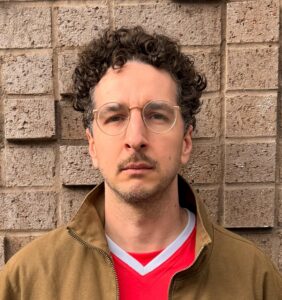
Justin Berner, Assistant Professor, Spanish
Voice of Wilkinson: Wilkinson is the heart and soul of Chapman University. What does being the heart and soul of this amazing university mean to you?
Justin Berner: For me, the phrase captures what is the essence of the humanities: it means that the people and the ideas in Wilkinson help us all appreciate what it means to be human and to be in a community together here at Chapman.
VoW: What would the personal section of your Wikipedia page say?
JB: It would probably mention my itinerant life so far! I’ve moved a bunch, from Pittsburgh to California and then to Spain, back to California, then to New York, and then China, then back to New York, and now once again in California, with a lot of other places in between.
VoW: Tell us the most interesting place you have traveled to. Where do you hope to travel one day?
JB: Gibraltar was a surreal experience that still sticks with me: I’m always intrigued by these liminal spaces, so there was something really unique about a British exclave in Spain, right next to this historically famous point between two continents. The top item on my list now is to go further south in South America: I’ve always wanted to visit Chile and Argentina, and studying Portuguese has really gotten me interested in Brazil.
Vow: What’s your favorite book? What did you read over the summer?
JB: My preferences change a lot, but I’ve been getting into Mad Men this spring/summer, which I never saw when it first came out. Most of my books are currently in storage as I move, but I did read a bit of St. Augustine’s Confessions when I was back in my parents’ home in Pittsburgh.
VoW: Share a fun fact with us!
JB: I was captain of my high school soccer team (but I was never very good, and it’s not my favorite sport…).
VoW: Why Chapman?
JB: I really loved the sense of community and the intellectual curiosity when I interviewed here. It’s also a lovely location – a small-town feel in a beautiful setting, yet right next to this giant, vibrant metropolis.
Angel Dagonel, Assistant Professor, Political Science
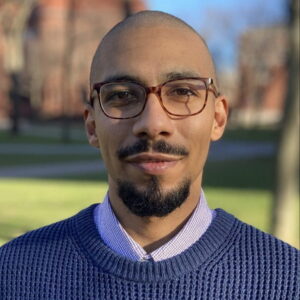
VoW: Wilkinson is the heart and soul of Chapman University. What does being the heart and soul of this amazing university mean to you?
Angel Dagonel: My love of education has always been tied to the study of the humanities and social sciences. As a student, I always felt they allowed for both creative and critical thinking and opened my mind to how to understand and interpret the real world. Being part of Wilkinson means a lot to me because it gives me the opportunity to bring out my love for creative and critical learning for Chapman students.
VoW: What would the personal section of your Wikipedia page say?
AD: It would definitely have to say I’m from the San Gabriel Valley! Anyone who knows me knows that I proudly represent Pasadena, Altadena, and Alhambra, so I’d imagine the section would start there. It would also probably mention my less accomplished history as a musician, both as a record-digging producer of instrumental hip-hop and as a more recent guitar noodler.
VoW: Tell us the most interesting place you have traveled to. Where do you hope to travel one day?
AD: The most interesting place I’ve traveled to internationally was Barcelona, Spain. I loved their panderias and the energy of its residents, and accidentally bumping into Gaudí buildings. Domestically, Shenandoah National Park is an amazing place to camp and visit, and I would love to knock out more of the trails. I hope to travel to Jamaica one day to learn more about my family history and to go record shopping for rare reggae and rocksteady tunes.
VoW: What’s your favorite podcast and movie? What did you read over the summer?
AD: Favorite podcast is Life of the Record; Favorite movie is The 400 Blows, and what I read over the summer was Shadow Ticket by Thomas Pynchon.
VoW: Share a fun fact with us!
AD: All the letters of my first name are in my last name.
VoW: Why Chapman?
AD: I pursued a career in post-secondary education because of the transformative experiences I had as a college student at Pasadena Community College. After living in the Boston area for years while pursuing my PhD, it was important for me to return home to Southern California and give back to the community that raised me and sparked my intellectual and academic interests. There are so many values surrounding education and skill-building that Chapman and I share, so I’m honored to teach here and help students recognize their potential and develop their interests.
Maria Teresa De Luca, Assistant Professor, Italian Studies
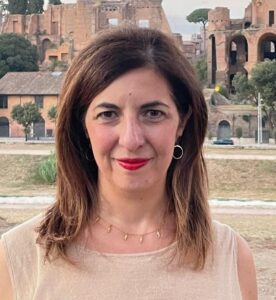
VoW: Wilkinson is the heart and soul of Chapman University. What does being the heart and soul of this amazing university mean to you?
Maria Teresa De Luca: For me, teaching and working with students is a privilege and a responsibility, and I look forward to contributing to the intellectual and academic life of students at Chapman!
VoW: What would the personal section of your Wikipedia page say?
MD: I was born and raised in Italy, in the south-eastern region of Puglia. I have lived and worked in Germany and in the United States and studied and taught at seven different universities. My life has always been a journey across countries and continents, and it continues to be.
VoW: Tell us the most interesting place you have traveled to. Where do you hope to travel one day?
MD: One of the most fascinating places I have visited is the underground city of Naples. Its history dates back to the fifth century BCE, when the Greeks began excavating the rock for building materials. The Romans later expanded the network of tunnels. Today, this vast maze of underground cavities covers about 900,000 square meters, ranging from passages so narrow that only one person can fit through to enormous cisterns as large as cathedrals.
VoW: What’s your favorite book, and tell us what you read over the summer.
MD: My favorite book is always the one I am currently reading, ‘Estate al lago’ (Summer at the lake) by Alberto Vivegani.
VoW: Share a fun fact with us!
MD: A fun fact about me is that as a teenager, I rappelled down the side of a mountain in the Swiss Alps. Unfortunately, I have no picture to prove it!
VoW: Why Chapman?
MD: I share Chapman’s commitment to helping students develop their abilities to live inquiring, ethically oriented, and socially aware lives. I especially value Wilkinson College’s commitment to doing this with a firm grounding in the tradition of liberal arts education—all this makes Chapman a great fit!
Alessandro De Ponte, Assistant Professor, Political Science
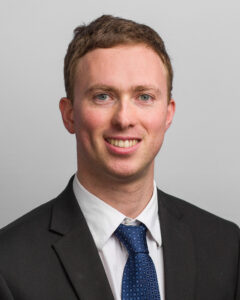
VoW: Wilkinson is the heart and soul of Chapman University. What does being the heart and soul of this amazing university mean to you?
Alessandro De Ponte: It means being able to connect with students from across the campus and being able to speak to an interdisciplinary audience.
VoW: What would the personal section of your Wikipedia page say?
AD: Born in Genoa, Italy. Fan of the football team Sampdoria. Married to Shouling, one son (Leonardo). Avid mountaineer and kayaker. Lived in Italy, Malaysia, Singapore, and the United States.
VoW: Tell us the most interesting place you have traveled to. Where do you hope to travel one day?
AD: The most interesting place I have traveled to is probably Mount Kinabalu, the highest peak in Borneo at 13,435 feet. The sky is limitless from there. You can see the sunrise, thunderstorms, and the moon at the same time in the same sky from there. One day, I hope to travel to Nepal.
VoW: What’s your favorite book, and tell us what you read over the summer.
AD: Adam Smith’s Theory of Moral Sentiments. This summer, to celebrate the semiquincentennial of the United States, I read many of the Founders’ works, such as the letters between John and Abigail Adams, the Federalist Papers, and the Antifederalist Papers, to name a few.
VoW: Share a fun fact with us!
AD: Before pursuing a career in academia, I served as the executive assistant to Italy’s former Prime Minister, Mario Monti, at the Italian Senate in Rome. From my office, I could look in awe at the Pantheon right in front of me!
VoW: Why Chapman?
AD: I use economic experiments to study politics, and there is simply no better place in the world to do experimental economics than Chapman. I am proud to be a colleague of Nobel Laureate Vernon Smith, the father of experimental economics, who built an incredible team of researchers here at Chapman. In economic experiments, participants interact with one another in so-called economic games, in which they make decisions with real money on the line. Vernon saw promise in this method when nobody else did. He is a great inspiration to generations of researchers.
Manjing Gao, Assistant Professor, Sociology
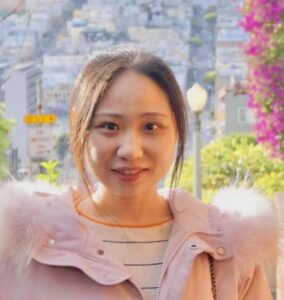
VoW: Wilkinson is the heart and soul of Chapman University. What does being the heart and soul of this amazing university mean to you?
Manjing Gao: To me, being the heart and soul of the university means holding both a central role and a great responsibility. The liberal arts cultivate curiosity, empathy, and critical thinking, helping us better understand the world and our place in it. In the AI era, that mission feels more important than ever. While technology can generate answers, the liberal arts help us ask meaningful questions, challenge the status quo, and shape a better future. To me, that’s what makes Wilkinson the heart and soul of the university: it not only advances knowledge but also enriches how we think, connect, and live.
VoW: What would the personal section of your Wikipedia page say?
MG: Born in China, she is an enthusiastic dessert maker, restaurant recipe detective, and serial DIYer. Her household includes one husband, one son, and many ongoing adventures in the kitchen and around the house. She firmly believes that every failed recipe or home project is simply another opportunity to learn.
VoW: Tell us the most interesting place you have traveled to. Where do you hope to travel one day?
MG: One of the most interesting places I have traveled to is Hokkaido, Japan. I was drawn to its incredible food, beautiful snowy landscapes, and the history and culture of the Indigenous Ainu people. One day, I hope to travel to Iceland to witness the Northern Lights and experience its unique landscapes.
VoW: What’s your favorite movie and/or book? What did you read over the summer?
MG: My favorite movie is Yi Yi by Edward Yang. I love how the film captures the beauty, complexity, and quiet moments of everyday life through the stories of an ordinary family. One of my favorite books is To Live by Yu Hua, a powerful novel that reflects on resilience, family, and the profound changes experienced by ordinary people in modern Chinese history. Over the summer, I read James by Percival Everett, a thoughtful and powerful retelling that explores identity, history, and the human experience from a new perspective.
VoW: Share a fun fact with us!
MG: I have loved playing the guzheng and guqin, two traditional Chinese zither instruments, since I was a child.
VoW: Why Chapman?
MG: I chose Chapman because it is a place where I can combine my passion for research with my commitment to undergraduate education. I am drawn to Wilkinson’s close-knit, student-centered community and its emphasis on the liberal arts, interdisciplinary collaboration, and meaningful student engagement. I look forward to working closely with undergraduates, mentoring their intellectual growth, and contributing to a community where we can ask important questions from different perspectives.
YoonJi Kim, Assistant Professor, English
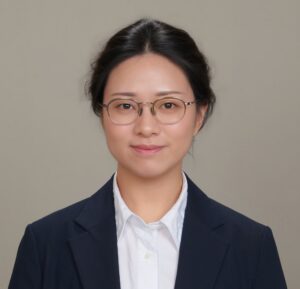
VoW: Wilkinson is the heart and soul of Chapman University. What does being the heart and soul of this amazing university mean to you?
YoonJi Kim: To me, being the heart and soul of a university means creating a community where people are excited to learn, ask thoughtful questions, and support one another. The humanities encourage us to think critically, communicate effectively, and better understand the world around us. I’m excited to contribute to that community as I begin my time at Chapman.
VoW: What would the personal section of your Wikipedia page say?
YK: YoonJi Kim is an Assistant Professor of English who studies technical communication, environmental communication, and data visualization. Her research explores how people make sense of complex information and how communication shapes decision-making in technical and public settings. She enjoys teaching technical and professional writing and is always interested in the ways communication connects people, technology, and the world around us.
VoW: Tell us the most interesting place you have traveled to. Where do you hope to travel one day?
YK: The most interesting place I’ve traveled to is Kodiak Island, Alaska. I went fishing there and got to watch bears catching salmon nearby, which was an unforgettable experience. One place I’d love to visit someday is New Zealand because of its beautiful landscapes and hiking trails.
VoW: What’s your favorite movie? What did you read over the summer?
YK: One of my favorite movies is Pixar’s WALL-E. I love how it tells such a meaningful story with little to no dialogue. This summer, I’ve been reading The Soul of an Octopus by Sy Montgomery.
VoW: Share a fun fact with us!
YK: I used to fence épée.
VoW: Why Chapman?
YK: I’m excited to join the Chapman community and be part of a collaborative and interdisciplinary environment. I look forward to teaching, continuing my research, and collaborating with students and colleagues from a variety of disciplines.
Joey Morris, Assistant Professor, Photography
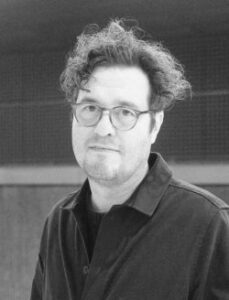
VoW: Wilkinson is the heart and soul of Chapman University. What does being the heart and soul of this amazing university mean to you?
Joey Morris: To be the heart and soul of Chapman University is to create and nurture a pulse that carries forward and holds a lasting impact on the life of an individual and collective body.
That pulse touches every community that each individual becomes a part of, moving
Forward.
VoW: What would the personal section of your Wikipedia page say?
JM: The personal section of my Wikipedia would say that the communities that I am a part of say that I have a heart of gold.
VoW: Tell us the most interesting place you have traveled to. Where do you hope to travel one day?
JM: Many times to the Atacama Desert in Chile. Mexico City is where I hope to visit soon.
VoW: What’s your favorite movie?
JM: Choosing a ‘favorite’ anything is near impossible for a truly curious person. The movie I have seen most times in my life is probably Nostalgia for the Light. As a poetic documentary, it is a breathtaking, heartbreaking, and hopeful narrative.
VoW: Why Chapman?
JM: Chapman has a small but strong community.
Philippa Nesbitt, Assistant Professor, Creative and Cultural Industries
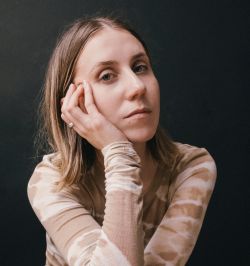
VoW: Wilkinson is the heart and soul of Chapman University. What does being the heart and soul of this amazing university mean to you?
PN: To me, it means being the center of connection. Some of the best ideas come from conversations and collaboration, from curiosity and engagement with one another. I’m so excited to join a community that values this, to learn from everyone here, and contribute in my own ways!
VoW: What would the personal section of your Wikipedia page say?
PN: I think it would say that I’m originally from Canada, but have lived in many different places throughout my life, including Melbourne and Paris. It would mention that, before academia, I worked in the fashion industry as a stylist and editor, which definitely laid the foundations for my research. It would also say that I love exploring new cities and I’m always on the hunt for a secret gem – whether it’s a special vintage piece, an unknown restaurant, or a little gallery.
VoW: Tell us the most interesting place you have traveled to. Where do you hope to travel one day?
PN: One of the most interesting places I’ve traveled to was a tiny Berber village in the High Atlas Mountains in Morocco. A local family welcomed my friends and me into their home, which was built into the mountains, and made us a beautiful traditional meal before we headed back down to Marrakech. It was so peaceful and special. My dream is to snowboard in Japan, so that’s the top of my travel list.
VoW: What’s your favorite podcast and/or movie? Read anything fun over the summer?
PN: My favorite podcast is Heavyweight. I’ve listened to it for a long time, and some of the stories have really stuck with me. My favorite movie is Chungking Express – mostly for the cinematography, but also the costumes, the music, and intersecting plots are just fantastic. This summer, I started reading The River Is Waiting by Wally Lamb, but I ditched it when Lena Dunham’s latest memoir Famesick came out!
VoW: Share a fun fact with us!
PN: I grew up in the Canadian province of Alberta, which is the only place in the world that has successfully eradicated rats. There is a rat patrol at the province’s borders and a rat hotline, and as a result… no rats!
VoW: Why Chapman?
PN: There are so many things to love about Chapman, but to me, it was all about the people. Every conversation I had with faculty and staff made me feel so welcome, and every student I met was so cool and so genuinely curious. I also loved that Chapman values interdisciplinary thinking. My work engages with fashion, media, culture, and social justice, so it felt like a great fit. And I’m really excited to bring that into the classroom!
Jinhui Wu, Assistant Professor of Chinese, World Languages and Cultures
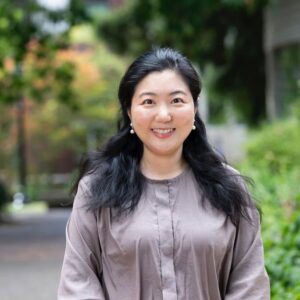
VoW: Wilkinson is the heart and soul of Chapman University. What does being the heart and soul of this amazing university mean to you?
JW: To me, being the heart and soul of Chapman means creating spaces where students can think deeply, communicate across cultures, and feel that their intellectual lives truly matter. Wilkinson’s strength lies in its commitment to the humanities—to creativity, critical inquiry, and human connection. As someone who teaches Chinese language, literature, and culture, I see my work as helping students enter different worlds of language, history, and imagination.
VoW: What would the personal section of your Wikipedia page say?
JW: Jinhui Wu is a scholar and educator whose work explores Chinese literature, culture, and visual media. Outside the classroom, she enjoys reading, walking, exploring museums and bookstores, and thinking about how stories travel across languages and media. She is especially interested in how classical texts continue to live in contemporary culture.
VoW: Tell us the most interesting place you have traveled to. Where do you hope to travel one day?
JW: One of the most interesting places I have traveled to is Dunhuang 敦煌, an oasis town on the old Silk Road in northwest China, where art, Buddhist manuscripts, desert landscapes, and Silk Road history all come together in an unforgettable way. One day, I would love to travel to East Africa to witness the Great Migration. I am fascinated by movement on a large scale—of people, animals, and stories—and seeing it in person would be extraordinary.
VoW: What’s your favorite book? What did you read over the summer?
JW: One of my favorite books is Journey to the West 西遊記. I love its mix of humor, adventure, and mythology—it is a classic that can be read in so many ways: as a fantasy, a comedy, a travel narrative, and a story about discipline and desire. My favorite character is Sun Wukong, the Monkey King: mischievous and rebellious, yet also a tragic hero. I find that mix endlessly compelling. Over the summer, I read and reread materials on Chinese literature and visual culture while preparing my new courses at Chapman.
VoW: Share a fun fact with us!
JW: I get very excited about strange and magical creatures in literature—animal spirits, ghosts, demons, and all kinds of beings who cross the boundary between human and nonhuman worlds. They often tell us something quite serious about imagination and what it means to be human.
VoW: Why Chapman?
JW: Chapman stood out to me because of its strong sense of community, its commitment to teaching, and its support for interdisciplinary research. Southern California is also a wonderful place to study East Asia, with deep cultural connections across the Pacific, rich communities and resources, and, of course, beautiful sunshine and beaches. For a long time, I had been looking for my academic home, and at Chapman, I feel I have found it. I look forward to contributing to Wilkinson and working with students as they build meaningful connections with the Chinese language, literature, and culture.