Wilkinson College of Arts, Humanities, and Social Sciences hosted Dr. Ashanté M. Reese, anthropologist, associate professor of African and African Diaspora Studies at The University of Texas, and author of Gather: Black Food, Nourishment, and the Art of Togetherness, as part of ETW: Leading the Conversation on People and Communities in Motion series.
Throughout her talk, Dr. Reese challenged conventional approaches to food justice, emphasizing the importance of cultural heritage, collective care, and community power.
One question she raised was: What if food justice meant more than just access to healthy, affordable food? And what if it also meant preserving cultural traditions, strengthening community connections, and creating spaces where people felt valued and connected to their pasts?
Drawing on lessons from her grandmother, she explored how gathering around food can nourish people in ways beyond what is on their plates.
Gathering for her began in her grandmother’s kitchen. Growing up, she watched her grandmother prepare meals, grow food, and turn ingredients into nourishing meals.
However, her grandmother taught her more than how to cook. Those experiences demonstrated how food could bring people together, preserve traditions, and create a sense of belonging.
“Gathering was a practice passed down through generations of women in my family. From preparing meals to collecting berries and vegetables, these shared experiences helped build community while sustaining cultural knowledge and relationships,” she said.
As an anthropologist, she has continued exploring these connections, asking what Black communities can teach us about gathering, nourishment, and building more than just food systems.
Her research, which draws on community engagement, interviews, photographs, videos, and family artifacts, examines how people create spaces of care and connection through food.
Dr. Reese challenged the idea that food justice can be measured solely by whether people have access to healthy food. “Although access remains important, conventional approaches can overlook the cultural, emotional, and social experiences that make food meaningful,” she said.
She highlighted the importance of delight, satisfaction, cultural identity, improvisation, and care — elements that are difficult to measure but essential to understanding people’s relationships with food.
“A meal is shaped not only by what is being eaten but also by the circumstances in which it is shared,” she said. “Food can carry memories, communicate love, and reinforce relationships. It can also be connected to trauma and the violence experienced by communities when access to food is restricted.”
One of the most compelling examples from her research was her study of Black family reunions. After inviting families to let her attend their annual gatherings, she received more than 40 invitations and attended eight reunions during the summer of 2023.
At one reunion in Nashville, Tennessee, approximately 250 family members gathered in a circle around a tree. The gathering began with a practice in which every person, including the children, was counted. The family also took time to remember those who had died during the COVID-19 pandemic.
This experience demonstrated the power of making sure everyone is seen and acknowledged. Although she attended as a researcher, the family invited her into the circle.
Dr. Reese described this openness as a form of hospitality: creating room for others and ensuring that everyone has a place at the table.
“Gathering creates opportunities to practice care, build relationships, and develop a shared sense of responsibility for one another.”
As she demonstrated through her research and personal experiences, nourishment is not simply about what people eat. It is also about whether they feel connected, valued, and supported.
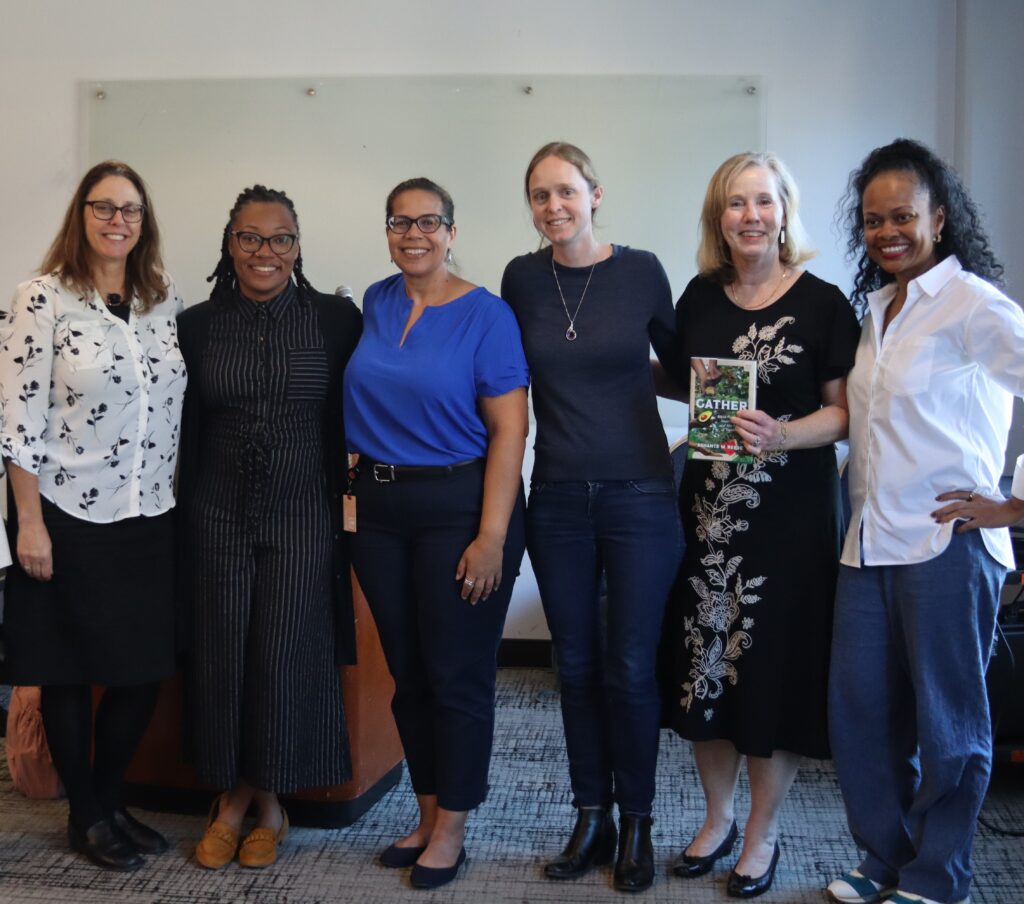
(Pictured in header: (left to right) Dr. Karen A. Snedker (Wilkinson College Associate Dean), Dr. Ashanté M. Reese (University of Texas), Dr. Charissa Threat (Wilkinson College Associate Dean), Dr. Kirsten Moore-Sheeley (Health Humanities and Environmental Studies), Dr. Jennifer Keene (Wilkinson College Dean), and Dr. Angelica Allen (Africana Studies) at the ETW: Leading the Conversation on People and Communities in Motion event in which Dr. Reese discussed her book Gather: Black Food, Nourishment, and the Art of Togetherness. Photo by Ann Hoang (’27 Writing for Film & TV and Strategic & Corporate Communication).