Beyond the Stage How Joe Chantry ’14 turned a dance degree into a global entertainment career on land and sea
April 6, 2026
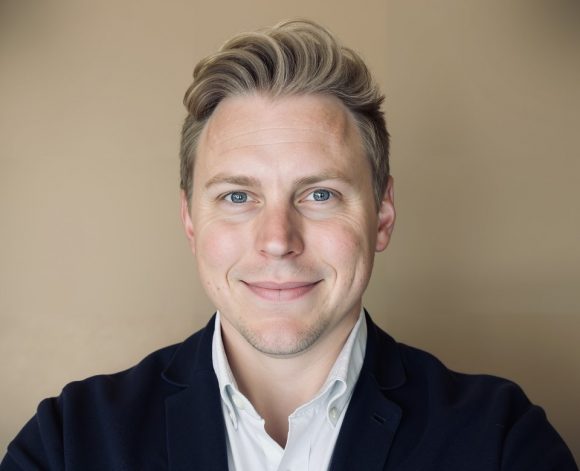
For students curious about the many paths an arts degree can open, Joe Chantry ’14, a Dance and Peace & Conflict Studies alumnus, offers one inspiring example. Today, as Vice President of Entertainment and Enrichment at Holland America Line and Seabourn, he oversees casting, production, and guest experience across a fleet of 17 cruise ships. He shared how Chapman shaped his path from performing artist to executive.
This interview has been edited and condensed.
You studied Dance and Peace & Conflict Studies at Chapman. What drew you to that combination, and how has it shaped how you lead creative teams today?
I chose Chapman originally for the strength of its dance program. I grew up as a competitive dancer, and I wanted to perform professionally. At the time I was more interested in commercial dance—film and television—so I chose to head to the West Coast. Chapman offered me an academic and a talent scholarship, and it ended up being a great fit.
During my freshman year, I realized the school’s mission and curriculum were focused on building global citizens. That interdisciplinary environment is how I discovered Peace Studies, which took me into writing, political science, ethics, conflict resolution and international affairs.
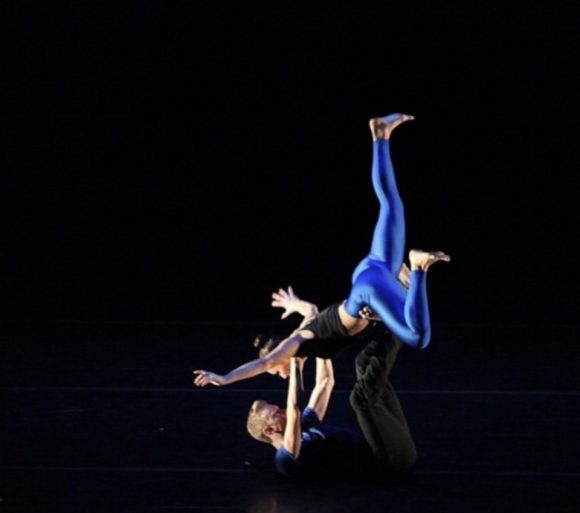
The dance program also went beyond preparing dancers for the stage — deep into history, pedagogy, and somatic psychology. I explored how Dance/Movement Therapy (DMT) could help adolescents in underserved communities heal from trauma through self-expression and social skills. For my senior thesis, I developed a program around that.
What transferable skills from performing arts training proved most valuable as you moved into executive leadership?
Discipline is the first practice that comes to mind. Becoming a proficient dancer doesn’t happen overnight—it takes years of showing up on time, refining your craft. That practice threads itself into your professional life. Dancers also live in front of a mirror: You’re constantly forced to self‑evaluate and correct. In leadership, I always start with self-questioning and accountability.
There’s also the social dimension. Effective leaders need very strong emotional and social intelligence, and the performing arts teaches you to adapt, collaborate, and wear many different hats — communicating both physically and verbally. That translates directly into balancing the creative and operational components of leading a complex, global entertainment operation.
You moved from onboard dancer to shoreside leadership quickly. What were the pivotal moments or mentors who accelerated that transition?
A friend who had danced for Holland America told me it was a great opportunity to travel, meet interesting people, and figure out what I wanted to do next. He was right. Ship life is incredibly rewarding sociological experience — you’re forming friendships and meeting people from all walks of life and cultures amidst the humbling power of the ocean and visiting new places.
In 2017, I was the dance captain aboard Eurodam when Bill Prince, then VP of Entertainment, came onboard for a town hall. I asked a few questions and offered some practical ideas around guest experience and performer retention. That piqued his interest, and he asked for a follow-up meeting. We stayed connected, and eventually he encouraged me to apply for a Production Manager role. I got the job.
A few months later, I joined the core production team for our partnership cruises with Oprah Winfrey and O, The Oprah Magazine, which gave me more visibility. By the end of 2018, I was offered a shoreside role in Seattle as Manager of Entertainment Operations. Seven years later, here I am.
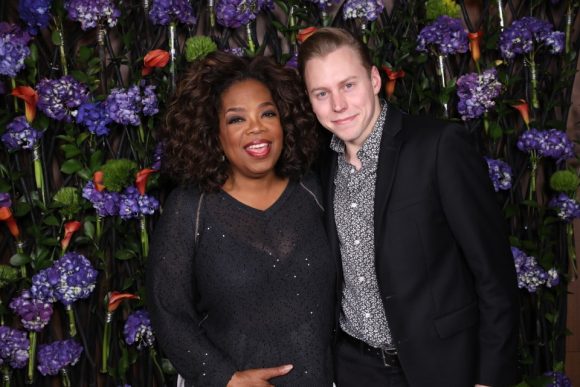
Chantry as Production Manager for Holland America’s partnership with Oprah Winfrey and O, The Oprah Magazine, in 2019 for the launch of the Nieuw Statendam
Holland America Line has hired multiple Chapman alumni. What do you see in Chapman grads that fits shipboard entertainment and shipboard life?
It was important to me to make sure the opportunity was visible to graduating students and fellow alumni. Many performing artists aren’t even aware of the different tracks within the entertainment business. So, I’d post job listings in the alumni network just so people could see: here’s a dancer doing something different, and this path exists.
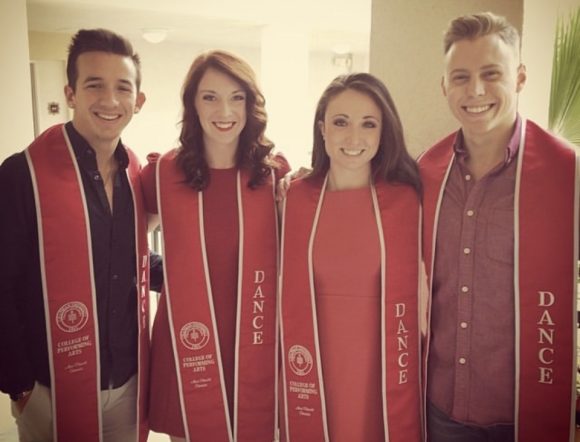
What I see in Chapman grads goes back to my own experience. The education is rigorous. Even as a dance major, you had to study — extensive research, writing, and critical thinking. There’s a degree of intellectual curiosity that comes from those who succeed in that environment. I also know who I was at 18 and who I was at 22 when I came out of Chapman. That growth is not lost on me.
What advice do you have for performers who are curious about careers beyond the stage?
Don’t focus on a specific job title or company. Focus on identifying your strengths —the things you find important, the things that drive you. Understanding what you value most and looking for opportunities that align with those values gives you the best chance of success.
And don’t plan too far out — three years is plenty. Your track may not be linear, and that’s OK. If you’re determined to stretch your performance career as long as possible, go for it. But if it’s not serving you the way you imagined, know that a well-rounded Chapman education will prove its worth over and over again and open far more doors than the stage alone.
Quick Hits / Rapid Fire
Three must‑go Chapman spots: Rutabegorz, Mama D’s in Newport Beach, and the Attallah Piazza with a good book.
Leadership habit borrowed from your dancer days: Self‑evaluation and continuous learning — I always go inward first.
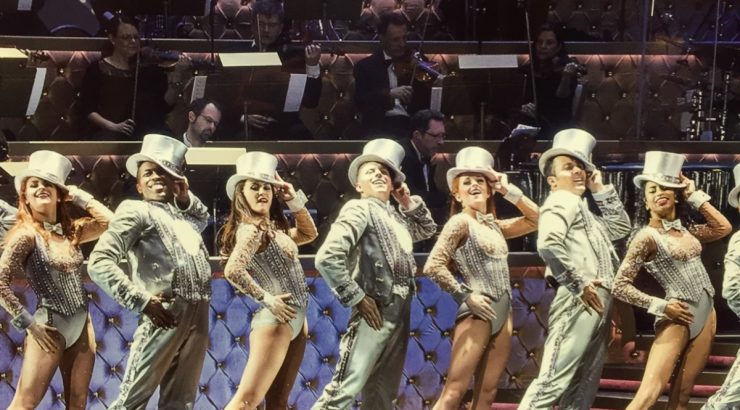
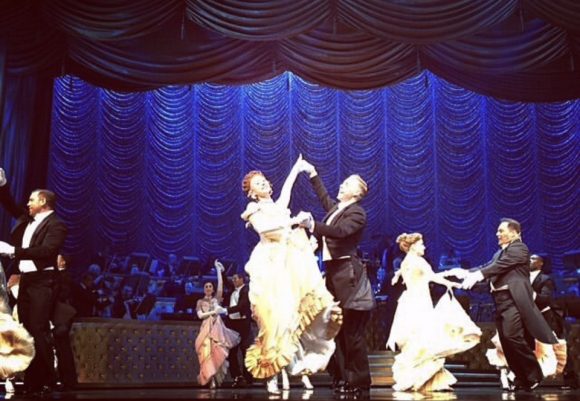
Favorite role you’ve ever danced: “One” from A Chorus Line, with original choreography by Baayork Lee from the original cast. The most fun and fulfilling closing number I ever performed night after night.
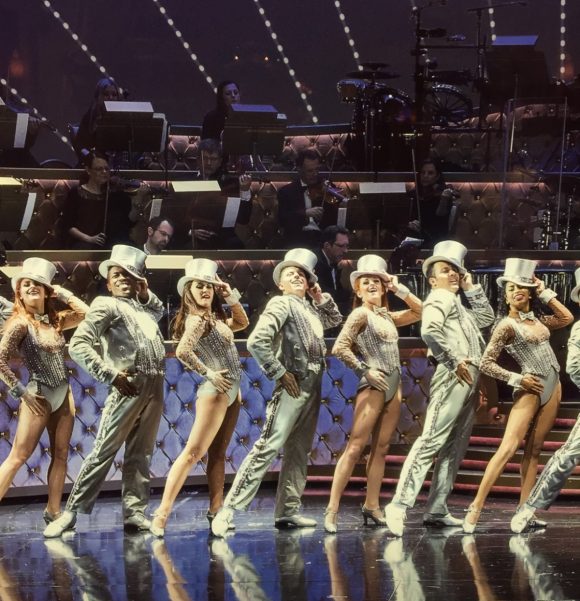
Closing number of A Chorus Line, “One,” at the Wynn Las Vegas, 2015
Photos courtesy of Joe Chantry.