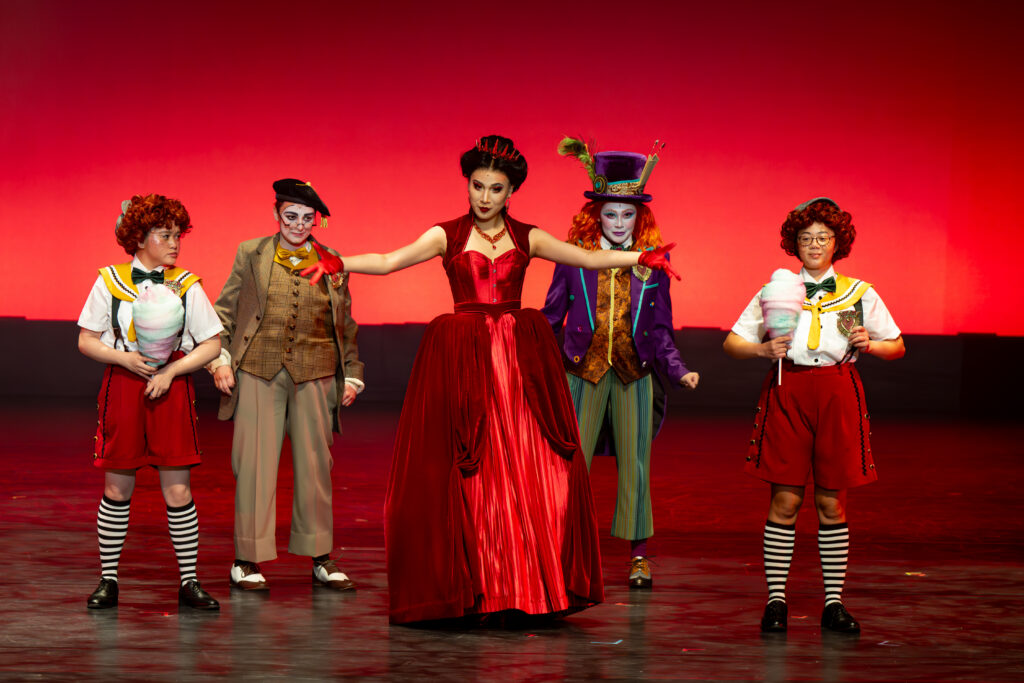
Dr. Marc Callahan, Associate Professor, Robert and Norma Lineberger Endowed Chair in Music, Interim Director of Vocal Studies, and Director of Opera Chapman, has been awarded a Japan Foundation Japanese Studies Fellowship for summer 2026. The fellowship supports scholars whose projects make a significant contribution to Japanese Studies and depend on sustained, Japan-based research that cannot be replicated elsewhere. The fellowship is a significant honor — but for those who have followed his work, it is also not a surprise. It is the recognition of a practice that has been quietly building for nearly a decade, one production, one teacher, and one tradition at a time.
For Opera Chapman director Dr. Marc Callahan, a prestigious international fellowship is the latest milestone in a decade-long artistic and scholarly journey — one that has always come back to the same question: what can opera learn from the rest of the world?
It started with Kurt Weill.
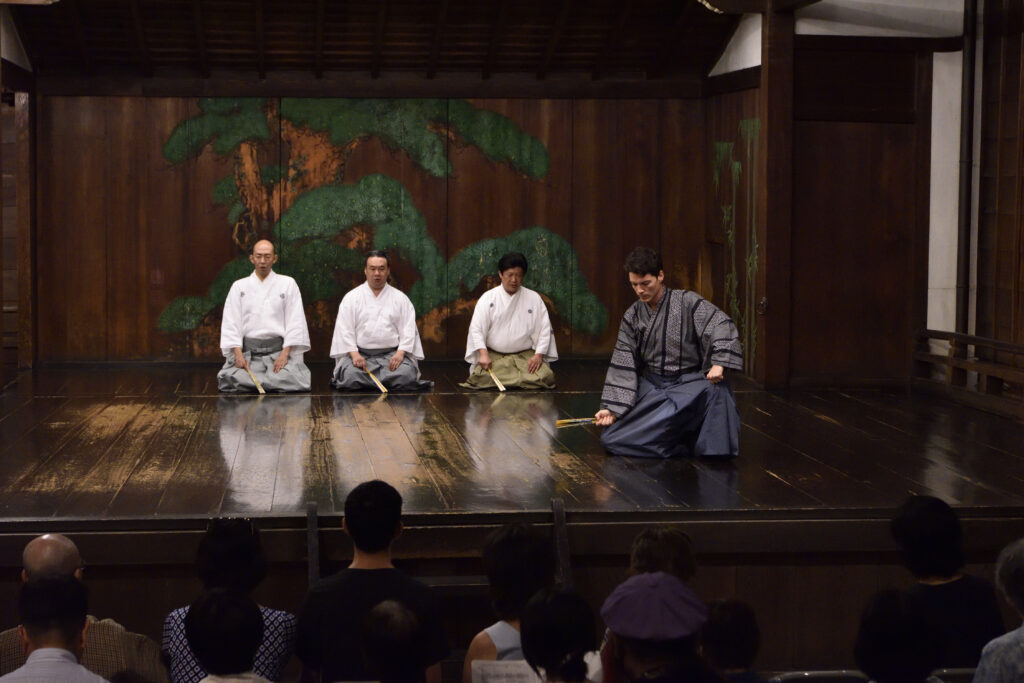
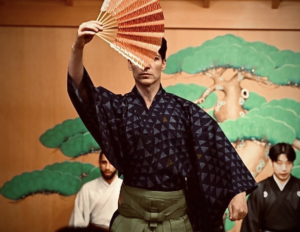
Around 2017, a conversation with a colleague at University of North Carolina (UNC) at Chapel Hill drew Callahan toward Der Jasager — Weill’s short, stark school opera that draws deeply on the Japanese theatrical tradition Noh. He wanted to direct it and decided, characteristically, that to do it right he needed to understand Noh from the inside. So, he went to Kyoto and studied movement with actors from the Kanze school, one of the great lineages of the tradition. When the production opened with UNC Opera, it won first prize at the National Opera Association. The research had paid off — but more importantly, something had opened up that Callahan wasn’t finished with.
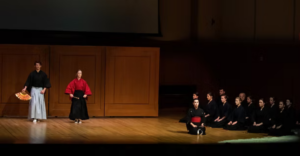
Noh is a performance tradition that operates from a completely different set of premises than Western opera. Stillness is dramatic. Time moves at its own pace. Meaning lives in the body as much as in the voice or the text. Gestures hold hundreds of years of embodied knowledge. For Callahan, encountering that — not as a tourist, but as a practitioner learning from the ground up — reframed what he understood about directing, about theater, and about how knowledge gets passed from one artist to another. It also changed what he wanted to offer his students.
“Opera training often teaches us to think in terms of voice, text, and music. Noh reminds me that time, stillness, and gesture can also be forms of knowledge. That is something I want our students to experience — not as imitation, but as a way of listening more fully to the traditions, artists, and communities with whom we work.”
— Dr. Marc Callahan
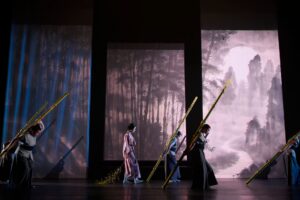
Back at Chapman, that philosophy began to shape everything he touched. When Callahan directed the West Coast premiere of Robert Moran’s From the Towers of the Moon — an opera drawn from the Japanese legend The Tale of the Bamboo Cutter — he wove Nihon Buyō, classical Japanese dance, into the heart of the production. The production won the coveted American Prize in opera performance. He continued his Nihon Buyō studies with Bandō Hirohichiro and built an ongoing performing partnership with distinguished Japanese traditional artist Ichinosuke Umekawa, taking the stage together at Shibuya Hall in Tokyo, at UNC Chapel Hill, and in an interdisciplinary performance at Chapman University. Callahan has danced at the Monterey Park Cherry Blossom Festival. He trained across two major lineages — the Kanze and Kongō schools of Noh. Each step fed directly into his work with students: a richer artistic vocabulary in the rehearsal room, and a more expansive understanding of what opera training can and should encompass.
The fellowship research project — “Embodied Transmission and Ritual Time: Lineage-Based Noh Movement in Sumidagawa and Curlew River” — is where all of that practice converges. Sumidagawa is a 600-year-old Noh masterwork about a mother searching for her lost child. Benjamin Britten encountered it on a visit to Japan in 1956 and was so moved that he spent years transforming it into Curlew River, his celebrated chamber opera. Britten didn’t just borrow the story; he absorbed the theatrical logic of Noh. Callahan wants to understand that logic and to bring that understanding back to bear on how both works are taught, directed, and performed.
“I am especially interested in how Noh movement carries memory, grief, and spiritual transformation through the body. Sumidagawa and Curlew River both center on loss, but they approach that loss through very different cultural and theatrical vocabularies. My hope is to study those vocabularies with greater care and bring that knowledge back to my students, my scholarship, and my future work as a director.”
— Dr. Marc Callahan
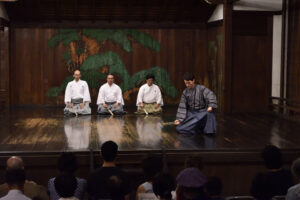
In Kyoto, Callahan will study with master Kongō school actor Udaka Tatsushige at the International Noh Institute, hosted by leading Noh scholar and fellow Japan Foundation alumnus Dr. Diego Pellecchia of Kyoto Sangyo University. The scholarly community he is entering — researchers and practitioners at the forefront of Japanese theater studies and intercultural performance — reflects the level at which this work is now operating.
When he returns to Chapman this fall, the implications will reach across his teaching, his scholarship, and his future creative work with Opera Chapman and beyond. The questions driving his research — how does the body carry cultural knowledge across generations? What happens when two theatrical traditions meet across centuries and continents? How should that encounter shape the way we train opera singers and directors? — are questions with consequences well beyond any single production or fellowship.
The Japan Foundation Fellowship affirms that these questions are worth asking — in the studio, in the archive, in Japan, and in the future of opera training.