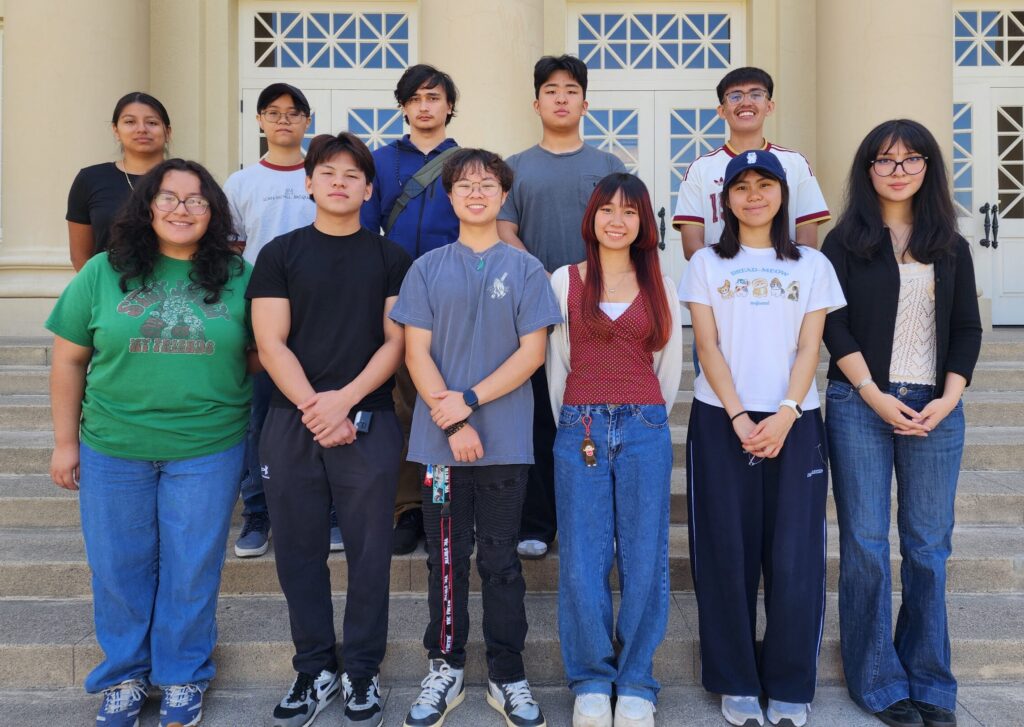
Featured Photo: The SURFEES ‘26 Cohort (Photo courtesy of the SURFEES program).
Schmid College’s Summer Undergraduate Research Fellowship in Earth and Environmental Sciences (SURFEES) brings together students from community colleges in Southern California for a two-month, hands-on research experience.
SURFEES scholars come from six community colleges in Orange County: Santa Ana College, Santiago Canyon College, Saddleback College, Irvine Valley College, Citrus College and Cypress College. Each summer, Schmid faculty mentors select 10-15 fellows, who spend eight weeks working in labs alongside Chapman students who are also engaged in summer research programs.
In the summer of 2026, eleven SURFEES fellows joined research labs studying biology, environmental science, chemistry, food science and more. The fellows also lived in Chapman’s freshman dormitories, and took advantage of career development programming and faculty seminars.
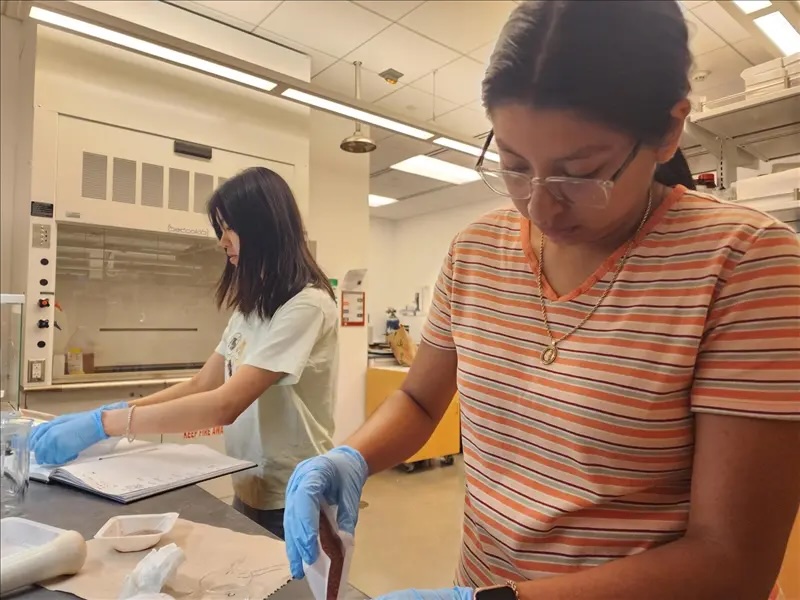
Berenice Rosales is one of the 2026 SURFEES scholars and an incoming plant science student at CalPoly Pomona. She found out about the program through Citrus College’s research office. Berenice joined Dr. Lillian Were Senger’s food science lab, and said the experience was an “eye-opener and a game-changer.” Her research focused on green coffee beans as a potential alternative to synthetic red dyes, like Red 3 which the FDA has banned from use in food starting in 2027.
“We were able to test it on yogurt, icing and muffins to see how long that red dye stays. It turned more like a purplish color, but we want red. You can say that was a mistake, but from that mistake we can learn something new,” says Berenice.
Berenice says the most impactful part of her research experience were the connections she made with her colleagues and mentor. Her time in Dr. Senger’s lab made her realize that she wants to learn more about agricultural systems, food growth and sustainability. She is specifically interested in future research on ways to reduce plastics in food production, and thus support the health of ecosystems and humans.
“This lab of sustainability and food coloring tone tells me there’s a lot of research about this. It’s just you gotta look for it. But at the same time I feel like it’s a wonderful thing that consumers are getting worried that there’s a lot of synthetic plastic that endangers human health, animal health and our planet’s health. So I’m just mainly concerned food wise and I really want to fix that,” says Berenice.
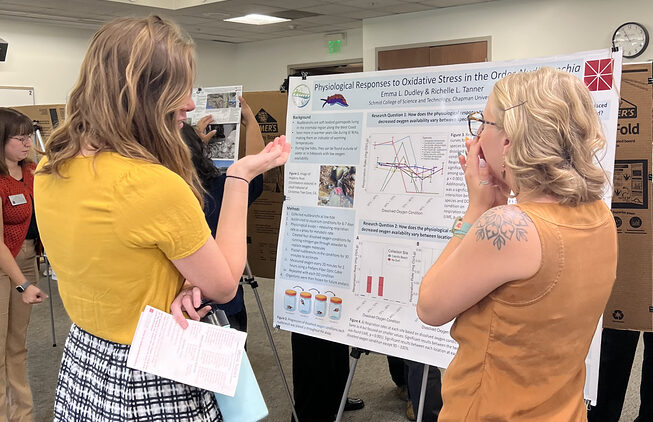
Much of her time this summer was spent on data collection, but she also got the chance to analyze results and write up her findings to share at the Summer Symposium Poster Presentations. Her time at Chapman was also her first experience living and learning on a university campus.
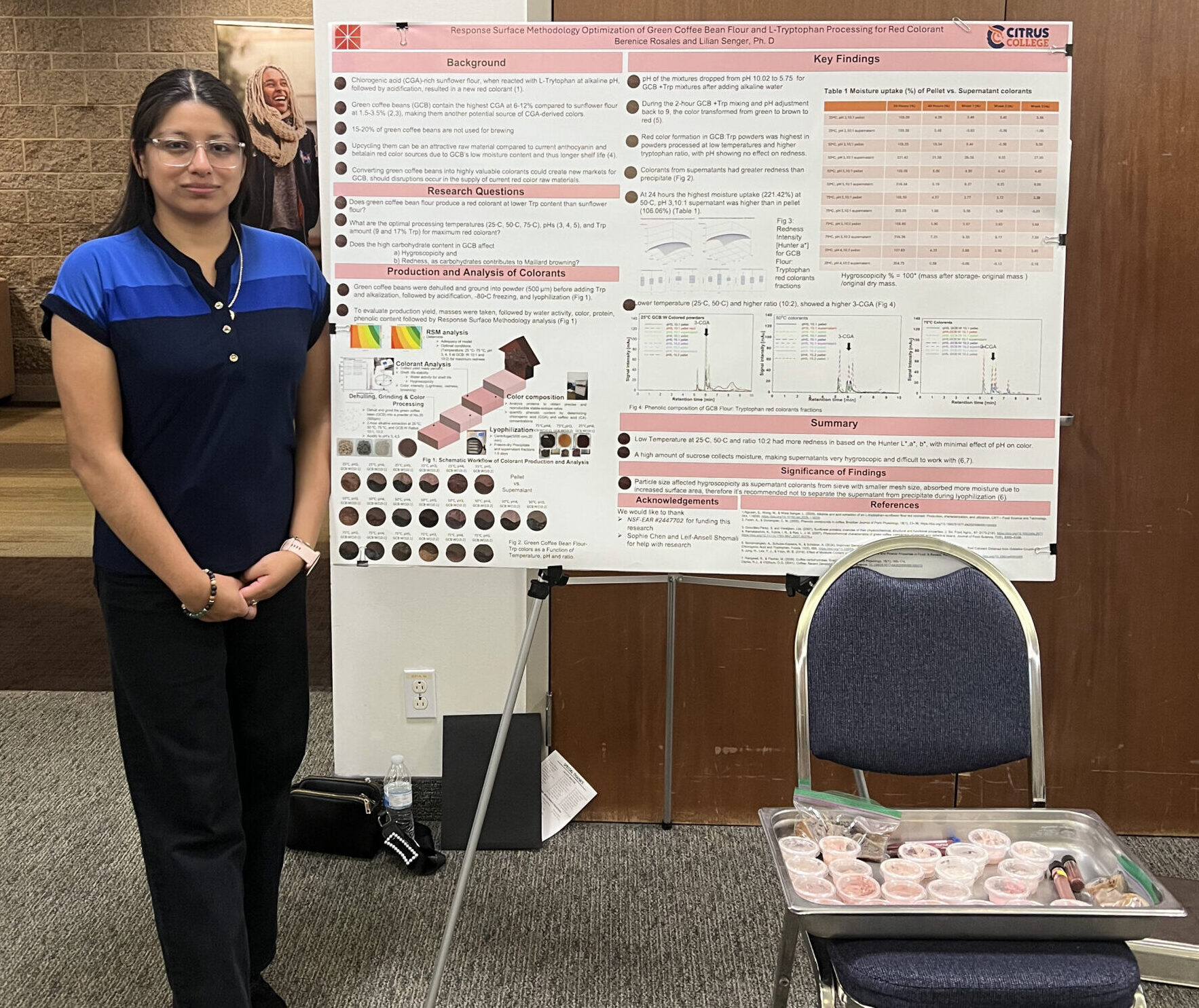
“Coming to Chapman definitely felt more connected. Because in Citrus College or any community college, you know in your mind sometimes that you’re just planning to just take your classes and transfer out. At Chapman, it felt like you’re gonna stay there for a long time. Like, ‘we’re here to help you,’” says Berenice.
That welcoming atmosphere for the fellows is a pillar of SURFEES co-director, Dr. Richelle Tanner’s vision for the program. Dr. Tanner is a professor of environmental science and policy at Chapman University, and a SURFEES faculty mentor.
“A lot of times the students can come into this program with a lot of imposter syndrome because they’re stepping onto a four year campus for the first time. The prerequisite for this program is that they don’t have experience doing research. We have our SURFEES in with the general population of researchers on campus, but the reality is they have a very different set of needs and they have a very different background from the Chapman students who are doing research,” says Dr. Tanner.
Dr. Christopher Kim, the co-director and founder of SURFEES, and the dean of Schmid College, says that those differences don’t hold the scholars back from achieving impressive results in a very short time.
“There’s a lot of learning, a lot of growth, a lot of trial and error, and a lot of personal development that happens in those eight weeks. The SURFEES that have been in my lab came in a little more tentative. Now, I think they can speak much more confidently about their data. They have a much better understanding of what they were doing, why they were doing it, and how to interpret the data that they’re generating. It’s just really rewarding to see that happen over such a compressed period of time.”
Every year, the number of SURFEES applications continues to rise. Dr. Kim says that he wants to bring the experience to as many students as are interested in participating. He and Dr. Tanner are exploring developing a two-week research experience to increase Schmid’s reach and provide more opportunities to community college students in the future.
Applications for the 2027 SURFEES cohort open at partner colleges this coming January.