
Schmid College is thrilled to spotlight Gabriella Dauber, 24, who was recently named a 2026 Graduate Research Fellowship Program (NSF GRFP) recipient!
The NSF GRFP was established in 1952 to recognize exceptional graduate students who have demonstrated outstanding potential to make meaningful contributions in science, technology, engineering, and mathematics (STEM) fields, including STEM education. The goal of the NSF GRFP is to support students in full-time research-based master’s and doctoral programs to ensure the longevity and success of STEM research and discovery in the United States. NSF GRFP Fellows are awarded professional development and international research opportunities in addition to an annual stipend to assist with the cost of tuition and fees.
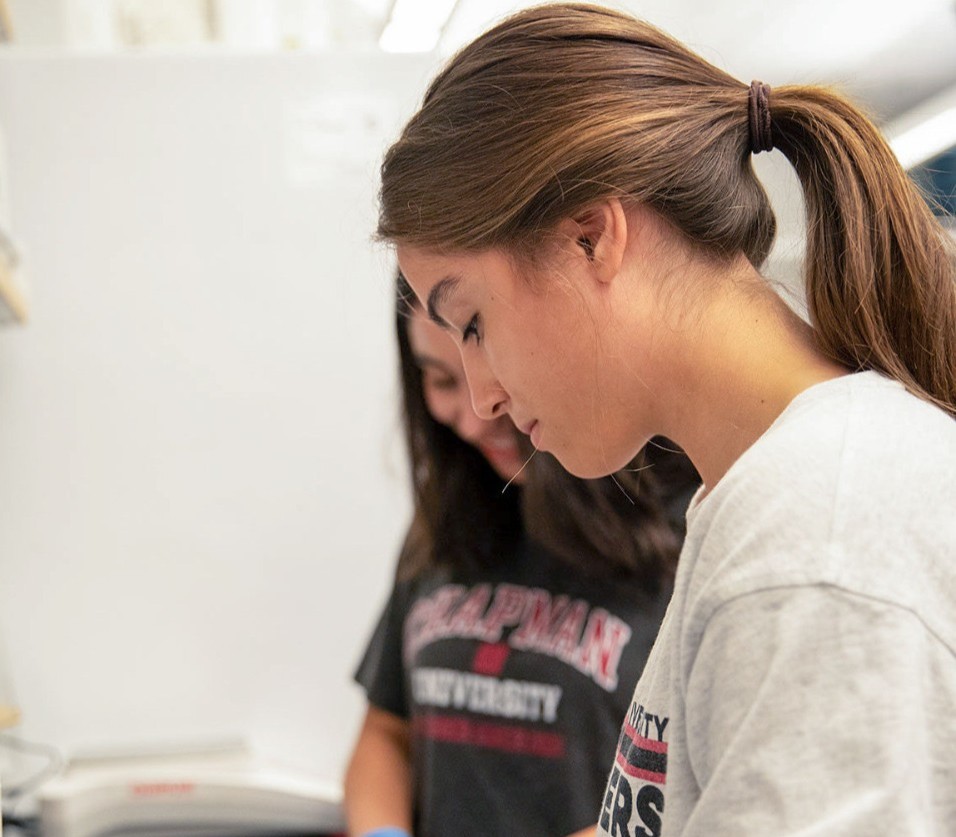
Since graduating with her Bachelor of Science in Biological Sciences from the Schmid College of Science and Technology at Chapman University in 2024, Dauber has continued her research as a Lab Manager in the Global Change Ecology Lab with Dr. Joshua Fisher and Dr. Gregory Goldsmith. She will begin the Environmental Science, Policy, and Management PhD Program at the University of California, Berkeley (UC Berkeley) in the fall, where she plans to continue her research on climate justice while exploring her passion for supporting STEM education through teaching. Dauber was gracious enough to share her thoughts about her academic and research journey at Chapman that helped her on her path to becoming an NSF GRFP awardee.
Research Involvement
Dauber first became involved in research at Chapman through the Grand Challenges Initiative during her freshman year, where she worked in a group with other STEM students to investigate the airborne transmission of COVID-19. Later in the GCI program, her group analyzed the impact that tracking devices for dementia patients can have on reducing caregivers’ stress levels.
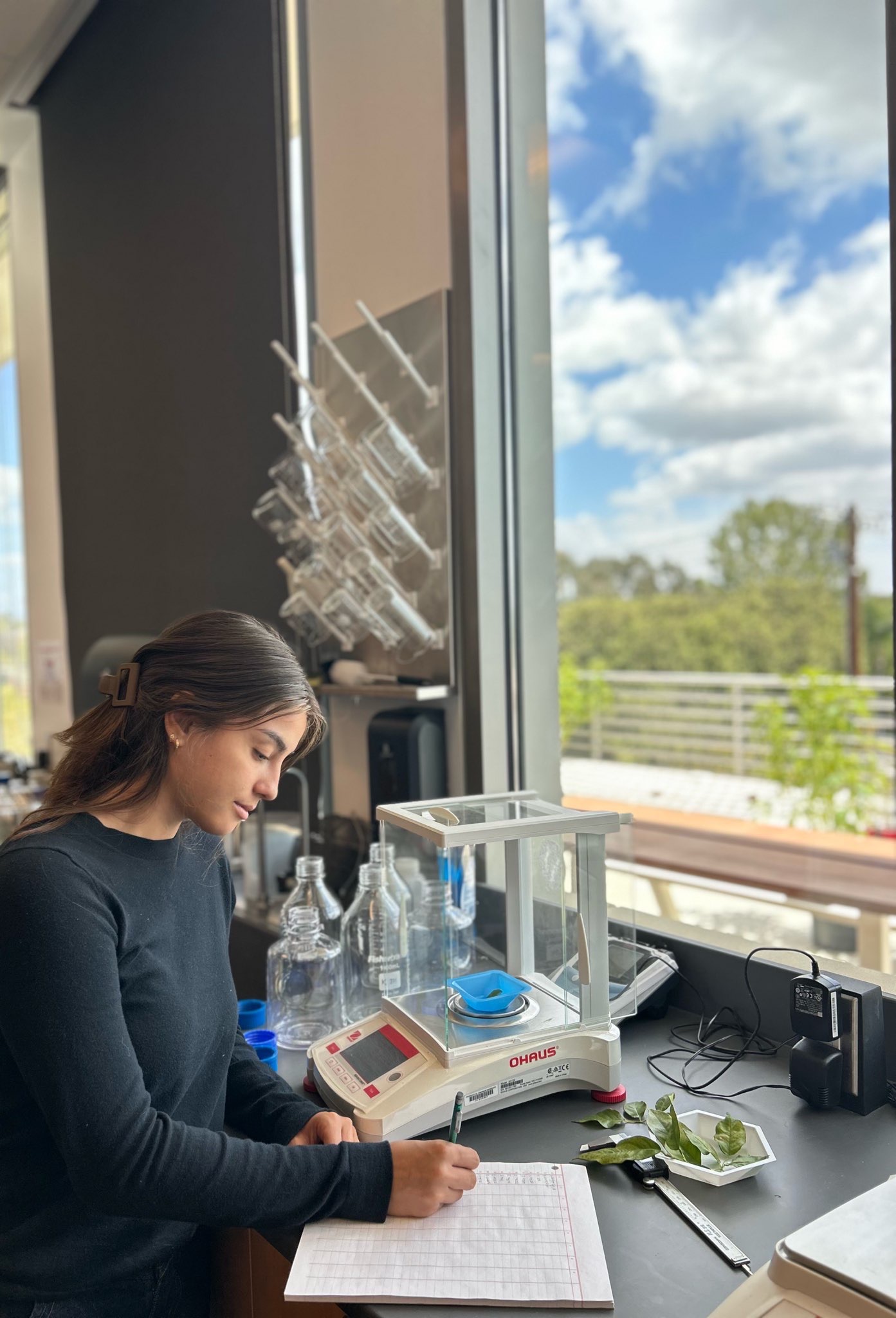
Dauber later took a Plant Biology course, where her class had the opportunity to collaborate with a non-profit land conservation agency. During this class, she was involved in “blending leaf trait data with surface temperature measurements to understand the thermal limits of plant species across the landscape,” and noted, “the results inform our ability to carry out climate resilient habitat restoration.”
Outside the classroom, Dauber conducted research in the Goldsmith Lab on plant ecophysiology, examining the relationship between green-stem photosynthesis and plant drought tolerance in avocados. She also worked within the Chapman Biology Education Research (CBER) group, where Dauber studied the impact of STEM course office hours on student experiences and provided recommendations on how instructors can structure their office hours to support students effectively.
It was through these experiences that Dauber says she “learned the importance of environmental stewardship and how to apply science for a more sustainable future.” Her time involved with research at Chapman “cemented [her] interest in an academic career that blends research and teaching in the sciences.”
Future Endeavors
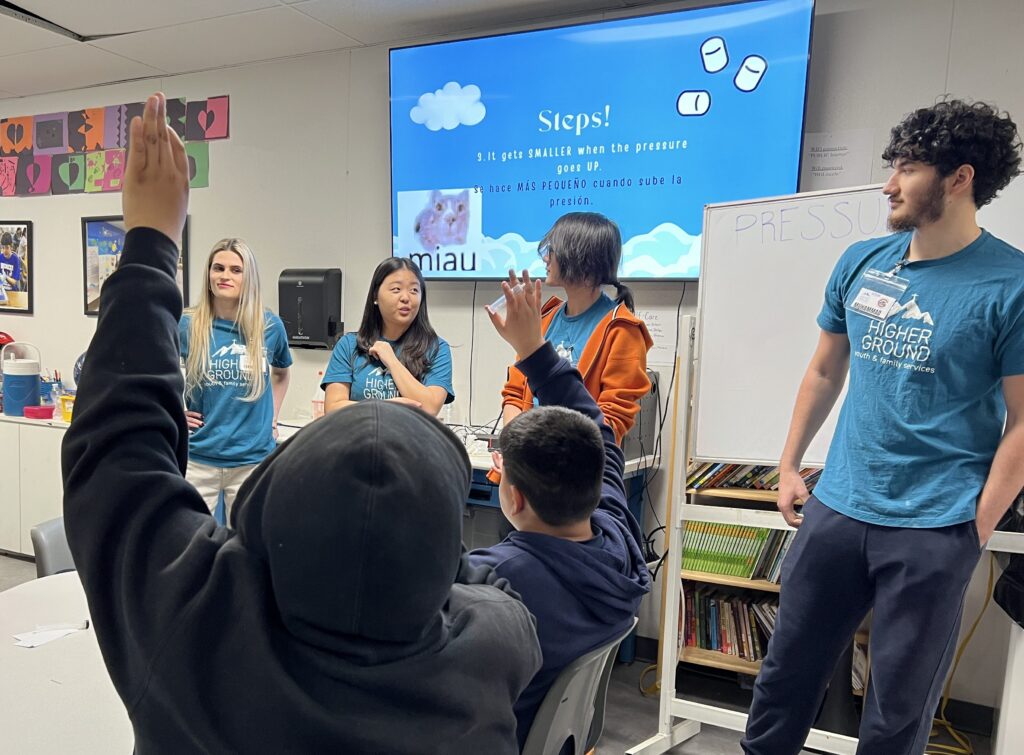
Dauber’s research as a PhD student at UC Berkeley will center around exploring questions of climate justice to, in her words, “deepen our understanding of ecosystem resilience, biodiversity, and environmental decision-making.” She hopes to deliver actionable outputs that will accelerate equitable climate resilience and sustainable land management. In addition to her research on addressing environmental and policy concerns, Dauber is excited to create hands-on teaching modules for university courses to help others with their STEM education journeys.
Her work developing teaching modules will support her future goal of becoming a professor upon completing her PhD program. Dauber says that she hopes to teach while “continuing to conduct environmental research that informs sustainable policy and conservation practices.” Her own experiences working with professors deeply inspired her to help others find their passion for scientific inquiry. Her goal is to invest her time and expertise in fostering the next generation of scientists to guide them on their academic and research journeys.
Tips for Students
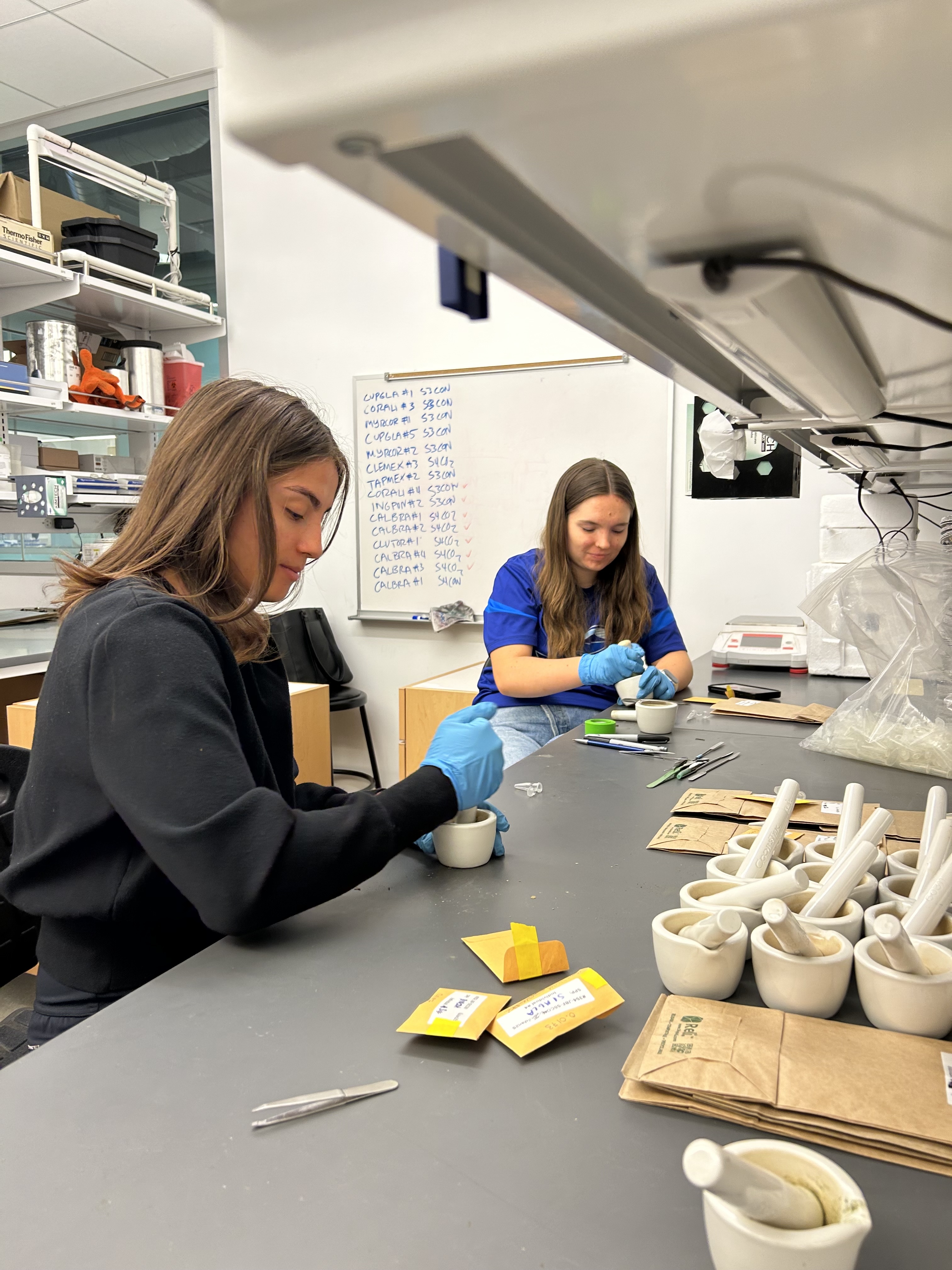
Students who are early into their undergraduate studies might find getting involved with research daunting, but Dauber suggests emailing faculty whose research interests you, and don’t be afraid to knock on office doors. “The professors at Chapman are extremely supportive and eager to collaborate with students, including those new to research,” says Dauber.
She also notes that for students who are interested in applying to graduate school, they should:
- Look into faculty members’ research to get an idea of what labs and centers you want to work with.
- Talk to current graduate students about their experiences to understand the ins and outs of programs.
- Start researching potential graduate programs early on to understand what classes and research experiences to explore during undergrad.
- Take Dr. Christopher Kim’s course on applying to grad school for hands-on guidance and advice on your applications.
Dauber’s main advice for all students is to “follow your interests, explore as many things as possible, and lean into what excites you.”
Special Thanks
Dauber wanted to take the time to thank the people who have supported her throughout her academic and research careers.
She says, “I am grateful for Dr. Greg Goldsmith’s invaluable guidance and for providing my first research experience, which shaped my identity as a scientist. I thank him for reading my countless terrible first drafts, always extending a listening ear, and for believing in me whenever I doubted myself. Thank you to Dr. Jeremy Hsu, who further fostered my passion for science education, championed my goal of pursuing a career in science, and helped me achieve my first first-author publication. I deeply appreciate Dr. Josh Fisher’s support throughout my graduate studies exploration and thank him for his generosity, advice, encouragement, and confidence in my ability to succeed. I would not be where I am today without these incredible mentors!”
Dauber also wanted to extend her appreciation for her familial support system. She says, “I am possibly biased, but my parents are the best parents in the world, and I cannot express enough how grateful I am for their endless support and love.”
We extend our sincerest congratulations to Gabriella and can’t wait to see everything that she accomplishes!
For anyone interested in learning more about applying to the NSF GRFP, visit the Application Resources webpage. The Center for Undergraduate Excellence is also available for Chapman students in every major who are interested in learning more about research, fellowship, and scholarship opportunities.