Finding My Voice in Corporate Communications

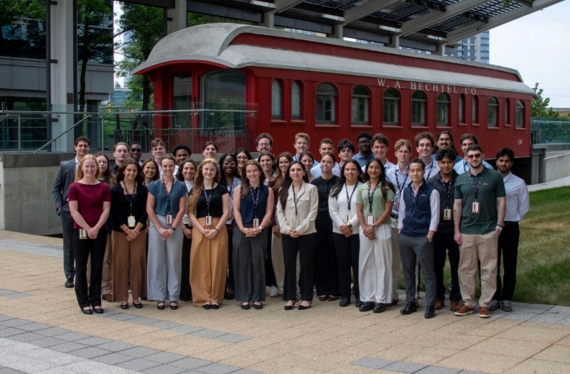
Hi! My name is Elissia Presti, and I’m a rising senior, graduating in May 2027, studying Strategic and Corporate Communications with a minor in English at Chapman University. This summer, I interned at Bechtel’s headquarters in Reston, Virginia, as a Corporate Affairs and Marketing Intern.
Bechtel is a global engineering, construction, and project management company that delivers major infrastructure projects worldwide. Before my internship, I mostly thought of communication in terms of writing, audience analysis, and messaging. At Bechtel, I saw how those skills support employees, executives, external audiences, and business priorities across a large organization, and how communication serves as a bridge between technical teams and the people who rely on their work.
Exploring the Many Sides of Corporate Communications
 One of the most valuable parts of the internship was the rotational structure. In addition to my day-to-day responsibilities, I rotated through several Corporate Affairs and Marketing disciplines, including strategic initiatives, digital content, internal communications, executive communications, events, media relations, and metrics. Each rotation gave me a clearer picture of how a large company communicates both internally and externally.
During my first week, I learned about the team’s priorities and how communication supports Bechtel’s business goals. I also created a personal learning plan, something I’d never done before, which helped me approach the summer with intention and track the skills I wanted to grow.

Internal communications showed me how important clarity and consistency are inside a global company. I helped draft employee updates and saw firsthand how communicators translate complex project information into messages that help teams stay aligned.
Executive communications were one of the most eye-opening rotations. I worked on developing talking points and presentation materials for senior leaders, which taught me how much thought goes into shaping a message that reflects both the speaker’s voice and the company’s priorities. It was intimidating at first, but it pushed me to write with precision and confidence.
Media relations gave me a behind-the-scenes look at how companies prepare for interviews, respond to reporters, and position themselves publicly. I helped research media outlets and draft briefing materials, tasks that showed me how communications professionals anticipate questions and shape narratives.
Applying Coursework Knowledge in the Workplace
My Chapman coursework prepared me more than I expected. Classes on audience analysis, writing for strategic communication, and message design helped me approach projects and tasks with a clear sense of purpose. Those skills came into play when drafting content, reviewing messaging, and choosing the right channels for different audiences.
One moment that stood out was helping refine messaging for an internal campaign. I found myself using concepts from class, like framing, clarity, and tone, without even realizing it at first. It was a reminder that the theories we learn in the classroom really do show up in real-world work.
Professional Growth Beyond the Job
Beyond my rotations, I participated in intern training sessions on professional etiquette, influencing without authority, performance management, and presentation skills. One session on “influencing without authority” especially stuck with me. We practiced how to communicate confidently even when you’re the newest person in the room, something I used constantly throughout the summer.
I also heard from executives about their career paths and leadership lessons. Listening to them helped me build confidence in my own direction and understand how communication plays a role in every part of the business.
One of my biggest takeaways was that communication is most effective when it is intentional. Every message, whether a social media post, an internal update, an executive talking point, or media materials, must be shaped by the audience, purpose, and context. I also learned that communications professionals often serve as connectors, translating complex information into clear stories and helping teams stay aligned.
Key Takeaways and Advice for Future Interns
For students interested in corporate communications, marketing, or public affairs, my biggest advice is to stay curious. Some projects may feel small at first, but each one teaches you something about writing, strategy, collaboration, or professional judgment. Ask thoughtful questions, take notes, and pay attention to how communications teams make decisions behind the scenes.
My internship at Bechtel gave me a broader understanding of the many career paths available to communication students. It helped me see how the skills I’m building at Chapman can be applied in a global corporate environment and showed me the value of clear, strategic, and thoughtful communication. Most importantly, it reminded me that communication has the power to connect people to purpose, whether through a story, a message, an event, or a shared company goal.