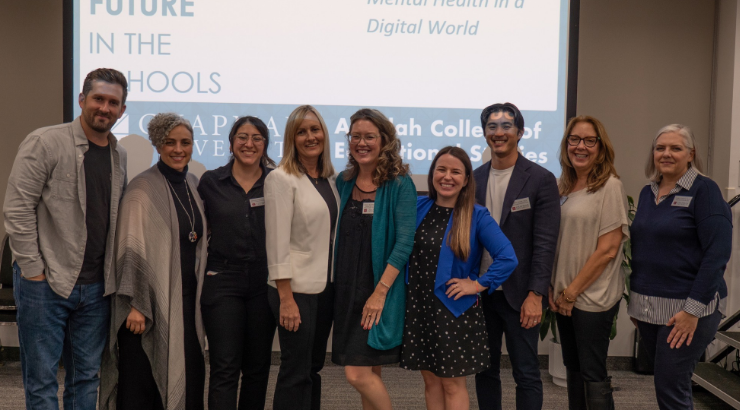
Chapman University’s Attallah College of Educational Studies hosted its third annual Imagining a Resilient Future in the Schools conference on Nov. 7, 2025, bringing together educators, school psychologists, counselors, mental health professionals and community partners to address one of the most pressing issues facing youth: mental health in a digital world.
The conference examined how technology, social media, and gaming shape young people’s daily lives and well-being. Hosted by Attallah College’s School Counseling and School Psychology programs, the event welcomed attendees from Chapman and partner school districts committed to supporting student mental health in and beyond the classroom.
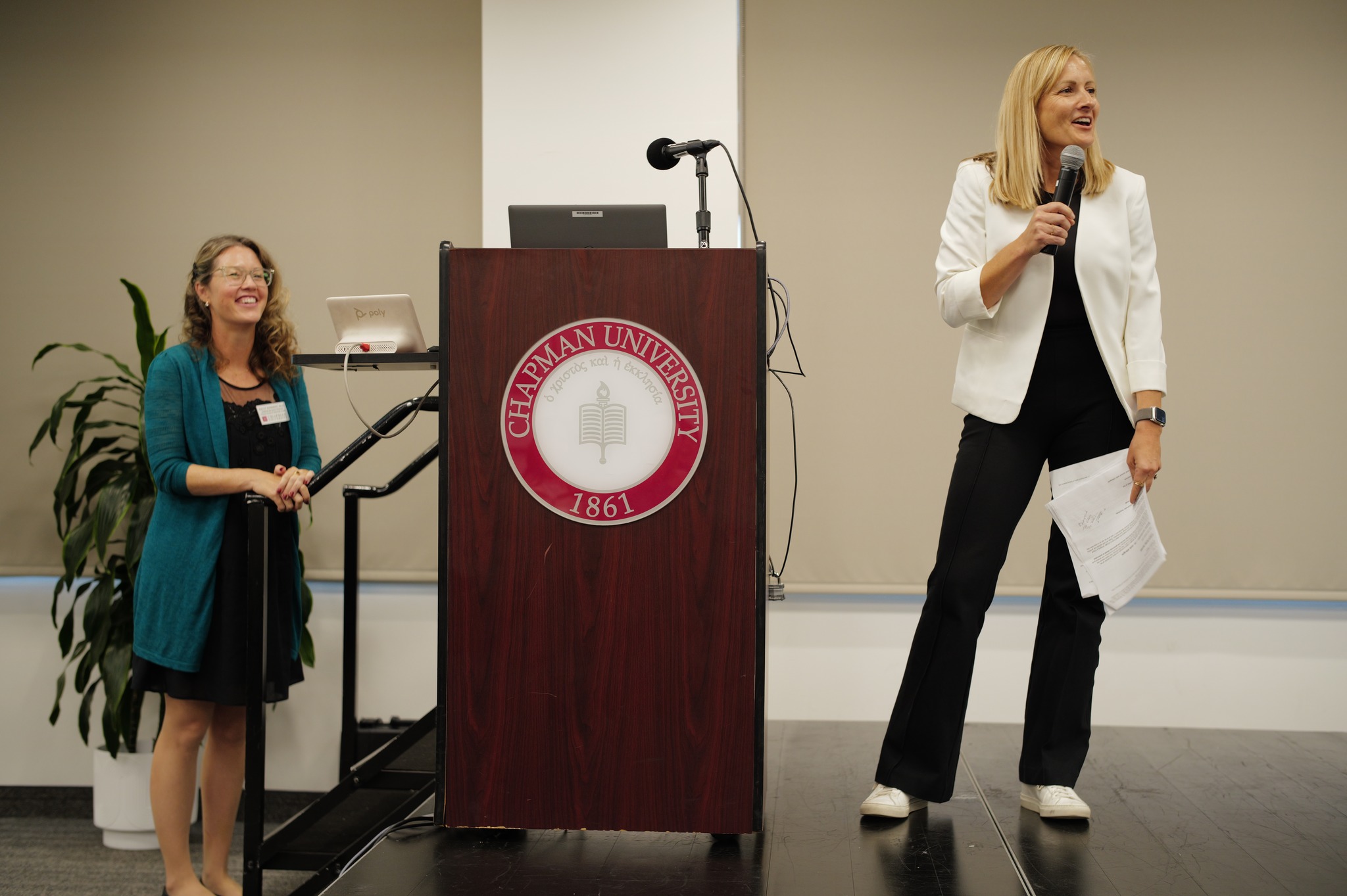
Associate Professor of Counseling and School Psychology Amy Jane Griffiths opened the conference by recognizing the complex role digital media plays in students’ lives. “Digital platforms have transformed the way young people socialize, learn and cope,” Griffiths said. “They have also introduced profound challenges, from rapid social comparison and cyberbullying to addictive design, identity struggles and increased exposure to trauma. The question is not whether youth will be online. The question is how we guide them toward healthier, safer and more empowered digital lives.”
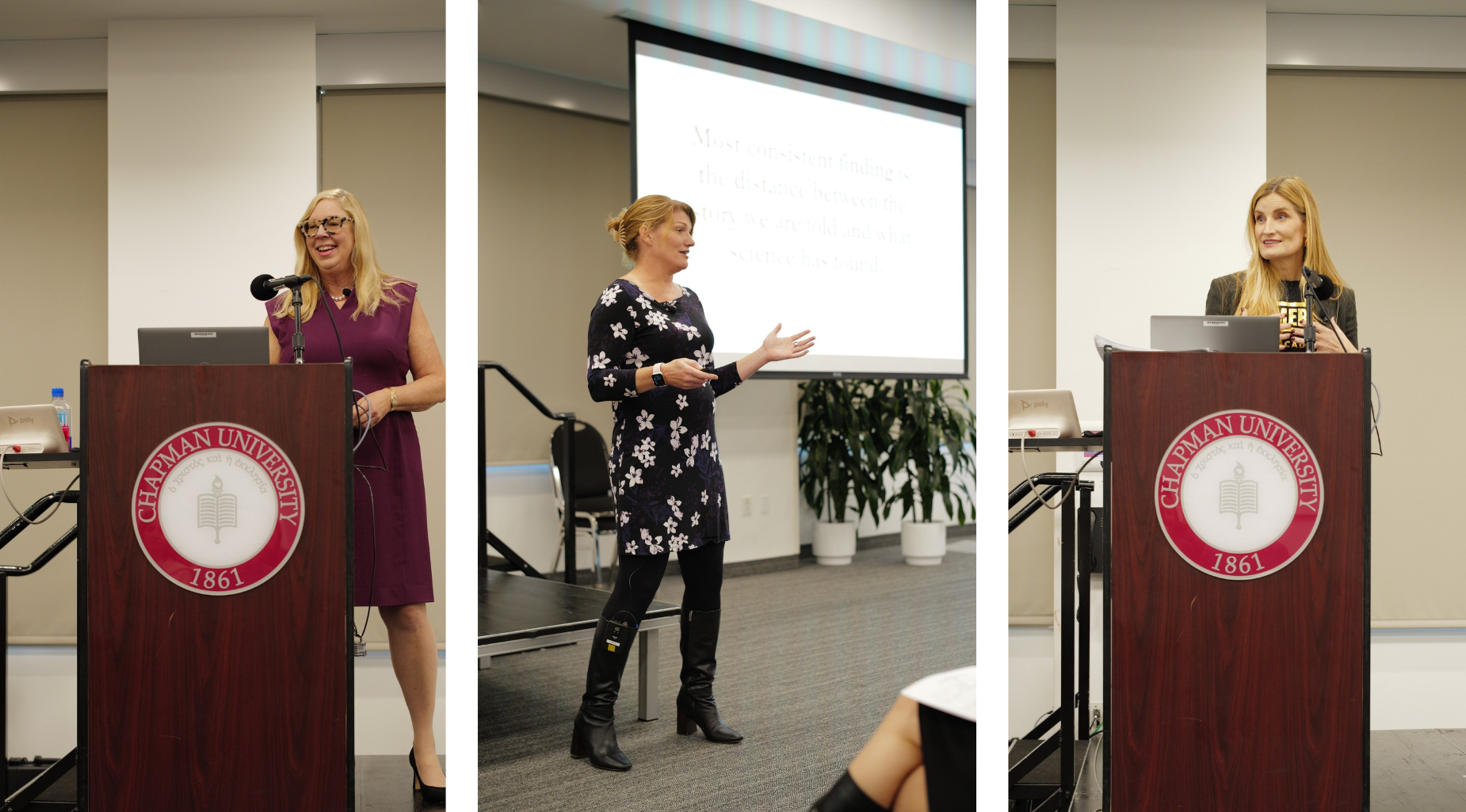
Co-led by Griffiths and Associate Professor of School Psychology Kelly Kennedy, the conference was co-sponsored by Chapman’s Thompson Policy Institute on Disability. The first keynote, “Adolescent Mental Health in the Age of AI,” was delivered by Candice L. Odgers, professor and associate dean at the University of California, Irvine, whose work examines what it means to grow up in the digital age. Odgers shared more than two decades of research on how smartphones, social media, and AI-enabled technologies intersect with adolescent development.
The second session, “The Untethered Student: Supporting Student Wellbeing and Learning in a Hyper-Connected World,” featured digital sociologist and University of Southern California lecturer Julie M. Albright. Author of Left to Their Own Devices: How Digital Natives Are Reshaping the American Dream, she explored how constant connectivity is reshaping students’ development, attention and relationships and outlined areas where youth are becoming increasingly disconnected from family life, school communities and themselves.
The third talk, “Online Games and Adolescent Mental Health: Designing Online Games for Learning, Growth, Empathy and Connection,” was presented by Constance Steinkuehler, professor of informatics at UC Irvine and co-director of the Games + Learning + Society Center. Steinkuehler shared her research on multiplayer online games, digital culture and youth learning and discussed how game design and player communities can influence empathy, cooperation and social connection.
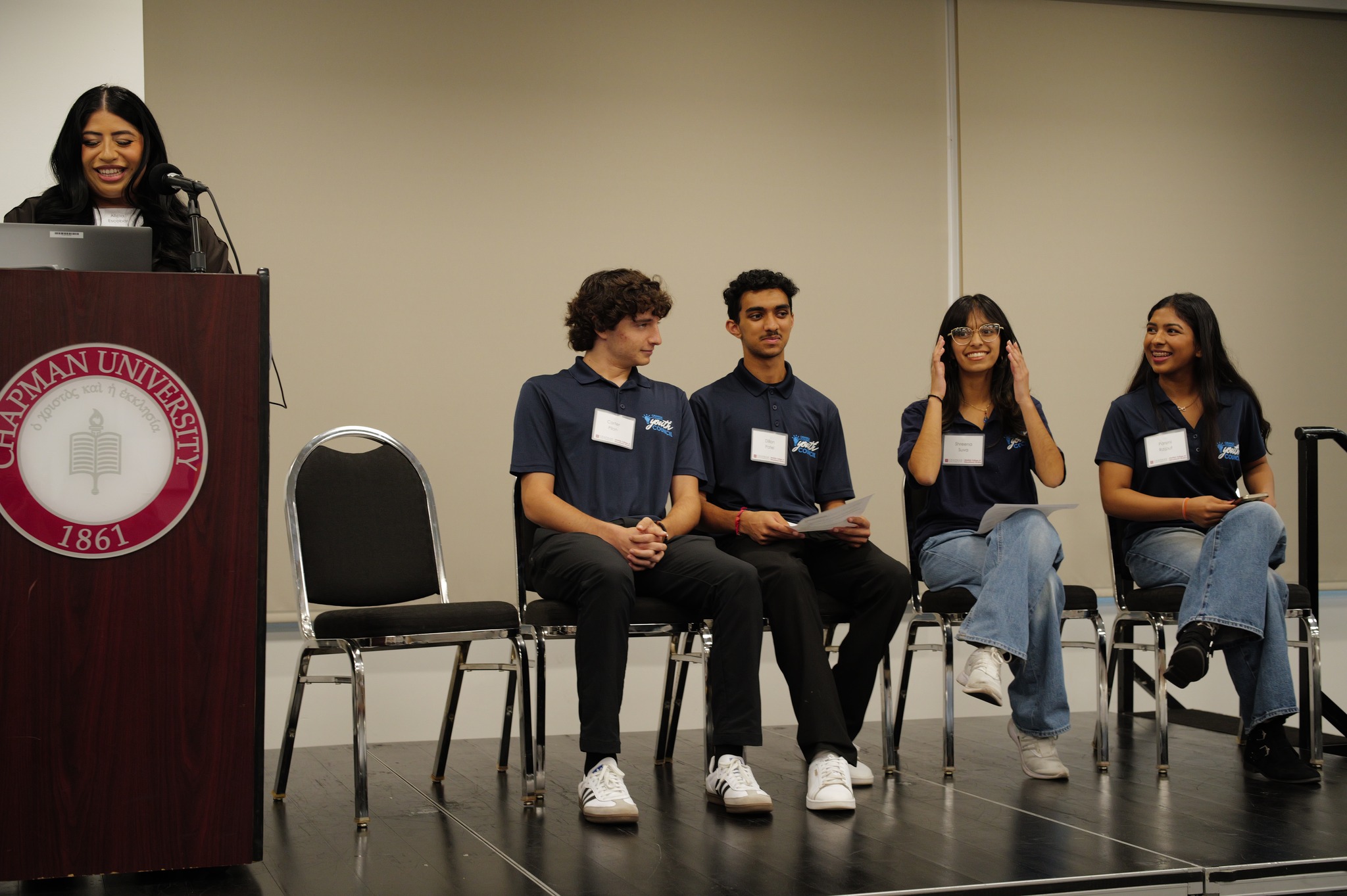
The day concluded with “Youth Voices Leading the Way: Peer-to-Peer Mental Health Advocacy in the Digital Age,” a panel featuring Orange County Department of Education partners and high school student leaders. Facilitated by CSP graduate student Tamara Tavira, the session included remarks from OCDE representatives Alicia Escobar and Rose Aguilera, who outlined regional efforts to promote substance use prevention, mental health awareness and positive youth development.
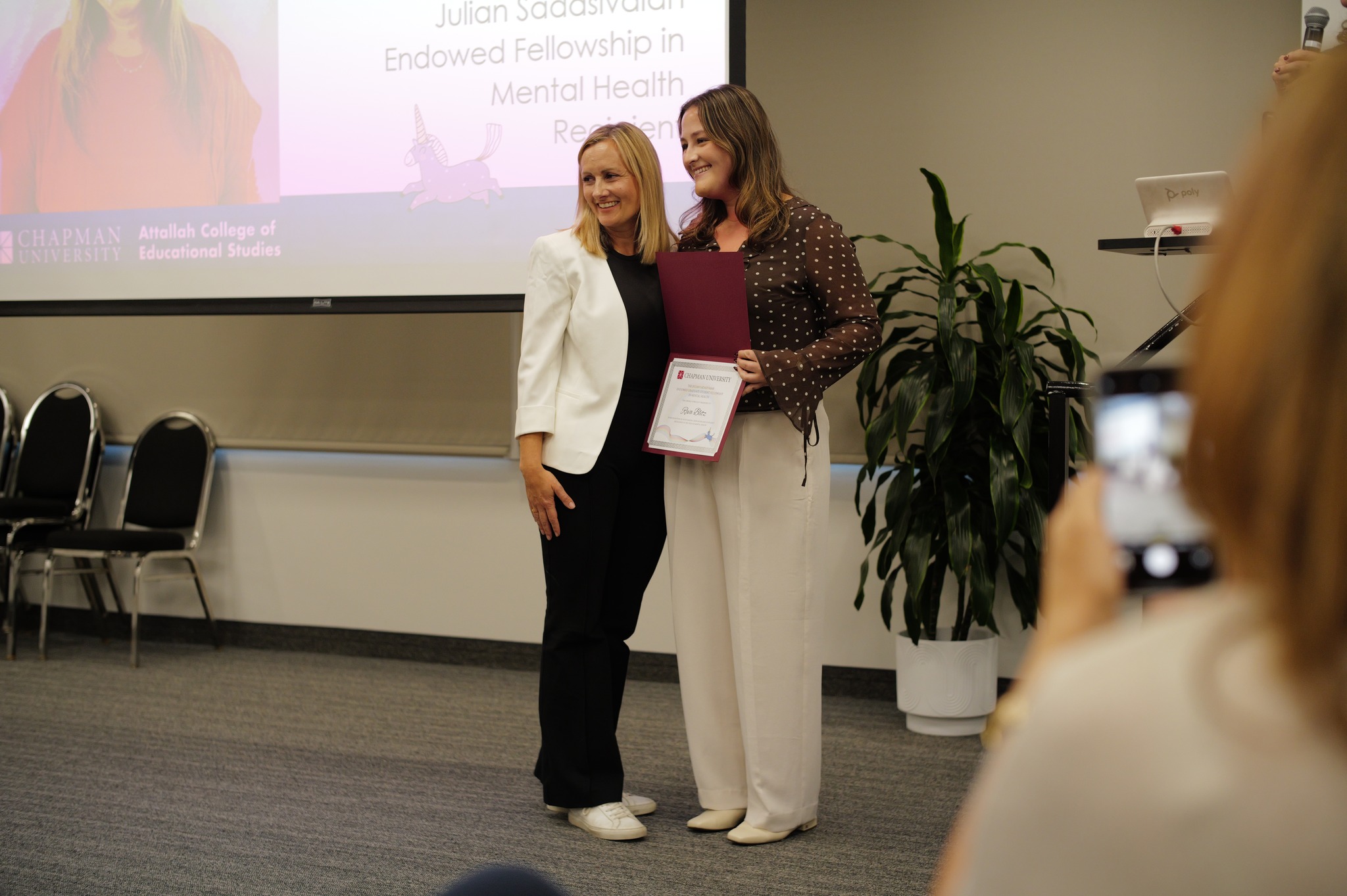
As in previous years, the conference highlighted the Julian Sadasivaiah Endowed Graduate Student Fellowship in Mental Health, which was presented at the event for the first time. The 2025 honoree, Reva Blitz, a third-year graduate student interning in the Placentia-Yorba Linda Unified School District, is pursuing a credential in school psychology, with additional emphasis in clinical counseling. Revah has focused her work on supporting youth with disabilities and chronic health conditions through trauma-informed, strengths-based care.
With each year’s theme addressing timely issues in K-12 mental health, the Imagining a Resilient Future conference continues to equip educators, counselors and school-based practitioners with strategies to support students’ evolving needs in a rapidly changing world.