187 posts categorized in

Grand Challenges Initiative


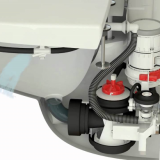
Reinventing the Toilet Ian Hakeman, James Hazen, Jose Arellano

May 11, 2021 by Grand Challenges Initiative | Student presentations

Our grand challenge is to reinvent the toilet. Contemporary flushing toilets waste an immense amount of water and also spread aerosols carrying viruses and bacteria when flushed. Through our research we discovered that vacuum toilets use roughly one-twelfth of the water per flush and also produce significantly fewer aerosols. We conducted a survey of Chapman

Using UVC Light as an Effective Form of Sanitation Kayla Ghodsi, Tally Holcombe, Jamie Kwong, Cristin Lue, Destiny Ly, Leia Reddy

May 11, 2021 by Grand Challenges Initiative | Student presentations

Our goal is to manage disease outbreak by using UVC light as a new, efficient yet effective form of sanitation. It is important to find a way to successfully clean commonly touched/used surfaces multiple times a day to reduce the spread while trying to help maintain good public health. Using UVC Light as an Effective

Varying Dye Color and Nanoparticle Coating in Dye-Sensitized Solar Cells for the Highest Efficiency Tia Fidaleo, Jackson Goldberg, Ramsey Elshiwick, Elif Narbay

May 11, 2021 by Grand Challenges Initiative | Student presentations

As the climate crisis emergency gains a new sense of urgency with only less than 10 years remaining until the damage becomes irreversible, the need for integrating renewable energy sources into our society becomes even more pressing. Solar panels are expensive but if we can increase their efficiency and lower their cost it would give

Greenhouse Gas Capture by Education Patrick Polcuch, Nikki Gelb, Sam Urbina, Kevin Alvarado Jimenez

May 11, 2021 by Grand Challenges Initiative | Student presentations

Our group was tasked with finding a novel method to capture greenhouse gases. Greenhouse gas production has proliferated alongside industrial development in most countries which has induced detrimental processes concerning our environment, which to this day, is in danger due to the presence of greenhouse gases lingering in the Earth’s atmosphere. Our group now strives

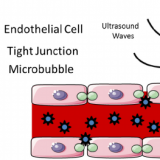
Curing Alzheimer’s: Use of microbubbles and ultrasound to increase blood brain barrier permeability for drug delivery Elizabeth Lee, Sam Covaia, and Katie Rodeghiero

May 11, 2021 by Grand Challenges Initiative | Student presentations

Alzheimer’s disease is a neurodegenerative disorder that is estimated to affect over 6 million Americans. The disease is marked by the presence of plaques and tangles in the brain. While some trials have hoped to combat these plaques using antibodies, the semipermeable blood brain barrier (BBB) blocks their passage. In order to get antibodies across

Polylactic Acid (PLA) Replacement to Polyethylene Terephthalate (PET) Water Bottles Veronica Warner, Haley Robertson, Gurleen Buttar

May 11, 2021 by Grand Challenges Initiative | Student presentations

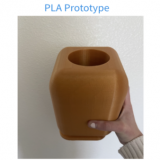
There are many environmental consequences such as pollution and climate change exacerbated by Polyethylene Terephthalate (PET), also known as plastic. PET water bottles, specifically, are a significant source of pollution on the planet. Our Grand Challenge Initiative aims to lessen the environmental consequences caused by plastic bottles by finding an alternative. Polylactic acid (PLA), a

Improving Group Findings in the GCI Programs Jordan Odekirk, Kai Itokazu, Luke Driscoll, Cece Abrahamsson

May 11, 2021 by Grand Challenges Initiative | Student presentations

Our goal is to create an efficient system for students to find groups in the Grand Challenges Initiative (GCI) program in the STEM department at Chapman University. GCI suffers from an enrollment problem. The problem arises in the transition from the First Year Focus Course (FFC) of GCI to the Grand Challenges Initiative seminars (SCI)

Improving Nurse Education with VR Samantha Bae, Keoni Lanoza, Mitch Melby, Blake Khaleghi, Kenneth Cho

May 11, 2021 by Grand Challenges Initiative | Student presentations

The challenge that our team sought to resolve is the fact that nurses and other medical practitioners often have to face heavy fees and hurdles in order to gain hands-on experience and education in the classroom through standardized patients. These paid actors can be expensive and limited, and as a result, we decided to develop

Log In
Open Main Menu