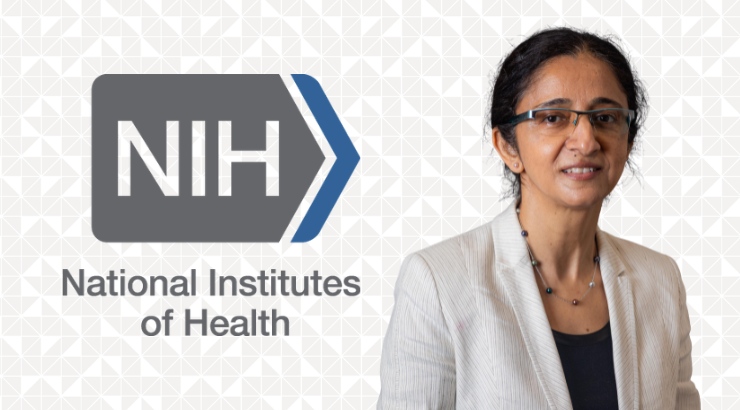
Kamaljit Kaur, Ph.D., Associate Professor in Biomedical and Pharmaceutical Sciences at Chapman University School of Pharmacy, has received a $535,000 National Cancer Institute (NCI) R15 award from the National Institutes of Health (NIH).
Working alongside colleagues Shiuan Chen, Ph.D., of City of Hope, and Chapman University faculty member Surya Nauli, Ph.D., Kaur will lead research titled “Peptide-Drug Conjugates Targeting EGFR for Improved Efficacy of Chemotherapy”, a project aimed at advancing targeted cancer therapy for triple-negative breast cancer (TNBC).
What Is Triple-Negative Breast Cancer, and Why Is It So Hard to Treat?
Targeted drug delivery has transformed cancer treatment by directing cancer-killing drugs more precisely to tumor cells while minimizing harm to healthy tissue. Kaur’s research focuses on one of the most challenging forms of the disease: triple-negative breast cancer. Unlike other breast cancers, TNBC lacks the estrogen, progesterone, and HER2 receptors that most current therapies target, leaving patients with significantly fewer treatment options.
TNBC accounts for 10–15% of all breast cancer cases and is associated with higher recurrence rates and poorer outcomes than other subtypes. It disproportionately affects younger women, premenopausal African American and Hispanic women, and women from lower socioeconomic backgrounds, highlighting the urgent need for more effective and accessible treatment options.
Peptide-Drug Conjugates That Target EGFR
Kaur and her research team are developing novel peptide-drug conjugates designed to recognize and bind to EGFR (Epidermal Growth Factor Receptor), a protein found in elevated levels on the surface of TNBC cells. By delivering chemotherapy drugs directly to EGFR-expressing cancer cells, this approach aims to dramatically improve drug concentration at the tumor site.
“By targeting EGFR receptors in TNBC using our drug conjugates, we can deliver several-fold higher levels of drug to cancer cells compared to giving the drug alone,” said Kaur, who brings more than 25 years of research experience in medicinal chemistry to the project. “I am grateful for this opportunity, which has the potential to make a meaningful impact on women’s health.”
Kaur serves as Director of the Center for Targeted Drug Delivery at Chapman University. She has published 75+ peer-reviewed articles, authored four book chapters, and holds more than three approved patents. She serves on the editorial boards of Scientific Reports and Pharmaceutics and has been a member of the Long Range Planning Committee of the American Chemical Society Division of Medicinal Chemistry.