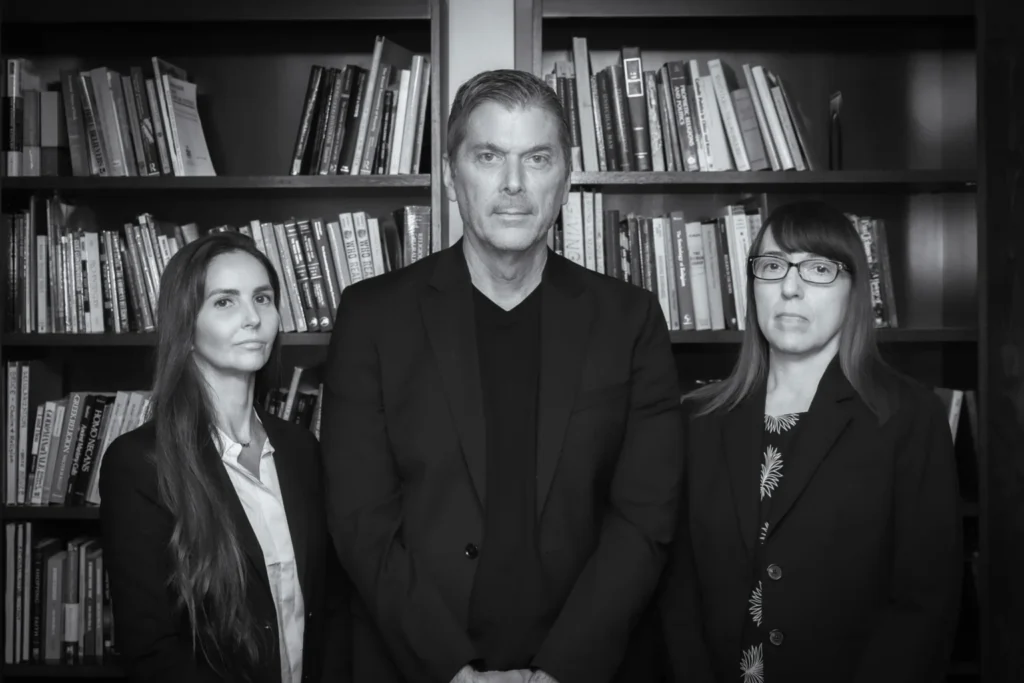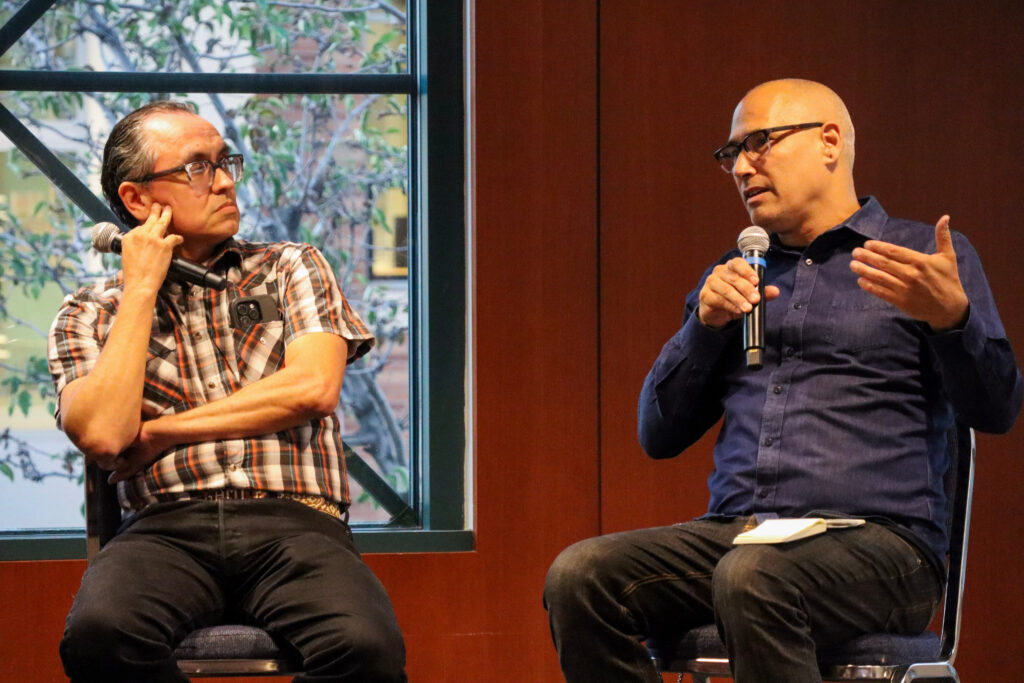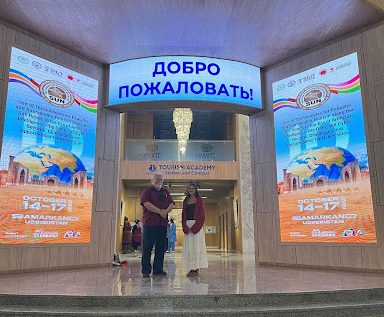
This edition of From Our Eyes features Sujung Cua (’28 Political Science; Women and Gender Studies minor). Cua recently traveled to Samarkand, Uzbekistan, to attend an international conference with Dr. Ronald Steiner (Political Science) as part of her role as the Assistant English Editor of Silkroadia, Silk-Road University Network’s web magazine.
The Silk-Road University Network (SUN) is an international academic organization created with the aim of restoring and connecting universities located on the land and sea routes of the ancient Silk Road. The Silk Road’s original driving force was to contribute to world peace and the development of civilization. Presently, SUN is composed of 81 institutions in 63 cities in 28 countries from Mongolia to Italy. I had the honor of attending the 10th General Assembly of SUN this October.
Throughout the last year, I have been working alongside Dr. Ronald Steiner (Political Science) as the Assistant English Editor of Silkroadia, SUN’s web magazine that publishes diverse stories surrounding culture, heritage, and travel on the Silk Road written by students and professors of SUN member universities. Working on this journal allows me to learn more about the deep history of the Silk Road and the ways in which SUN member universities are following its legacy of connection, collaboration, and cultural exchange.
This year’s 10th General Assembly was held in Samarkand, Uzbekistan, which historically served as a central trade hub and crossroad for world culture along the Silk Road. Today, Samarkand carries a rich history and beauty through sites like the Amir Temur Mausoleum, Registan Ensemble, Siab Bazaar, and Shah-i-Zinda.
The first day of the conference commenced at the Silk Road by Minyoun, where the welcoming ceremony took place. First, each participating university was represented by its flag and a faculty delegate. The professors donned their regalia, which symbolized their school’s participation in the network, filling the room with vibrant colors and academic pride. There were cultural presentations, including a performance on/about traditional Uzbek clothing. The theme of this year’s conference was the use of technology for peaceful and sustainable tourism along the Silk Road in the era of artificial intelligence. Many guest professors lectured on their research relating to these themes, such as climate change, humanity in healthcare, and how students, professors, and universities can coexist with the development of AI.
The student representatives also participated in a workshop to discuss AI’s role in higher education. In this conversation, we debated the uses, necessity, and power versus fears of AI, which was interesting as some students are studying artificial intelligence while others are only familiar with accessible regenerative models. This discussion sparked discourse about whether AI is replacing humans or will always only be a tool for us, as well as the idea that AI technology is leading us to become less independent in our own power of knowledge.

On our final day, we explored the cultural and historical sites of Uzbekistan. Shah-i-Zinda, meaning the ‘living king,’ is a beautiful mausoleum for Qutham ibn Abbas, a cousin of the prophet Muhammad, showcasing the incredible work of Timurid architecture, including elaborate blue tilework, carved terracotta, and mosaics. Siab Bazaar is Samarkand’s largest and oldest bazaar (market), known for being a vibrant hub for traditional and local goods, including spices, fresh produce, flatbread, fried fruits, and souvenirs.
Each day, we were treated to an abundance of delicious traditional Uzbek food like Plov (pilaf) or samsa (a pastry filled with meat), with fresh fruits and vegetables, cheeses, and salad. During these meals, I was able to bond with the other students from Tajikistan, Italy, Algeria, India, and many other countries around the world. The most memorable part of my experience in Uzbekistan was the people; I formed long-lasting friendships with like-minded future leaders and created memories beyond the academic conference that I will never forget. I experienced firsthand the spirit of the Silk Road by connecting culturally, academically, and, most importantly, at a basic human level, accepting differences and advancing our personal intentions.
Collectively, we reflected on the Silk Road’s original intent through our conversations of current and future world challenges, such as AI technology and climate change, ultimately nurturing cultural exchange, economic advancement, and world peace. I look forward to meeting them again next year at SUN’s 11th General Assembly. As I navigate through my undergraduate years, I am honored to have experienced new traditions, met remarkable people across cultures, and deepened my passion for travel through Chapman’s connection with the Silk Road University Network. SUN’s dedication to restoration and connection between vast communities among universities and cultures has broadened my horizons, inspiring me to see collaboration as a bridge for understanding and shared growth across global perspectives.