Wilkinson College’s Engaging the World Series Sparks Hope Through Naomi Klein Documentary
November 21, 2025
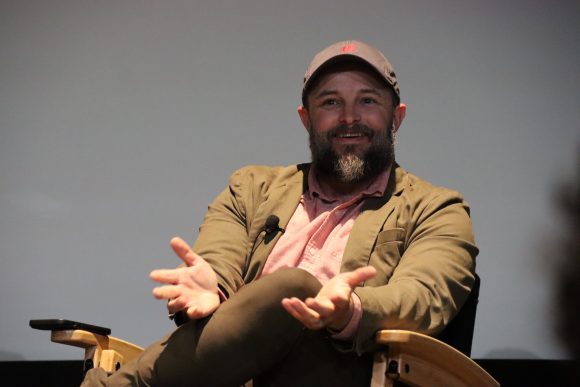
Dr. Kyle Harp-Rushing (Environmental Policy). Photo by Violet Gude (’29 Broadcast Journalism major).
The latest Wilkinson College of Arts, Humanities, and Social Sciences 2025 Engaging the World: Leading the Conversation on the Environment and Building Resilient Futures series event welcomed over 100 attendees for a screening of Naomi Klein’s documentary, This Changes Everything (2015). Dodge College of Film and Media Arts and Schmid College of Science and Technology co-sponsored the screening, in an interdisciplinary collaboration to engage students across three colleges at Chapman University.
The documentary was inspired by Klein’s international bestseller of the same title and follows seven communities grappling with the challenge of climate change globally, from North America to South India. Klein narrates insights and draws connections throughout each story shared. While the topics explored in the ninety-minute documentary encapsulates many monstrosities plaguing our earth today, attendees left the screening with hope and a curiosity that a better world is possible.
As a reconnecting Cree person (an indigenous group of the First Nations People), I resonated with the story focused on the Beaver Lake Cree Nation and their relation to the land. Members of this nation, including Crystal Lameman, advocated for access to traditional hunting territory affected by the Canadian Natural Resources Limited (CNRL) oil spill based on their constitutional rights as original guardians of the land. Prior to this spill, Beaver Lake Cree Nation launched the “Defend the Treaties” lawsuit against the Canadian government in 2008 that claimed the tar sands development, which was related to the oil spills, made traditional life impossible.
Lameman shared, “As long as the grass grows, the rivers flow, and the sun shines, we will always have an inherent right to the land” (This Changes Everything). Throughout the documentary, it is evident that this community worked together to advocate not only for themselves but the land they reside on. Their strength and commitment to protecting the land have not wavered despite various obstacles placed in front of them by the Canadian government.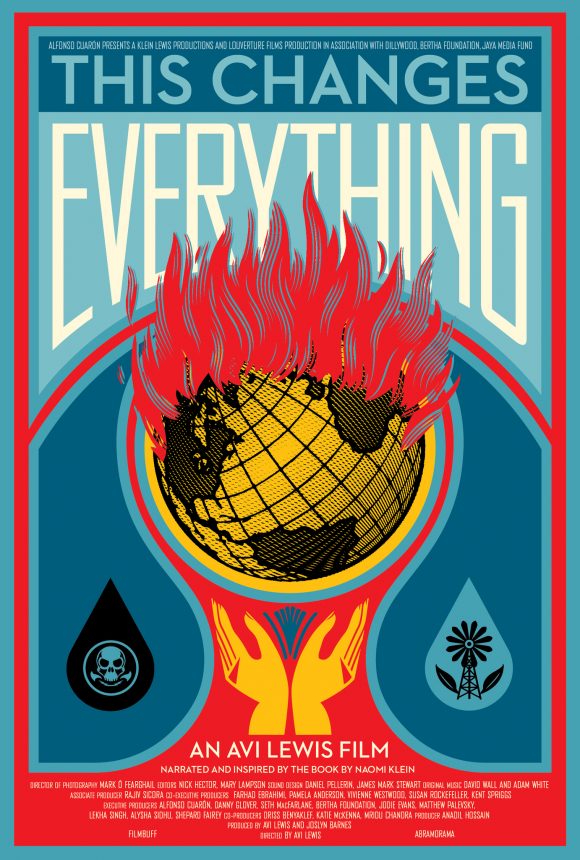
Since the documentary was released, Beaver Lake Cree Nation is set to have a trial in 2026. Currently, the courts have confirmed the original lawsuit will cover all past and future damages caused by Canada, including “authorizing further extensive pipelines and facilities for carbon capture installations, proposed by oil sands companies” (Alberta Wilderness Association, 2025).
Following the screening, the audience engaged in a discussion with Dr. Skye Niles (Interdisciplinary Programs and Environmental Policy) and Dr. Kyle Harp-Rushing (Environmental Policy) about the film.
Both panelists focused on how hope among communities is a driving force in approaching climate change and alleviating climate anxiety. Additionally, they highlighted how the documentary challenges the notion that human beings control the environment rather than co-inhabit it. Dr. Harp-Rushing highlighted “how colonialism and continued extraction of the environment under capitalism” has contributed to climate change and how “mutual aid, solidarity networks and direct action is tremendously helpful” in response to these broken systems.
Dr. Niles led the audience in a quick exercise from Robert Reich, Emeritus Carmel P. Friesen Professor of Public Policy at UC Berkeley. She asked, “What would be the most important things to you? Would it be to graduate Chapman and make as much money as possible? Would it be to become famous? Would it be to have good relationships with friends, family, community or would it be to make a difference in the world?”
While there is no right or wrong answer to these questions, most people would agree that life is not about us being against each other but rather about making a difference within our own worlds. The individuals within the documentary strived to address how their communities are affected by climate change. Their hope and ability to work together aided in accomplishing their goals for a better future.
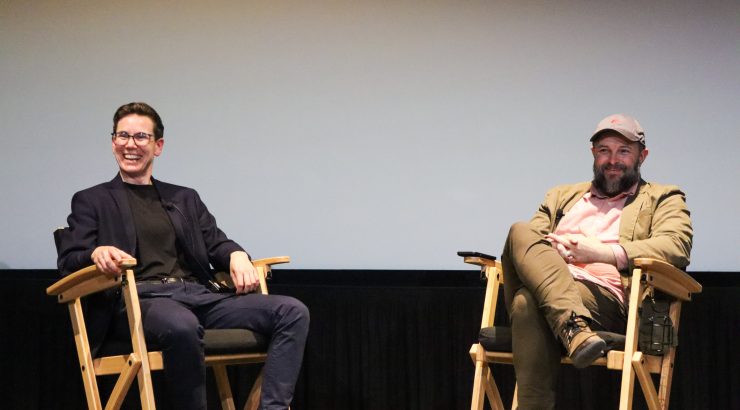
(Pictured in header: (left to right) Dr. Skye Niles (Interdisciplinary programs and Environmental Science and Policy) and Dr. Kyle Harp-Rushing (Environmental Policy). Photo by Violet Gude (’29 Broadcast Journalism major).