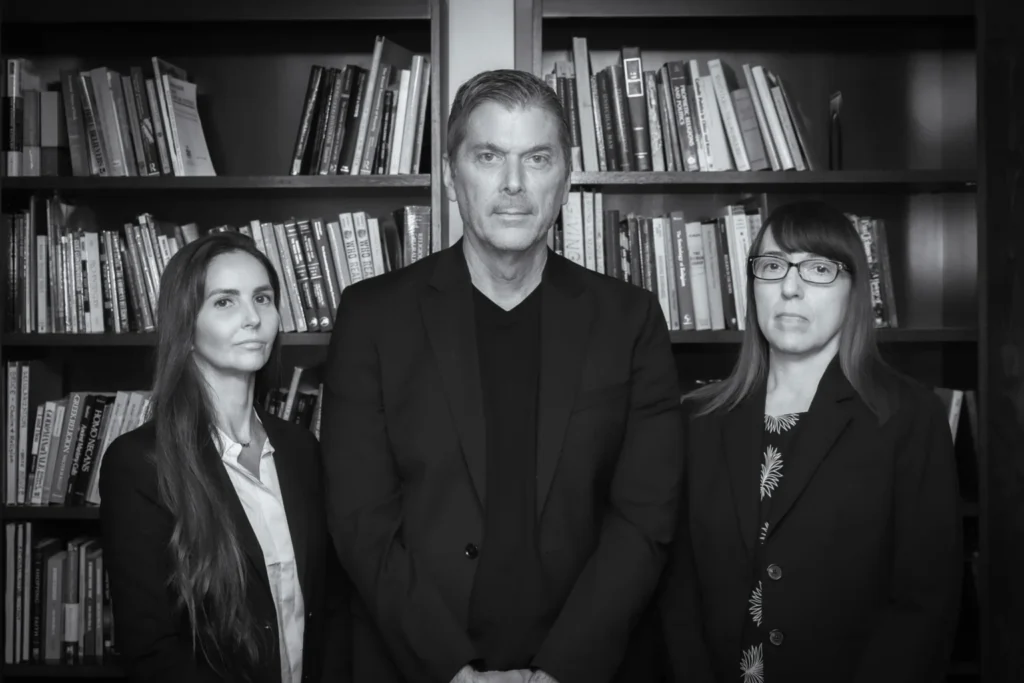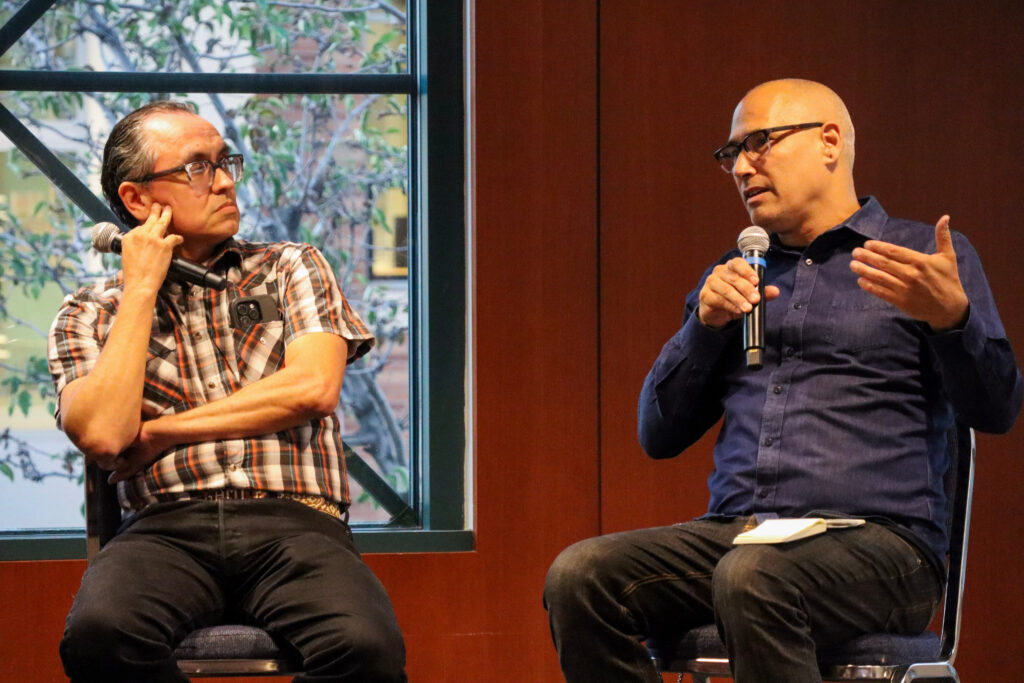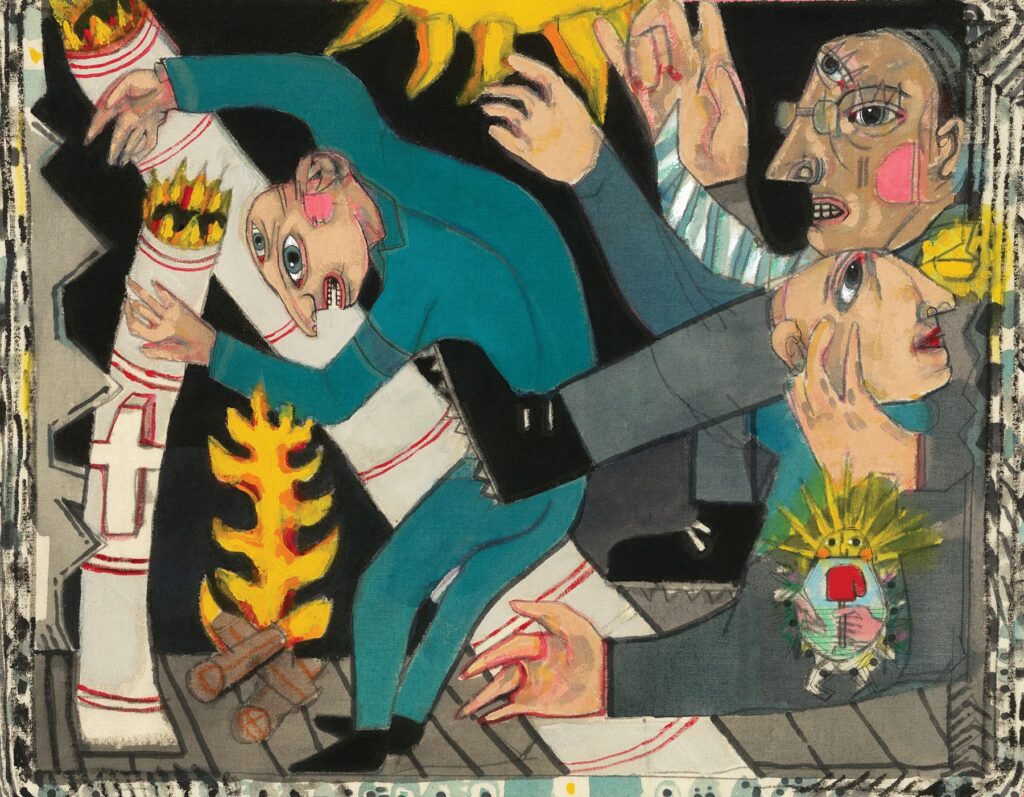
Wilkinson College professors Ian Barnard (English) and Morgan Read-Davidson (English) are co-editors of Trigger Warnings: Teaching Through Trauma, recently published by Lever Press. The book is a collection of chapters on trigger warnings, both inside and outside the classroom, addressing current controversies around the topic, including arguments for and against their use.
“The chapters encompass multiple genres (e.g., memoirs, manifestos, research papers, teaching narratives) and the authors come from a wide variety of teaching backgrounds. We intentionally welcomed this genre variety, and didn’t just want to have conventional academic essays in the book, as that would necessarily exclude some voices and some viewpoints,” said Barnard.
Barnard and Read-Davidson were among the book’s seven co-editors; the others include Kristi M. Wilson (Soka University), Ryan Ashley Caldwell (Soka University), Jada Patchigondla (UCLA), Aneil Rallin, and Ethan Trejo (’21 English MA at Chapman University), who is currently a doctoral candidate at USC, working towards a PhD in English.
 In addition to the seven editors (three of whom are affiliated with Chapman University), two of the contributors are Chapman faculty, Kelli Fuery (Creative and Cultural Industries) and Read-Davidson, and four of the contributors are Chapman alums; Paolena Comouche (‘21 English MA), Megan Friess (’22 English MA/Creative Writing MFA), Rhyan Warmerdam (‘24 English MA) and Trejo, who co-authored the introduction.
According to Read-Davidson, the growing awareness that certain difficult or distressing subjects can trigger traumatic or emotional responses for readers, viewers, and participants has developed, in part, out of discussions in online communities. This has normalized the expectation that trigger warnings should be used in classrooms and creative sites, as well as expanded the range of subject matter that could be considered possibly triggering.
“[Some people may] see an ethical obligation for writers and instructors to give prior warning of that distressing content,” said Read-Davidson. “Concerns and anxieties from instructors include the need to address difficult subject matter in order to better understand it and work toward solutions, and that censoring such content reduces the opportunities for critical thinking.”
However, the research on this topic has uncovered that instructors have expressed anxieties over the weaponization of trigger warnings; if they do not provide a warning, for example, or even if they do but include the distressing content, students may report them or refuse to do the coursework, possibly jeopardizing their job, promotion, or tenure, or harming their reputation.
“Critical thinking becomes more difficult if students consider any view outside their own distressing and triggering. Our book addresses a wide range of issues and perspectives surrounding this discussion,” said Read-Davidson. “Authors provide insightful experiences, in-depth research, and helpful pedagogical approaches to considering how and why we use trigger or content warnings.”
Trigger warnings are a complicated issue. There’s no simple right or wrong answer, but Ian Barnard hopes that teachers who have a knee-jerk reaction against trigger warnings will learn something and, after reading the book, come away with a more nuanced understanding.
Trigger Warnings is an open-access publication, and anyone can download it for free from the publisher’s website.