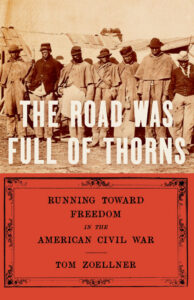
 When we think about the end of slavery in America, it’s easy to picture a moment of triumph: the Emancipation Proclamation signed, chains broken, and justice finally delivered. But as Wilkinson College English Professor and historian Tom Zoellner reminds us in his powerful new book, The Road Was Full of Thorns: Running Toward Freedom in the American Civil War, the reality was far messier.
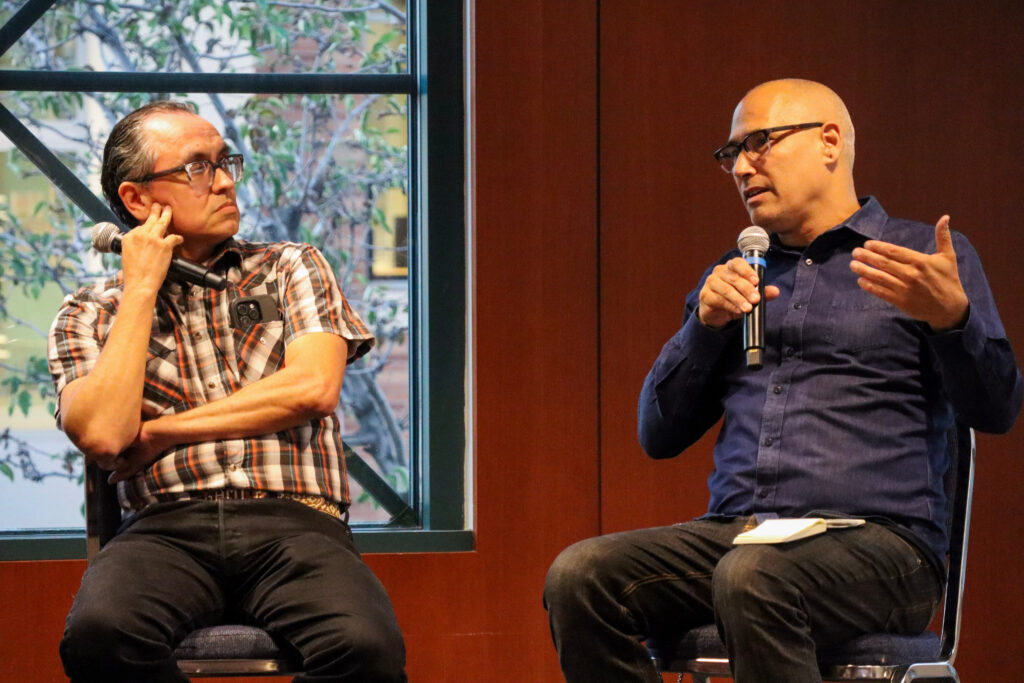
The Voice of Wilkinson recently sat down with Dr. Zoellner to discuss his latest publication. The New York Times bestselling author of nine nonfiction books, including Train, The Heartless Stone, and Island on Fire, brings to life the incredible stories of enslaved men and women who broke free during the Civil War. Through grit and determination, they pushed past prejudice and violence, risking their lives to escape into dangerous and unfamiliar territory, and played a key role in history.
Voice of Wilkinson: Congratulations on your latest publication. Can you give the readers a little synopsis?
Tom Zoellner: In the opening days of the Civil War, three enslaved men approached the gates of Fort Monroe, a U.S. military installation in Virginia. In a snap decision, the fort’s commander “confiscated” them as contraband of war. From then on, wherever the U.S. Army traveled, runaways rushed to secure their own freedom, a mass movement of 800,000 people—a fifth of the enslaved population of the South—that set the institution of slavery on a path to destruction.
VoW: The story takes place during the early days of the US Civil War, an important part of history. Can you talk about how you focused the book on affirming African Americans who freed themselves, versus what most remember as Abraham Lincoln’s work?
TZ: About a third of the book is about Lincoln’s leadership style, which he described as “point to point,” in the style of the flatboat captain that he used to be. He saw himself as being pulled along by the current of events rather than directing them. In the case of emancipation, it was runaway enslaved people who were creating the current. They gave Lincoln the justification for signing the Emancipation Proclamation.
VoW: You “reveal how the least powerful Americans changed the politics of war” in the book. Can you go into a little detail about that?
TZ: After the contraband decision on May 24, 1861, at a place called Fort Monroe in Virginia — a military policy that Congress soon adopted as federal law — enslaved people became more emboldened to run toward the north in numbers far greater than the Underground Railroad had ever seen. It was one of the largest mass migrations in American history up until that point, all of it in the midst of social upheaval and violence.
VoW: What do you hope readers will walk away with after reading The Road Was Full of Thorns?
TZ: Admiration for the courage of the enslaved people who endured terrible trials in the cause of freedom.
VoW: Anything else you would like to add?
TZ: I would like to thank the unsung heroes at Chapman University: the staff of Leatherby Library. Without the work of those in the interlibrary loan department, this book could not have been written. They have my enduring gratitude for widening the scope of our holdings.