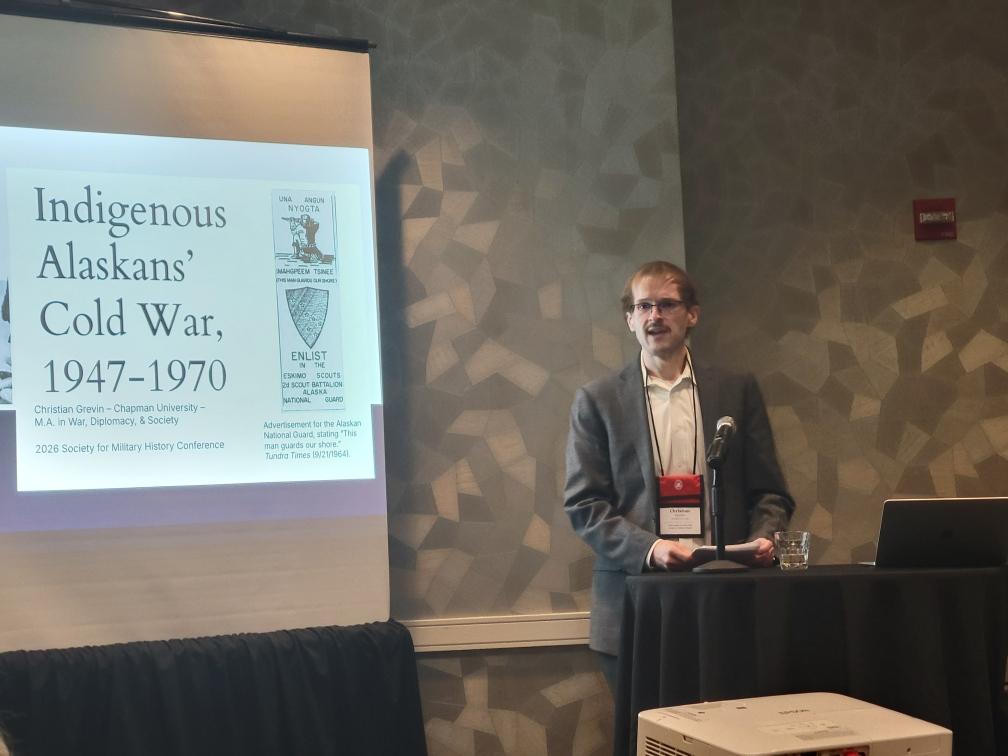
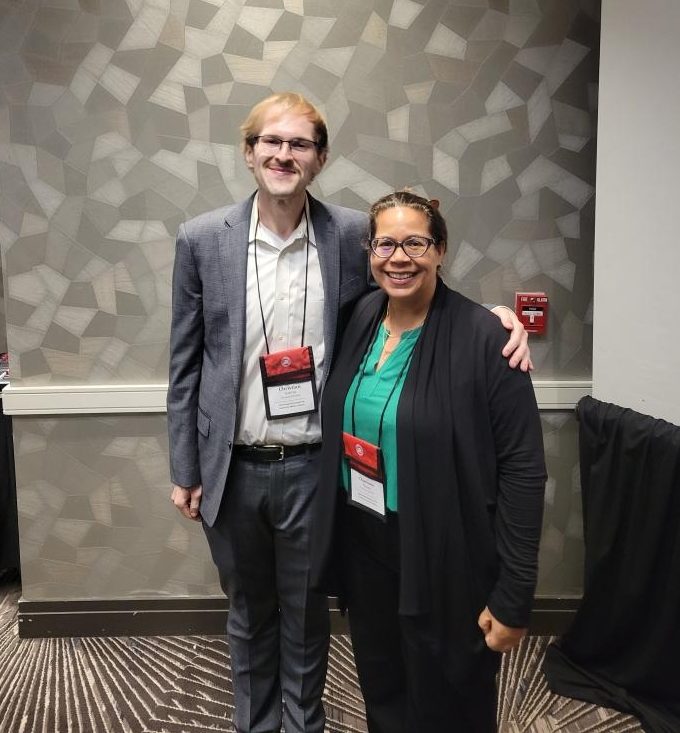
This edition of From Our Eyes features Christian Grevin (‘26 M.A. in War, Diplomacy, and Society). Grevin was able to attend the 2026 Society for Military History (SMH) Conference in Washington, D.C., this past March through a conference travel grant he received from Wilkinson College of the Arts, Humanities, and Social Sciences.
For the past year, I have been working on my master’s thesis titled “Indigenous Alaskans’ Cold War, 1947-1970” under the mentorship of Wilkinson College Dean Jennifer Keene. My research delves into the impact of military and governmental development projects on Indigenous Alaskans during the Cold War, and native communities’ varying responses to them. I knew that having the opportunity to present my findings in a condensed format and receive feedback from others would be invaluable to me at this stage of my thesis. The 2026 SMH Conference in Washington, D.C., offered me that opportunity through their newly developed Graduate Student Talks. These panels allow students to create a short TED Talk-esque presentation that encompasses their whole project. My application to the conference was accepted, but it was ultimately the travel grant from the Wilkinson College of the Arts, Humanities, and Social Sciences that allowed me to attend.
While at the conference, I connected with other graduate students who are passionate about research. I gained a sense of scholarly community unlike anything I had experienced before, as we eagerly discussed our research agendas and learned about subjects new to many of us. I also developed multiple mentor relationships with individuals working in fields such as the federal government, archives, and museums. They provided me with insight into the next steps in my career and offered connections to learn about professional opportunities I was previously unaware of.
The conference presentation felt the most rewarding. I find it difficult to speak publicly about my research for fear of not articulating my points exactly as I envision them in my head. That being said, I felt myself actively push through that fear both in preparing for the conference with supportive faculty like Dean Keene, Dr. Charissa Threat (History), and Dr. Minju Kwon (Political Science), and in delivering the talk. I worked extremely hard to prepare by creating multiple versions and workshopping them with faculty, friends, and family members in the weeks leading up to the conference. I memorized my key points and allowed for fluidity in my presentation to ensure I communicated what I wanted without getting trapped in a set script. I could see that my audience was actively listening to the presentation and thoughtfully engaged with the material. Afterward, I received positive feedback from my fellow presenters, as well as Dr. Threat and Dr. Kyle Longley, who were present to support me. The consistent and exceptional help that the faculty provided me with, from the preparation to the actual presentation, truly embodies the community Chapman offers.
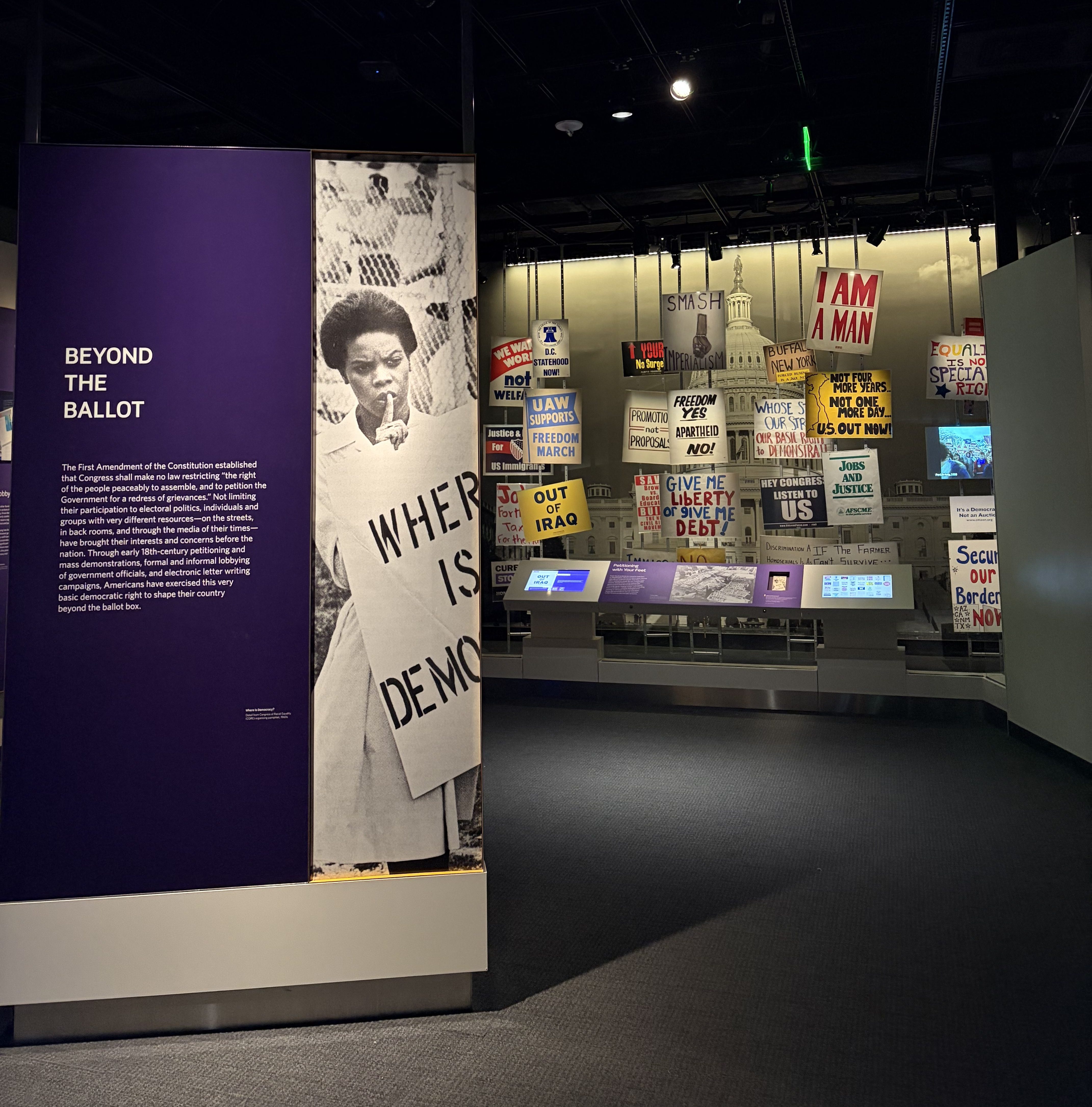
This conference also afforded me the opportunity to explore the nation’s capital in an immersive and authentic way. I visited the Smithsonian’s National Museum of American History for the first time. The museum’s unique exhibits and careful curation of the nation’s complex history reminded me of the real-world importance of my studies. I was particularly moved by one section titled “Many Voices, One Nation,” which explores the diverse cultures and histories of the American people. This space delved into topics like resistance against cultural assimilation, racial discrimination, changing notions of citizenship, and religious persecution, which have become increasingly difficult to address in an era of intense political polarization and censorship. The exhibit tackled the tragic aspects of our nation’s history, but, just as importantly, highlighted the shared humanity that connects Americans across cultural, religious, and ideological identities.
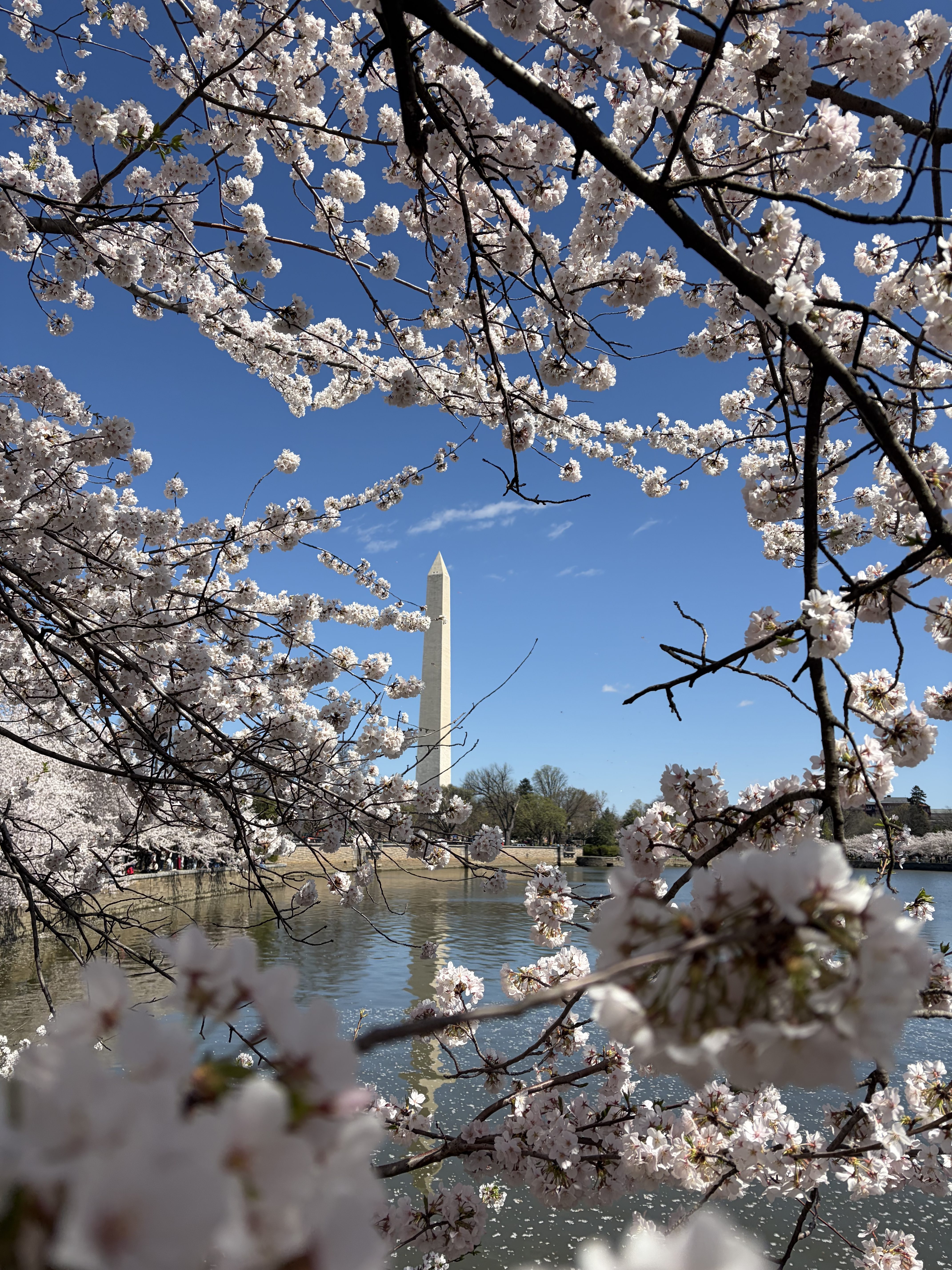
The beautiful complexities of humanity were displayed outside of museum walls as well. At one point on the trip, I wandered along the grounds of the Washington Monument, starting at the United States Capitol Building. That particular day was the annual Blossom Kite Festival and Cherry Blossom Festival, both held on the grounds. As I walked along the mile-long path that afternoon, I was surrounded by people enjoying the sunny weather and flying their kites. It was breathtaking to see hundreds of kites fill the sky with the Washington Monument towering in the background. I quickly picked up on other events occurring simultaneously in the same space. Protesters walked alongside me as they participated in ‘No King’s’ protest, drawing attention to immigration issues, the war in Iran, and other injustices occurring under our current administration. One child was there with her parents, holding a sign that read “No Kings, Only Princesses.” It was rather impactful as I saw my niece in her, and was reminded that no fight is over until a just future for all is created. I also heard a voice booming over a speaker, discovering an event being held on the grounds for Trans Day of Visibility, drawing attention to the discrimination transgender people face, while honoring their lives and contributions to the world. I found the juxtaposition between the varying events to be rather awe-inspiring. They reflect the duality of people and the breadth of human life. The act of protesting and drawing attention to injustices is vital for societal progress, while the ability to find joy in life is necessary for one’s well-being and, in many respects, serves as a form of protest itself. It was meaningful to see people being people.
I am extremely grateful for the experience Wilkinson College of the Arts, Humanities, and Social Sciences provided me with. I walked away with a renewed sense of self, acknowledging my strong research and presentation skills. Most importantly, I reflected on what my work, and really life, is all about, highlighting a shared sense of humanity that connects and guides us toward a brighter future.
(Pictured in header: Christian Grevin (‘26 M.A. in War, Diplomacy, and Society) presenting at the 2026 Society for Military History (SMH) Conference in Washington, D.C. Photo courtesy of Grevin.)